



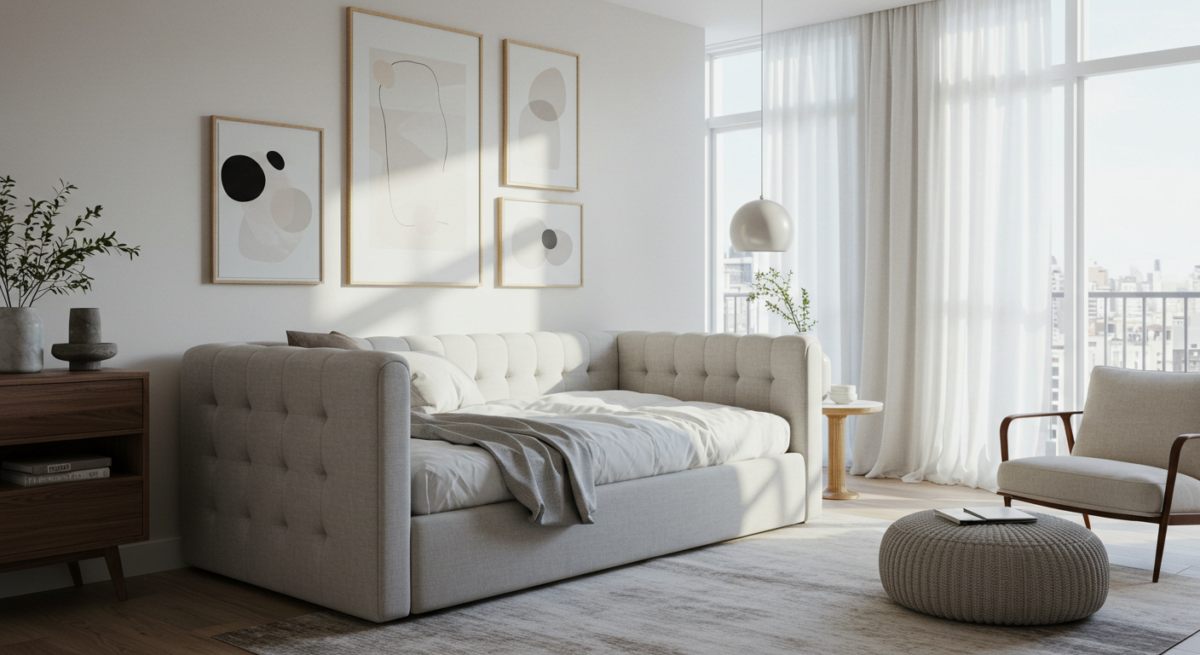
Day beds are versatile pieces of furniture that serve as both elegant seating solutions and comfortable sleeping spaces.
They feature a distinctive design with a three-sided headboard and footboard, creating a unique aesthetic that seamlessly combines the functionality of a sofa with the comfort of a traditional bed.
These adaptable furnishings have become increasingly popular among homeowners seeking to maximise their living spaces without compromising on style or practicality.
Day beds are commonly found in:
- Small apartments or studios: They offer an ingenious space-saving solution, providing a sophisticated seating area during daytime hours whilst transforming into a comfortable sleeping space at night. The dual functionality makes them particularly valuable for those living in compact urban dwellings.
- Guest rooms: They serve as an excellent accommodation option for overnight visitors, offering a welcoming place to rest while maintaining the room's aesthetic appeal. During the day, they function as comfortable seating for socialising or relaxing, making the guest room a more versatile space.
- Children's bedrooms: They have become an increasingly popular choice for children's rooms, offering a versatile space for daytime activities such as reading, playing, or studying. When evening comes, they transform into a cosy bed, perfect for a good night's sleep. The design also helps create a more mature atmosphere as children grow older.
- Sunrooms or home offices: They create an inviting retreat for short breaks, casual reading sessions, or afternoon naps. In home offices, they can serve as a comfortable spot for brainstorming or taking refreshing breaks between work tasks, adding both functionality and style to the space.
While interior design trends have evolved dramatically in recent years, offering countless style options, many homeowners face the challenge of maximising limited living spaces. The growing popularity of day beds reflects this modern need for furniture that combines form and function.
Whether you're working with a compact bedroom in a traditional townhouse or seeking to optimise your studio flats layout, numerous innovative furniture solutions and design aesthetics can help you make the most of your available space. Day beds stand out as a particularly versatile option in this context.

The materials used in their construction vary widely, including elegant wooden frames, durable metal structures, and luxuriously upholstered fabric options.
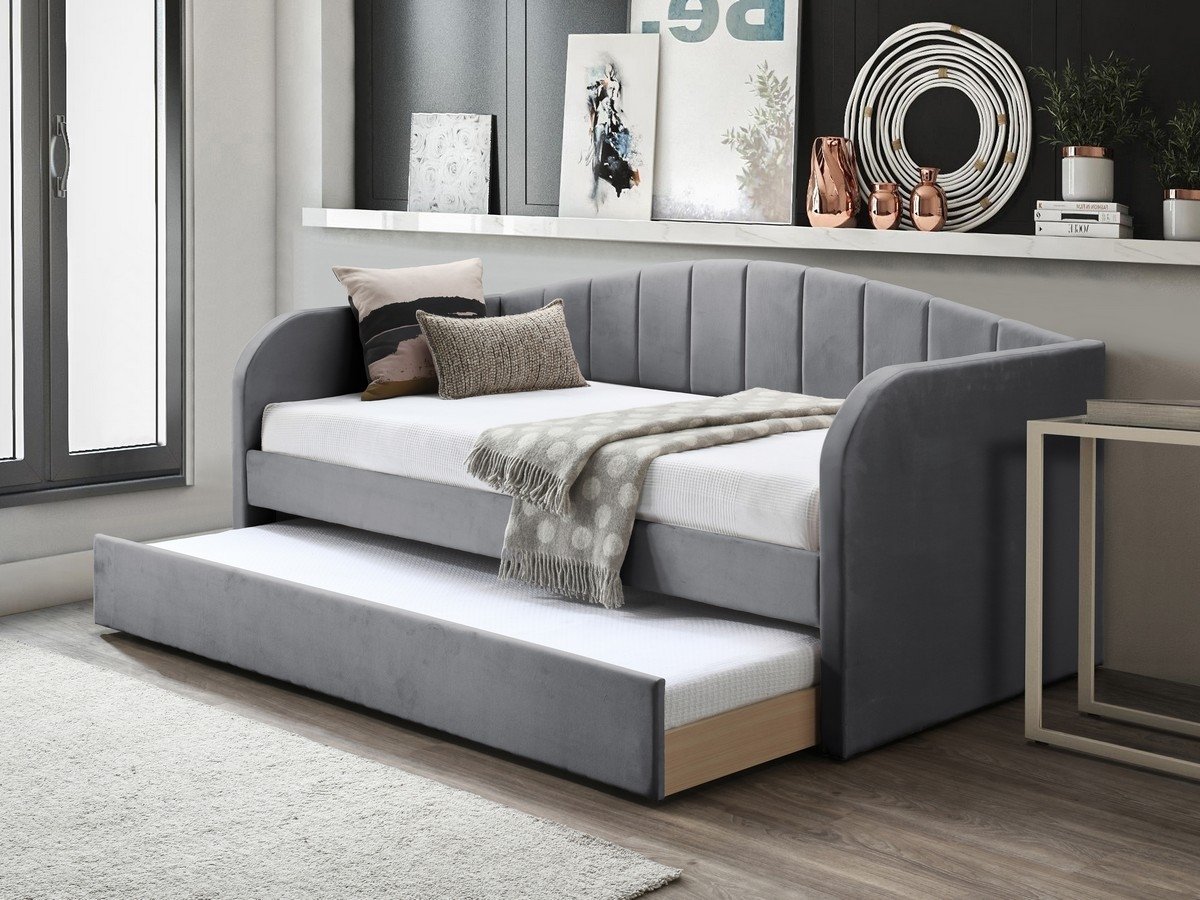
Many modern day beds feature practical additions such as trundle beds that discreetly slide beneath the main frame, providing valuable extra sleeping space for guests without permanently occupying additional floor area.
Solving the storage issue
Although bedrooms should ideally serve as peaceful sanctuaries for rest and rejuvenation, the reality often sees them doubling as storage spaces in modern homes.
Whether you're managing an extensive wardrobe collection or housing an impressive library of books, finding effective storage solutions becomes crucial for maintaining a harmonious living environment.

Many homeowners facing spatial constraints have successfully adopted vertical storage solutions. This approach ranges from implementing modular stackable storage systems for personal belongings to crafting custom-built bookshelves that maximise wall space. T
The key insight here is that limitations in floor space can be effectively overcome by thinking vertically and utilising the full height of the room.

Try multifunctional furniture
However, if transforming your bedroom into something resembling a storage facility doesn't align with your vision, exploring multifunctional furniture options can provide elegant solutions for decluttering your sleeping space while maintaining its aesthetic appeal.
The market offers a wide array of innovative furniture designed to help declutter bedrooms effectively.
From practical divan beds that provide concealed storage for seasonal items like winter blankets to versatile day beds that offer both stylish seating and comfortable sleeping arrangements for unexpected guests, multifunctional furniture can revolutionise how you use your space.
It's worth noting that day beds aren't limited to bedroom settings. Their versatility makes them equally valuable in guest rooms, where they provide comfortable accommodation for visiting friends and family, or in living rooms, where they create perfect spots for relaxing television sessions.
This adaptability demonstrates how multifunctional furniture can effectively address the challenges of modern living in compact spaces.
Use colour and light effectively.
Even if you aren't prepared to make a significant investment in a day bed, numerous creative design strategies can help create an illusion of spaciousness in your bedroom. These clever techniques can transform even the most modest spaces into rooms that feel open, welcoming, and significantly larger than their actual dimensions.
Incorporating minimalist Scandinavian decor has become increasingly popular among homeowners seeking to maximise their space visually. This design approach emphasises clean lines, uncluttered surfaces, and a neutral colour palette that naturally creates a light, airy atmosphere in compact spaces.

When combined with this year's trending colours, particularly soft grey tones, this aesthetic can dramatically enhance the perceived spaciousness of any room.
The subtle, muted qualities of grey work exceptionally well in creating depth and dimension, making it an ideal choice for homeowners looking to optimise their bedroom's visual appeal.
One of the most effective optical illusions in interior design involves the strategic placement of large mirrors. These reflective surfaces serve multiple purposes: they bounce natural light around the room, create the impression of extended space, and add a touch of sophistication to the overall decor.
Positioning mirrors opposite windows or light sources can maximise their space-enhancing properties, effectively doubling the perceived size of your bedroom.
Embrace the cosy aesthetic.
While creating the illusion of space is important, it's crucial to remember that a bedroom shouldn't feel clinical or impersonal. Instead of fighting against the intimate nature of a smaller bedroom, many homeowners are now choosing to celebrate it by crafting a deliberately cosy and inviting atmosphere.
The Danish lifestyle concept of Hygge has revolutionised how we approach compact living spaces. This philosophy emphasises creating environments that promote comfort and contentment through thoughtful design choices.

By incorporating ultra-soft textures in bedding and furnishings, strategically placing ambient lighting through carefully chosen candles, and adding plush cushions in varying sizes and textures, you can transform your bedroom into a supremely comfortable sanctuary.
For those seeking to add more character to their space, bohemian design elements offer exciting possibilities. This eclectic style incorporates various textures and patterns through distinctive elements such as intricately designed kilim rugs, which add both visual interest and warmth to the floor space.
Macrame plant hangers introduce an organic element while making clever use of vertical space, and chunky throws layered over day beds or existing furniture pieces create inviting nooks perfect for relaxation. These bohemian touches can make even the smallest bedroom feel like a personalised retreat, proving that limited space doesn't mean limited style potential.