


Table of Contents
Here's a figure that might surprise you: 4% of people have bought their 'new' mattresses from doorstep or 'back-of-the-van' traders. That's one in every 25 shoppers falling for these scams.
When you're looking at beds and mattresses that cost hundreds of pounds, it's only natural to want the best deal possible. You see those tempting offers and think you've struck gold. But here's the problem – how do you know if that 'was' price ever existed in the first place?
A Which? investigation tells the real story. They analysed nearly 13,000 online prices for beds and sofas over seven months, and what they found was eye-opening. Seven out of eight major stores were running 'offers' that could mislead customers. Unless you're buying from an established retailer with genuine manufacturer contracts, you can't be certain you're getting an authentic mattress.
Why does this matter to you?
Whether you're browsing mattress sales this weekend or hunting for the best deals in your area, knowing how to spot a fake could save you serious money and protect your sleep quality. Your mattress affects how well you rest every single night – so getting this decision right is crucial.
This guide will show you exactly what to look for, what to avoid, and how to shop with confidence. Because when it comes to your sleep, there's no room for compromise.
Common Mattress Scam Tactics
Here's a sobering fact: the mattress industry loses around £100 million per year to fraudulent sales tactics. These scammers have perfected their techniques over years, but once you know what to look for, their tricks become obvious.
Fake discounts and inflated RRPs
Ever noticed how that "£2000 mattress" is always on sale for £799? There's a reason for that. Retailers artificially inflate original prices to create the illusion of massive savings. They'll mark up costs way above the manufacturer's suggested retail price, then slash them down with claims of impressive "discounts".
The Advertising Standards Authority regularly catches retailers doing this. They ruled against one company in 2024 where a mattress was promoted as discounted despite being sold at the lower price for longer than the higher reference price. The harsh truth? That "was" price probably never reflected the mattress's real value.
Door-to-door and van sales tricks
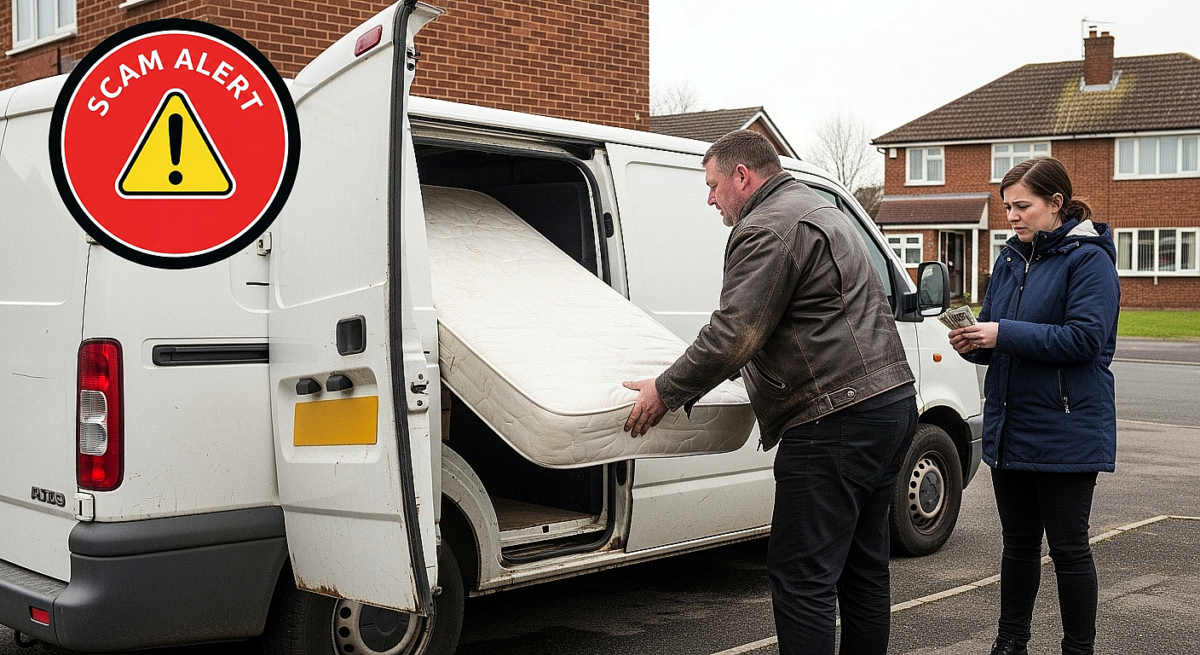
Picture this: someone knocks on your door claiming they have leftover mattresses from cancelled orders, surplus stock, or mattresses from closing businesses. They look legitimate – white or silver van with company branding, proper uniforms, the works.
Nearly 280,000 UK consumers have bought mattresses from these traders. But here's the catch: they'll give you fake receipts and business cards with phone numbers that go nowhere when you try to call. Most concerning of all, these mattresses frequently fail fire safety tests and might even be used mattresses dressed up in new covers.
Your safety isn't worth any discount, no matter how tempting it sounds.
What should you look for when inspecting a mattress?
When you're hunting for genuine bargains during mattress sales, knowing how to spot counterfeits could save you from a costly mistake. The National Bed Federation estimates mattress fraud costs the UK industry approximately £100 million annually. More than 280,000 consumers purchase mattresses from unauthorised retailers each year.
Don't worry – spotting fakes isn't as difficult as it sounds once you know what to look for:
Check the stitching and materials first
Run your hands along the mattress seams and edges. Quality mattresses have tight, reinforced stitching that feels solid under pressure. Loose threads, uneven fabric, or stitching that comes apart easily are dead giveaways of poor craftsmanship.
Fake mattresses often contain nothing more than a basic spring unit with a cheap polyester pad, all wrapped in flimsy material that won't last. Your fingers will tell you the difference – genuine mattresses feel substantial and well-constructed.
Hunt for the fire safety labels
Every mattress sold since 1988 must carry fire safety labels proving they meet British flammability standards. These aren't just stuck on – they're sewn into the mattress fabric to make removal difficult. Without this certification, selling or donating the mattress is actually illegal.
Takeaway Tip: Authentic labels reference BS7177, the British safety specification. Scammers sometimes attach fake labels, so check the reference codes carefully.
Watch out for suspicious fillings
Counterfeit mattresses often hide nasty surprises inside. You might find old, used spring units mixed with dirty fillings that should never be in a new product. Some rogue traders even take old mattresses, stuff them into fresh covers, and sell them as brand new.
These items can be genuinely unhygienic and unsafe, sometimes containing banned materials that pose health risks.
Look for proper brand identification
Legitimate manufacturers always leave their mark somewhere on the product. Even if tags get removed, you can usually find the brand name sewn directly into the mattress fabric. No clear identification means you can't verify authenticity or safety standards.
Remember – those 'back of the van' mattresses might seem tempting during your weekend mattress shopping, but they can be extremely dangerous. Stick with NBF-approved retailers whose products have been properly inspected and tested.
How to Buy Safely During Mattress Sales
Shopping smart during sales means knowing exactly what to look for and where to look. Here's your step-by-step plan to secure a quality mattress without falling for the tricks:
Start with NBF-approved retailers
Look for the NBF (National Bed Federation) Approved logo when you're shopping. These retailers have been vetted to ensure they sell products that are safe, clean, and honestly marketed. NBF Retail Champions source at least 50% of their UK & Irish-made beds from approved manufacturers, while Premier Retail Champions source all their beds from approved members. This logo is your guarantee of legitimacy.

Verify they have a real business address
Any company you're considering should have a physical location – either a registered office, factory, or showroom you can visit. Be wary of websites that only display mobile phone numbers or those starting with 0203. Legitimate businesses typically use 0800 or 0345 numbers and have proper privacy policies and terms of conditions on their websites.
Check their return and warranty policies
Some retailers offer generous trial periods – IKEA provides a 365-night "Sleep on it" policy, while Dreams offers a 100-Night Comfort Guarantee. Most require waiting at least 30 days before requesting exchanges to allow your body to adjust. Make sure you understand the conditions, and keep your mattress in pristine condition using a protector throughout the trial period.
Compare the technical specifications
GSM (grammes per square metre) reveals the weight of materials used in construction. Higher GSM (above 3500) indicates better quality and durability. A mattress with 1200 GSM wool offers significantly more value than one with 300 GSM at the same price. Most retailers hide this information to prevent direct comparisons between brands – so ask for it specifically.
Question those "too good to be true" deals
When a mattress is advertised at "half price," ask yourself whether twice that amount was ever its real worth. Compare it with similar models from different retailers. Always evaluate the mattress and base separately to determine the true value of each component.
Takeaway Tip: Don't let sales pressure rush your decision. Quality mattress retailers understand this is a significant purchase and will give you time to consider your options.
What to Do If You've Been Scammed
Found yourself on the wrong end of a dodgy mattress deal? Don't panic. You have rights, and there are people ready to help you get things sorted.
Get help from the experts
Your first call should be to Citizens Advice Consumer Service on 0808 223 1133. They'll give you free, confidential advice and can escalate serious cases to Trading Standards. You'll also want to report the scam to Action Fraud online or ring them on 0300 123 2040.
If someone's turned up at your door trying to flog mattresses, that's a different matter entirely. Ring your local police on 101 straight away – or 999 if you feel threatened or unsafe.
Know your rights under the law
The Consumer Rights Act 2015 is firmly on your side here. Your mattress must be exactly as described, fit for purpose, and of satisfactory quality. If it fails any of these basic tests, you're entitled to a full refund within 30 days of purchase. After that first month but within six months, you can still demand a replacement or repair.
Keep everything as evidence
This bit's crucial – save every scrap of documentation you have:
- Your original receipts and order confirmations
- Photos of the mattress showing any defects or problems
- Names of anyone you dealt with during the sale
- Every email, text message, and notes from phone calls
Help others avoid the same trap
Once you've sorted your own situation, consider sharing your experience on review sites like Trustpilot or Google Reviews. Stick to the facts rather than getting emotional about it. Your honest account could save someone else from falling for the same scam.
Remember, getting scammed doesn't reflect poorly on you – these fraudsters are skilled at what they do. What matters now is taking action to protect yourself and others.
Your mattress shopping toolkit is now complete
Shopping for a mattress doesn't have to feel like walking through a minefield. You now know exactly what to watch out for – those artificial discounts, endless sales that never really end, vague marketing terms, and those convincing door-to-door sellers with their tales of surplus stock.
More importantly, you can spot the telltale signs of a dodgy mattress. Poor stitching, missing fire safety labels, and suspicious fillings are dead giveaways that you're looking at a fake. And remember, legitimate retailers will always have proper addresses, clear return policies, and those all-important NBF approval marks.
Good deals do exist – just not where you'd expect
Don't worry, genuine bargains are out there. They just won't come knocking at your door or flash "90% OFF" in giant letters. Instead, they'll be found by comparing GSM ratings, spring counts, and shopping with trusted retailers who've earned their reputation.
Your mattress is where you'll spend roughly a third of your life. That makes it one of the most important purchases you'll ever make for your health and wellbeing. So take your time, ask the right questions, and trust your instincts.
Should you find yourself caught up in a scam despite your best efforts, you're not powerless. Citizens Advice and Action Fraud are there to help, and UK consumer law is firmly on your side. Keep those receipts, take photos, and don't be afraid to speak up.
Next time you see a mattress sale, you'll approach it with confidence rather than confusion. Because now you know the difference between a genuine opportunity and a well-dressed scam. Sweet dreams start with smart shopping decisions.
Key Takeaways
Protect yourself from mattress scams that cost the UK industry £100 million annually by recognising common deceptive tactics and knowing what to look for in legitimate products.
• Always buy from NBF-approved retailers with physical addresses and clear return policies to ensure product safety and authenticity
• Check for proper fire safety labels (BS7177), quality stitching, and brand identification to spot counterfeit mattresses
• Be wary of "never-ending sales," inflated RRP discounts, and door-to-door sellers claiming surplus stock from cancelled orders
• Compare specific details like GSM ratings and spring counts rather than relying on vague marketing terms like "premium" or "luxury"
• If scammed, report immediately to Citizens Advice and Action Fraud whilst keeping all receipts and communication records
Remember that genuine quality mattresses are an investment in your health—deals that seem too good to be true usually are, and your consumer rights under UK law provide strong protection when purchasing from legitimate retailers.
FAQs
Q1. How can I identify a counterfeit mattress? Look for poor stitching, missing or fake flammability labels, and the absence of clear brand or model information. Genuine mattresses have tight, reinforced stitching, proper fire safety labels referencing BS7177, and identifiable manufacturer marks.
Q2. What should I consider when purchasing a mattress during a sale? Buy from NBF-approved retailers, verify the company has a physical location, check for clear return and warranty policies, and compare specific specifications like GSM (grammes per square metre) and spring count between different mattresses.
Q3. Are perpetual mattress sales a red flag? Yes, continuous sales can be a deceptive tactic. Most retailers run promotions year-round, particularly around holidays. Be wary of countdown timers or "Sale Ends Sunday" banners designed to create false urgency.
Q4. What should I do if I've fallen victim to a mattress scam? Report the incident to Citizens Advice Consumer Service and Action Fraud. Check your refund rights under the Consumer Rights Act 2015, keep all receipts and communication records, and consider leaving an honest review to warn others.
Q5. Why should I be cautious of door-to-door mattress sellers? Door-to-door sellers often use deceptive tactics, claiming to have surplus stock or cancelled orders. These mattresses may fail fire safety tests or even be used mattresses repackaged as new. It's safer to purchase from established retailers with genuine manufacturer contracts.