


403 Forbidden
ERR_WEB_NGX_403
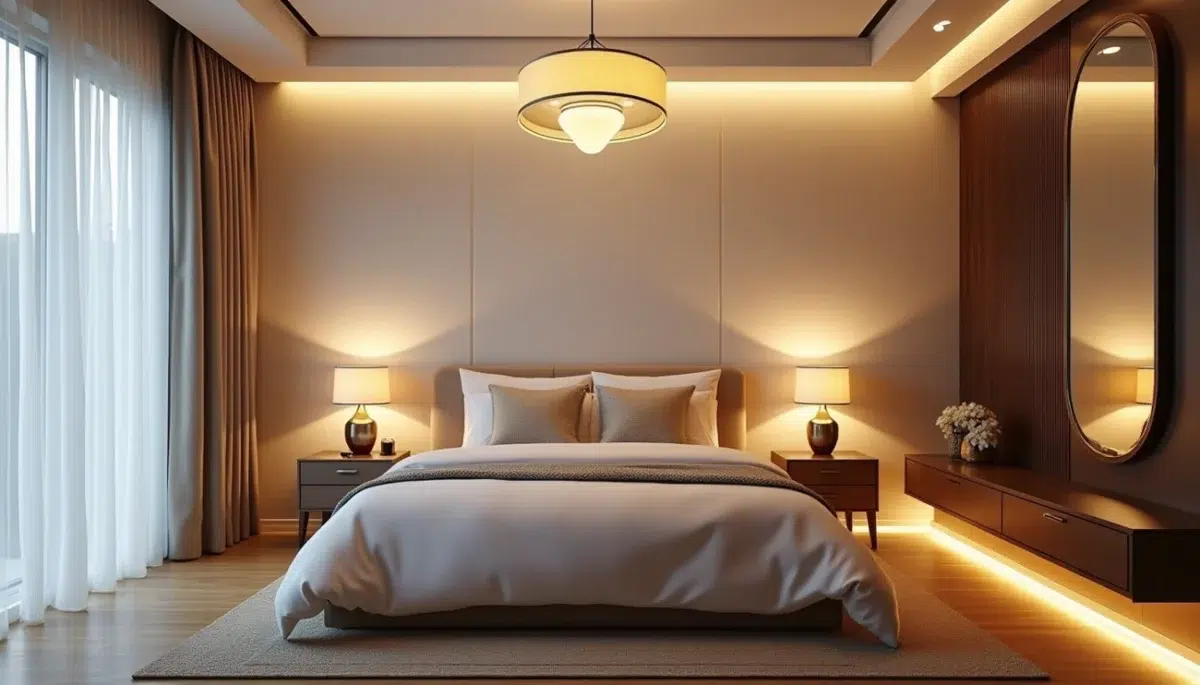
Did you know that light is the most important factor affecting your sleep quality?
Your bedroom should be your own personal sanctuary. A space where you can escape from the outside world and truly unwind. Yet many of us overlook one of the most crucial elements that can make or break this peaceful retreat - the lighting.
According to The Sleep Foundation, lighting plays a central role in regulating your circadian rhythm and aids the production of melatonin, the sleep-promoting hormone. When it comes to your bedroom, lighting truly sets the tone for everything - when it's light, your body wakes up, and when it's dark, your body prepares for sleep.
Creating perfect ambient lighting isn't just about making your room look beautiful. It's about crafting a space that soothes your senses and helps you forget about the daily hustle and bustle. Warm bedroom lighting has a naturally calming effect, infusing your room with that cosy golden glow that helps you relax after a challenging day.

Whether you're giving your entire bedroom a refresh or simply want to update your lighting scheme, the right ambient lighting ideas can work wonders for your space. For the most soothing atmosphere, experts recommend choosing bulbs with a colour temperature of around 2700K to ensure your lights emit that perfect warm hue.
Ready to create a bedroom lighting scheme worth switching off the world for? We'll guide you through everything you need to know - from understanding the basic principles to putting practical lighting ideas into action that work for your specific space and lifestyle.
Think of lighting design like getting dressed - you wouldn't just throw on a single layer and expect it to work for every occasion, would you? Creating a perfectly lit bedroom follows the same principle. Professional designers consistently recommend layering your lighting to create a versatile, balanced space that works for all activities and moods.
Effective bedroom lighting relies on three essential layers:
The beauty of layered lighting lies in its flexibility. Each layer can be controlled independently, allowing you to adjust the mood from bright and energising in the morning to soft and relaxing in the evening. What's more, combining all three layers eliminates harsh shadows and creates a bedroom that feels thoughtfully designed rather than simply functional.
Takeaway Tip: Start with your ambient lighting as the base, then add task lighting where you need it most, and finish with accent lighting to bring personality to your space.
Ambient lighting forms the foundation of your bedroom's atmosphere, setting the mood for both relaxation and functionality. The secret lies in flexibility and control.
Dimmer switches will completely change how you experience your bedroom throughout the day. You can effortlessly shift from bright, energising morning light to soft, calming evening illumination. For smooth, flicker-free performance with LED lights, ensure each type of light is on a separate circuit and dimmed independently.
Skip the standard hanging lights and consider smarter alternatives. Flush ceiling fixtures create an illusion of more vertical space whilst delivering softer illumination. Pendant lights with fabric or alabaster shades diffuse light beautifully, casting a gentle glow instead of harsh direct beams.
Light control extends far beyond your fixtures. Blackout curtains made of dense fabrics like velvet or suede not only enhance sleep quality by blocking external light but also contribute to the room's thermal insulation. For more flexibility, layered window treatments combining sheer and heavy curtains allow for adjustable natural light throughout the day.
Takeaway Tip: Position a large mirror opposite your bedroom window to capture and reflect daylight into darker corners, instantly making your space feel brighter and more spacious.
Strategic mirror placement amplifies both natural and artificial light. This simple trick can brighten even the darkest bedroom corners whilst creating the illusion of extra space.
Task lighting goes beyond basic illumination - it's about creating focused light exactly where you need it for specific activities. Placing a reading lamp or wall sconce beside your bed creates the perfect spot for evening reading without straining your eyes. For maximum functionality, consider adjustable wall-mounted fixtures that can be positioned precisely to illuminate your book whilst preventing disturbing light from reaching your partner.
But task lighting isn't just about function. Table lamps with adjustable stems allow you to direct light specifically where needed, serving both practical and decorative purposes. For dressing areas, directional lighting with cooler colour temperatures helps you stay focused whilst getting ready.
Takeaway Tip: Choose adjustable fixtures that can move with your needs throughout the day.
Accent lighting works magic in transforming your bedroom's atmosphere, drawing attention to specific features and creating depth that makes your space feel professionally designed. LED strip lights behind headboards or under bed frames offer a sophisticated floating effect that adds a contemporary touch without overwhelming the space.
Warm white LEDs between 2700K to 3000K create that ideal relaxing atmosphere, perfect for winding down after a long day. The secret to stunning accent lighting? It should be three times brighter than your surrounding ambient lighting for maximum impact.
Smart control makes all the difference. Dimmers allow you to adjust each layer independently depending on your mood, whilst smart LED strips with Wi-Fi or Bluetooth give you effortless control via apps or voice assistants.
Whether you want dramatic evening ambiance or gentle morning light, having independent control over each lighting layer means your bedroom adapts to you, not the other way around.
Proper bedroom lighting truly changes how you experience your most personal space. You've discovered how layering light creates the flexibility that a single overhead fixture simply cannot achieve. The three-tiered approach provides both practical illumination and aesthetic appeal for any bedroom setting.
Your bedroom lighting choices can make all the difference to how you feel when you wake up and how easily you drift off to sleep. Dimmer switches offer remarkable flexibility, allowing you to adjust brightness levels according to different times of day and activities.
Task lighting enhances your bedroom's functionality, while accent lighting adds depth and character to your space. Together, these elements work to create a bedroom that supports both your practical needs and emotional wellbeing.
Remember that perfect bedroom lighting balances both science and personal preference. After all, your bedroom serves as your sanctuary—a place to unwind, recharge, and prepare for restful sleep. The right lighting scheme doesn't just illuminate your bedroom; it transforms how you experience this essential space.
Don't forget, creating the perfect lighting atmosphere is about finding what works for your lifestyle and space. Whether you prefer soft, warm glows or need brighter task lighting for reading, the key is having options that adapt to your daily rhythm.
Ready to create your own lighting sanctuary? Start with one layer and build from there—you'll be amazed at the difference thoughtful lighting can make to your sleep and overall wellbeing.
Transform your bedroom into a sleep sanctuary by mastering the art of layered lighting that supports both functionality and relaxation.
• Layer three types of lighting: ambient for overall illumination, task for specific activities, and accent for mood and character
• Use warm bulbs (2700K-3000K) with dimmer switches to create flexible lighting that adapts from energising mornings to calming evenings
• Install bedside reading lamps and wall sconces to provide focused task lighting without disturbing your partner's sleep
• Add LED strip lights behind headboards or under bed frames for sophisticated accent lighting that creates depth and atmosphere
• Position mirrors opposite windows and use layered curtains to maximise natural light control throughout the day
Proper bedroom lighting isn't just about visibility—it's about creating an environment that supports your circadian rhythm and promotes better sleep quality. By combining these lighting layers with strategic placement and warm colour temperatures, you'll craft a bedroom that truly serves as your personal retreat from daily stress.
Q1. What is the three-layer approach to bedroom lighting? The three-layer approach involves combining ambient, task, and accent lighting. Ambient lighting provides overall illumination, task lighting focuses on specific activities, and accent lighting adds depth and character to the room.
Q2. How can I create the best ambient lighting in my bedroom? To create the best ambient lighting, use warm white bulbs (2700K-3000K) with dimmer switches. Install ceiling fixtures or pendant lights with fabric shades for a soft, even glow. Maximise natural light with strategically placed mirrors and use layered window treatments for flexibility.
Q3. What colour LED light is best for sleep? Warm colours like red and amber are best for sleep. These colours have a lower colour temperature and are thought to stimulate melatonin production, promoting better sleep quality.
Q4. How can I incorporate task lighting in my bedroom? Add bedside lamps or wall sconces for reading. Use adjustable fixtures to direct light where needed without disturbing others. For dressing areas, consider directional lighting with cooler colour temperatures to help you stay focused while getting ready.
Q5. What's the golden rule of bedroom lighting? The golden rule is to create a well-balanced, layered lighting setup. Combine ambient, task, and accent lighting to ensure functionality, comfort, and aesthetic appeal. Use dimmers to control each layer independently, allowing you to adjust the atmosphere according to your needs and mood.