



Table of Contents
You spend about a third of your life asleep, which makes your student bedroom more important than you might realise. The Mental Health Foundation confirms that sleep ranks alongside eating, drinking and breathing as essential for maintaining good mental and physical health.
Your student bedroom design goes far beyond making things look pretty—it directly shapes how you feel every single day. Struggling with a cramped space or finding it hard to stay motivated? The right approach to small student bedrooms can completely change your university experience.
Research reveals that even simple design elements like curved versus rectangular shapes can dramatically affect your mood, with curved environments boosting positive feelings and sparking creativity. What's more, one in three people in the UK experience Seasonal Affective Disorder, making thoughtful design choices absolutely crucial for your mental wellbeing.
Why should you care about creating the perfect student bedroom? Your space becomes your personal retreat during one of life's most challenging transitions. Whether you want to boost your academic performance or simply feel more at home in university accommodation, smart bedroom choices make all the difference.
This guide shares simple university student bedroom ideas that support your wellbeing whilst expressing who you really are. From the psychology of colour to lighting that actually works, we'll show you how to create a space where you can truly thrive during your university years.
The emotional impact of your student bedroom
Your student bedroom becomes far more than just somewhere to sleep and study. It transforms into your personal sanctuary, the space that reflects who you are, and your emotional lifeline during university life. Research confirms that the connection between students and their living spaces directly impacts both mental health and academic performance.
Why your space affects your mood
Here's something you should know: the physical features of your student bedroom have powerful effects on how you feel psychologically. Studies reveal some stark statistics—26% of first-year university students score above the cut-off for moderately severe depression, whilst nearly 19% experience severe anxiety. These numbers highlight just how vital creating a supportive living environment becomes.
Every time you walk into your room, your brain processes countless details—colours, lighting, shapes, textures—all subtly influencing your emotional state in that moment. Students who feel uncomfortable in their living spaces report higher levels of depression, anxiety, and loneliness. The good news? Thoughtful student bedroom choices can actively boost your mental wellbeing.
Several key environmental factors shape how you feel:
- Natural light exposure - Rooms with good daylight lift your mood and help regulate sleep patterns; students in well-lit spaces show greater self-esteem
- Views of nature - Simply being able to see greenspace from your window reduces anxiety and encourages relaxation
- Noise levels - Students in quieter environments find it easier to settle into university life
- Clutter - Long-term exposure to messy, chaotic spaces connects to lower wellbeing and reduced productivity
Moving to university accommodation represents a major emotional shift. As Alan Percy explains, "When people leave the security of their home environment they leave behind everything that is familiar and this can impact on their sense of self". Many students describe existing in what researchers call a "liminal space"—never quite feeling at home in their university room or back at their family home.

How your room becomes a mental reset zone
Smart student bedroom design ideas can help you create what we call a mental reset zone—your personal space to unwind, recharge, and work through emotions. This matters more than you might think, especially given research showing graduate students experience anxiety and depression at rates two to six times higher than the general population.
Personalisation makes all the difference in building this reset zone. Students who bring meaningful items from home—fairy lights, photographs, posters, familiar bedding—create bridges between university life and home comfort.
One student perfectly captured this: "I've made my room how I want to be, I've made it really really comfy... having photos around my room of my friends and home and making sure my little space was comfortable for me so even if I was having a bad time outside it, I could go back in and just feel way more relaxed".
Small student bedroom ideas need to balance your need for social connection with private retreat space. Your bedroom serves multiple emotional purposes—sometimes as a social hub for building friendships (essential for fighting loneliness), sometimes as a private haven for quiet reflection.
Researchers stress that "the design and management of student accommodation needs to consider and balance the conflict between the desire to individuate and be private, with the desire, and necessity, to be sociable".
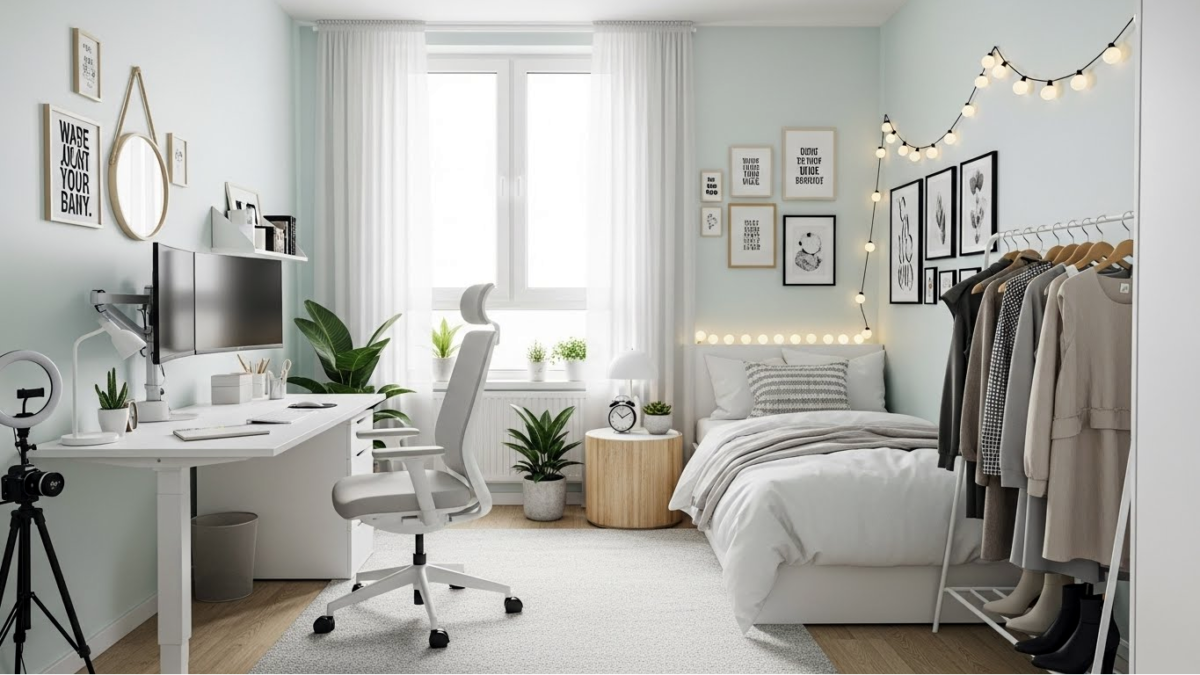
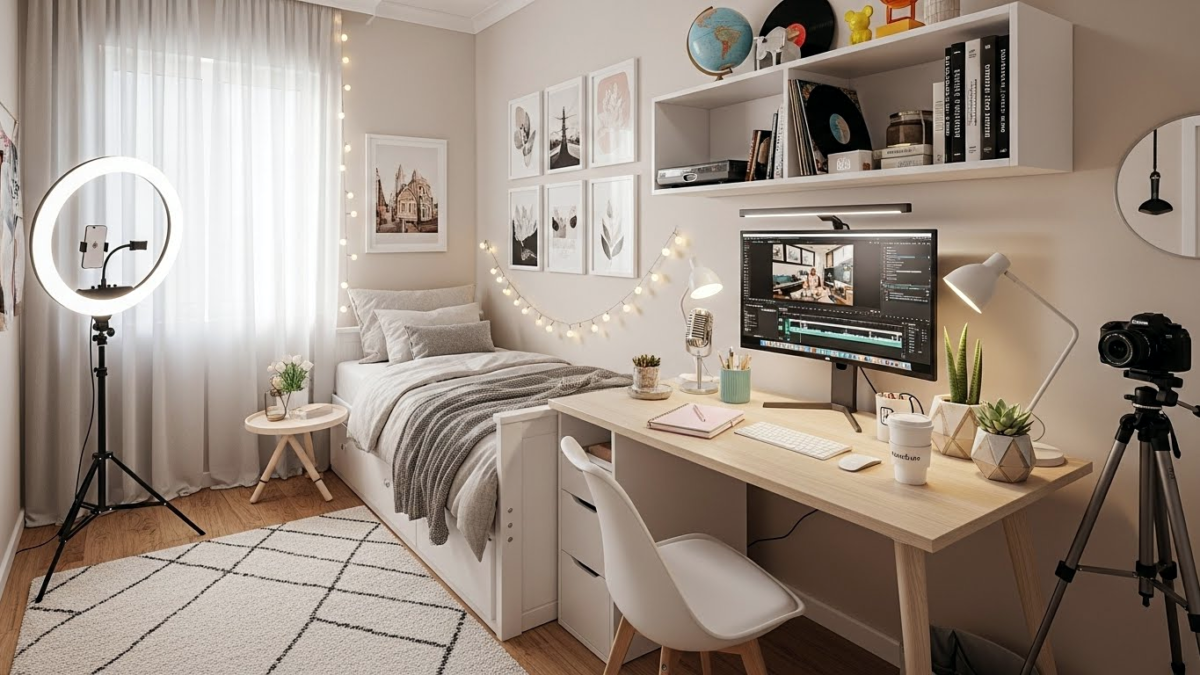
Simple changes like creating a dedicated calm corner can make a real difference. Your brain gradually associates specific areas with particular moods, so regularly using one spot for relaxation actually trains your mind to feel calmer there. For student bedroom ideas in small rooms, think about multifunctional furniture that creates separation between your sleep and study areas—research shows this division benefits both mental health and sleep quality.
Colour choices that support mental wellbeing
The colours you choose for your student bedroom aren't just about what looks good—they're actively shaping your mental state and academic performance every single day. Research proves that colour choices affect everything from how well you concentrate to how deeply you sleep, making them one of your most powerful wellbeing tools.
Warm vs cool tones: what works best for students
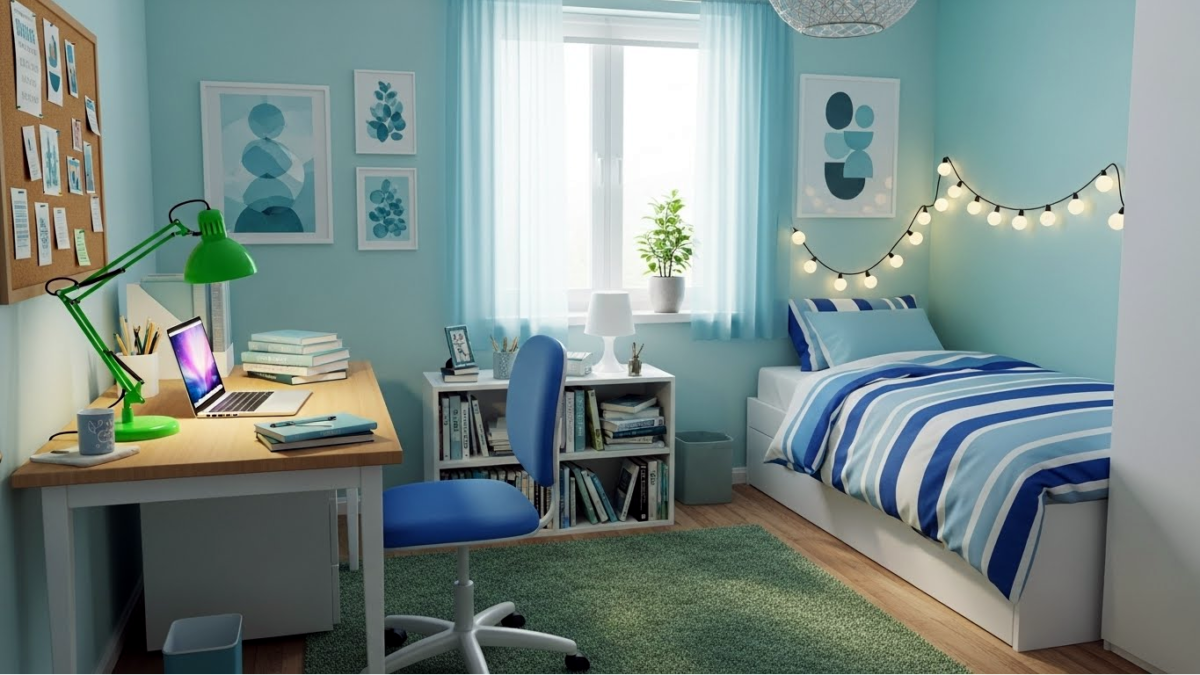
Here's what works: cool colours like light blues and greens typically serve students far better than warm tones, especially where you study. Light to mid blues support sustained attention and mental clarity, whilst soft greens help maintain balance and reduce visual fatigue during those marathon reading sessions. One fascinating study found that lighter blues can actually slow your heart rate and reduce blood pressure, creating a naturally calming environment without you even realising it.
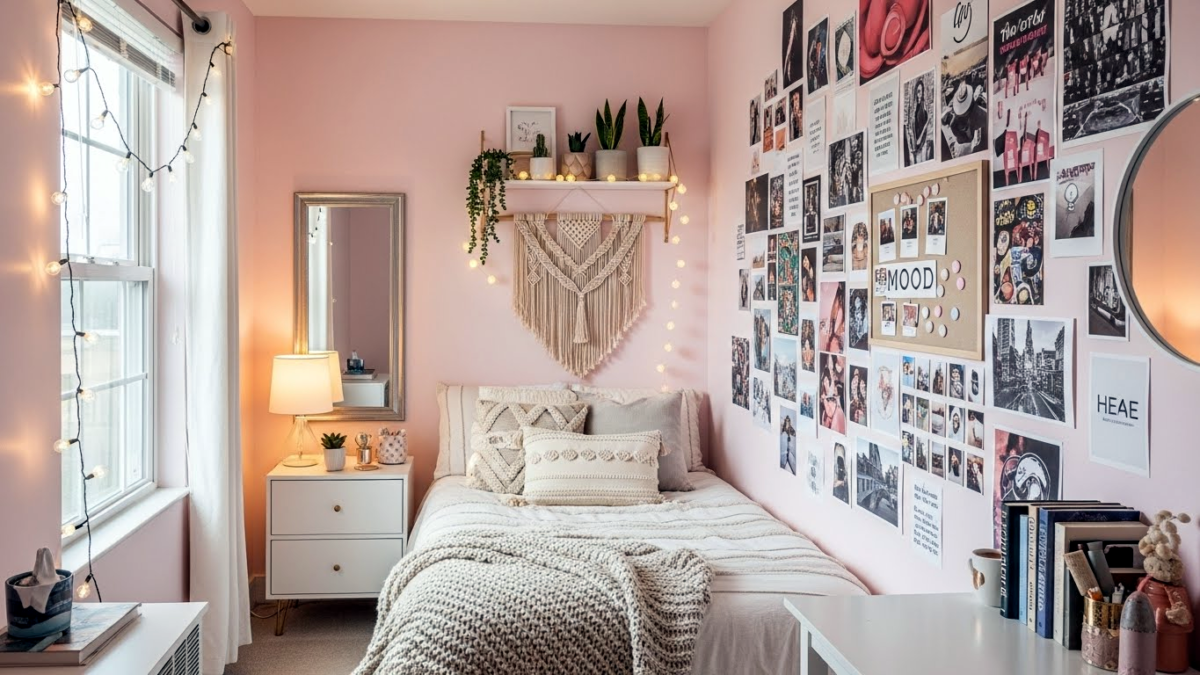
Warm colours do have their place, though. Pale yellows work brilliantly as accent colours for brainstorming areas, whilst muted pinks provide what one expert perfectly describes as "sleeping in a warm hug". The secret lies in intensity—highly saturated shades can feel demanding over long study sessions, whereas soft, light colours with low saturation naturally calm your mind.
Your best approach:
- Choose light blues and greens as main wall colours to lower anxiety
- Add warm accents (soft yellows, pinks) for energy and creativity
- Avoid bright reds and oranges in study areas as they may trigger alertness and fight-or-flight responses
Using colour psychology in small student bedrooms
Small student rooms demand even smarter colour choices. Light-reflecting paints like eggshell whites and pastel blues bounce daylight around your room and make cramped spaces feel significantly larger. Neutral bases—off-white, linen, or soft grey—keep glare low and distractions to a minimum.
Research from the University of California reveals that younger people respond more positively to lighter colours whilst dark shades tend to create more negative associations. This explains why so many students report feeling genuinely better in rooms with cooler, lighter tones.
Love richer colours but working with limited space? Try painting just one accent wall at your room's far end behind your desk so it's out of your direct line of sight. This clever approach adds visual interest without overwhelming your space or disrupting your concentration.
Personal colour associations and their hidden power
Beyond universal colour psychology principles, your individual associations with specific colours matter enormously. As one colour expert wisely notes, "There's no universal list of best bedroom colours – it's about finding what best suits your personal rhythms, lifestyle and taste".
Studies show that students often develop a preference bias for whatever colour surrounds them in their living space, highlighting how powerfully our environments shape our preferences over time. These personal associations can affect your emotional response to your space far more dramatically than any general colour principles.
When selecting colours for your student bedroom, think about:
- Colours that hold positive personal meanings or memories for you
- Cultural associations you might have with certain hues
- How different lighting conditions affect your chosen colours throughout the day
- Your specific needs for the space (better sleep, sharper focus, etc.)
Don't worry if you're feeling overwhelmed by all the options—start with one colour that genuinely makes you happy, then build from there. Even the most institutional student accommodation can become a space that truly supports your mental wellbeing through thoughtful colour choices that honour both psychology and your personal preferences.
Lighting that lifts your mood and improves sleep
Your student bedroom lighting does much more than help you see—it actively shapes your mood, sleep quality, and academic performance. Research shows that harsh overhead fluorescent lighting in typical dorm rooms can make studying more difficult and increase daytime drowsiness.
Maximising natural light in small rooms
Natural light makes spaces appear larger and colours look brighter, whilst also improving your mood and boosting happiness. Position your desk perpendicular to the window where possible—this prevents glare on your computer screen whilst still providing ample natural illumination for your studies.
Smart tricks for maximising natural light include using mirrors strategically to bounce light around the room and choosing light-filtering curtains instead of heavy drapes during daytime. Keep those windows clean and trim any foliage that's blocking precious daylight. Select furniture with reflective or light-coloured surfaces to help distribute light throughout your space.
Dan Roberts, director at Mystudenthalls.com, explains it perfectly: "Having the right lighting can make or break the space... Lighting sets the tone, creates the perfect feel and mood, and having the right lighting for both studying and relaxing is important".
Choosing the right bulbs for evening calm
After sunset, your bulb choices become crucial for mental wellbeing. Research indicates correlations between different light colours and your emotional state—red light may possess calming properties, whilst cool lighting appears to improve concentration.
Cool blue light bulbs around 3500-5000K help you stay alert and focused during study sessions by mimicking natural daylight. However, when evening arrives and it's time to wind down, switch to warm lighting between 2700-3300K. This warmer glow creates what experts describe as "a cosy vibe that's perfect for winding down".
Consider investing in dimmable LED bulbs that allow you to adjust light intensity throughout the day—nobody wants to be blinded by white light first thing in the morning. Portable, USB-powered lamps offer brilliant flexibility in small student bedrooms, allowing you to create the perfect lighting zone for each activity.
Circadian lighting: what it is and why it matters
Circadian rhythms are 24-hour biological cycles that regulate sleep-wake patterns, hormone secretion, and overall wellbeing. These natural rhythms respond strongly to specific wavelengths of light at different times of day. Morning light advances your circadian clock, promoting alertness and enhancing cognitive performance.
The benefits from proper circadian lighting are impressive—students in well-lit classrooms show 20% faster math progress and 26% faster reading progress. Blue-enriched light specifically improves cognition and alertness.
Most student bedrooms lack sufficient biologically effective illumination. Without enough "melanopic light"—essentially brain fuel—you may feel sluggish and unfocused. Support your circadian system with bright, blue-rich lighting during morning and study sessions, then switch to softer, warmer lighting in evenings. LED lights that change colour temperature throughout the day work brilliantly, and sunrise alarm clocks that gradually increase light intensity can transform your mornings.
Smart lighting choices create a student bedroom that genuinely supports both your academic performance and mental wellbeing throughout the university year.
Layout and organisation tips to reduce stress
Did you know that organised spaces can reduce stress hormones by up to 32%? For students already juggling academic pressures, this makes your bedroom layout a powerful tool for wellbeing. The way you arrange your student bedroom affects far more than just how it looks—it directly impacts your mental state too.
Decluttering for mental clarity
Clutter doesn't just look messy—it actually increases the mental effort your brain needs by up to 43%, which can seriously affect your study performance. Rather than feeling overwhelmed by tackling everything at once, start small with just one corner or drawer.
The four-box method works brilliantly for student rooms:
- Keep (things you use daily)
- Store (seasonal items like winter coats)
- Donate (useful items you never actually use)
- Discard (anything broken or unnecessary)
Make decluttering part of your weekly routine instead of a massive one-off project. Here's a tip that might surprise you: the space under your bed represents 30-40% of your room's total storage potential. Don't let that valuable real estate go to waste!
Zoning your room for study, rest and play
Your bedroom needs to work hard for you, serving multiple purposes throughout the day. Creating distinct zones helps your brain switch between different activities more easily. Since cluttered environments significantly affect stress levels, establishing what experts call "pockets of breathable energy" becomes essential.
Position your desk away from your bed wherever possible—ideally on a different wall entirely. This creates psychological distance between work and rest, helping you sleep better and study more effectively. Your desk might need to double as dining space, whilst your bed area serves as both sleep zone and somewhere to relax with friends.
Simple visual barriers can work wonders in shared spaces. A colourful rug positioned between areas helps establish personal boundaries without making the room feel divided.
Simple university student bedroom ideas for better flow
Small spaces demand smart solutions. Multi-functional furniture and vertical storage become your best friends here. Wall-mounted shelves, hanging organisers, and under-bed containers create order without eating up precious floor space.
What you'll need:
- Command hooks for doors (perfect for hanging bags and jackets)
- Stackable storage boxes for seasonal items
- Pretty baskets for toiletries and everyday essentials
Keep things organised:
- Arrange decorations on the floor first to visualise placement before hanging anything
- Use pinboards for photos and mementos where you can't make holes in walls
- Create designated spots for everything you use regularly
This approach creates personalised zones whilst maintaining the order that's so important for mental health—especially considering that 36% of international students struggle with poor mental wellbeing. Your room should support you, not stress you out further.
Decor and personal touches that boost happiness
The items you choose to surround yourself with in your student bedroom directly impact how you feel every single day. Creating a space that feels personally meaningful can significantly increase your sense of home and belonging, plus boost productivity as a therapeutic form of self-care.
Dopamine decor: what it is and how to use it
Dopamine decor represents the intentional choice to surround yourself with items that trigger happiness chemicals in your brain. This trend celebrates your individuality and invites you to embrace whatever makes you feel genuinely happy. It's about creating a bedroom sanctuary that makes your heart sing through vibrant colours, playful patterns, and gorgeous textures.
To bring dopamine decor into your student bedroom:
- Choose bedding or an area rug as your focal point—these occupy prime visual real estate
- Embrace maximalism with mix-and-match patterns that delight your senses
- Add textured elements like fluffy cushions, crocheted throws, or velvet accents
Adding meaningful items and memories
Your university room becomes a time capsule of who you are at this stage of life. Decorations with personal meaning are far more likely to feel enriching to your environment. Create a gallery wall or pinboard filled with photos, artwork, or postcards from family and friends.
Plants can fundamentally change the energy of your space. They're calming and give you something to care for, becoming a deeply personal form of decoration. One study found that houseplants can genuinely help you stress less.
Student bedroom decor that reflects your personality
Your room should express your authentic self—it's supposed to be your safe space where you can shed your armour and simply be you. Small personal touches make all the difference between institutional accommodation and a true home away from home.
Fairy lights create an instant mood boost—small but mighty, they add a warm, inviting glow that makes everyone want to relax in your space. Wall hangings bring colour and texture whilst covering large areas of unattractive walls.
Don't forget, your bedroom should reflect your personality and support your wellbeing. Whether you prefer minimalist elegance or maximalist joy, the key lies in choosing items that genuinely make you smile when you see them.
Your student bedroom should be your personal haven throughout university—not just another place to crash between lectures. We've explored how smart design choices can completely change your daily experience, from boosting your mood to improving your academic performance. Small changes really do make a massive difference to how you feel and function each day.
The power of colour psychology sits right at your fingertips. Light blues and greens create that perfect calm focus you need for studying, whilst strategic warm accents bring energy exactly where you want it. And don't underestimate good lighting—natural light during the day lifts your spirits instantly, whilst the right evening lighting helps your body wind down naturally for better sleep.
Getting organised isn't just about looking tidy. Decluttering actually reduces stress hormones in your body, whilst creating distinct zones helps your brain switch between work mode and relaxation. These simple tricks become absolute game-changers in smaller rooms where every square foot counts.
Personal touches transform those institutional walls into somewhere that genuinely feels like home. Whether it's meaningful photos, plants that make you smile, or decorations that spark joy, these elements create your authentic space and provide that emotional anchor during university transitions.
Your bedroom becomes your sanctuary during one of life's biggest adventures. University brings plenty of challenges, but a thoughtfully designed space gives you daily support for your mental wellbeing. Start with one small change rather than attempting to redesign everything overnight—you'll be amazed how even tiny adjustments can improve how you feel in your space.
Don't forget, you can create a student bedroom worth shouting about without breaking the bank. Pick one area to focus on first, whether that's adding some mood-boosting lighting or creating a dedicated study zone. Your future self will thank you for taking the time to make your space work for you.
Key Takeaways
Your student bedroom design directly impacts your mental health and academic performance, making thoughtful space planning essential for university success.
• Colour psychology matters: Use light blues and greens for calm focus, avoid bright reds in study areas, and add warm accents sparingly for energy.
• Lighting shapes your wellbeing: Maximise natural light during the day, use cool bulbs for studying, and switch to warm lighting in evenings for better sleep.
• Organisation reduces stress by 32%: Declutter regularly, create distinct zones for study and rest, and use vertical storage to maximise small spaces.
• Personal touches boost happiness: Incorporate meaningful photos, plants, and dopamine-triggering decorations that reflect your authentic personality and create emotional anchors.
• Your room becomes a mental reset zone: Through thoughtful design choices, transform institutional accommodation into a sanctuary that supports both academic performance and emotional wellbeing.
Research shows that 26% of first-year students experience severe depression, making your bedroom environment a crucial tool for mental health support during university transitions.
FAQs
Q1. How can I create a calming student bedroom environment? Use soft, warm lighting such as dimmable lamps or low colour temperature LED bulbs. Choose calming colours like blues or neutrals for walls and bedding. Keep surfaces clutter-free by using smart storage solutions and regularly decluttering your space.
Q2. What are some simple ways to boost mental wellbeing in my university room? Incorporate plants for stress reduction, display meaningful artwork or photos, and create a dedicated relaxation corner. Use colour psychology by choosing light blues or greens for focus and calm. Ensure good natural light during the day and switch to warmer lighting in the evening.
Q3. How does the layout of my student bedroom affect my mental health? A well-organised room can reduce stress levels by up to 32%. Create distinct zones for studying, sleeping, and relaxing to help your brain transition between activities. Use vertical storage and multi-functional furniture to maximise space in smaller rooms.
Q4. What's the importance of personalising my university bedroom? Personalising your space creates a sense of home and belonging, which is crucial for emotional wellbeing during university transitions. Display items that reflect your personality and bring you joy, such as photos, artwork, or cherished mementos. This can help reduce feelings of homesickness and anxiety.
Q5. How can lighting in my student bedroom improve my mood and sleep? Maximise natural light during the day by keeping windows unobstructed and using light-filtering curtains. For studying, use cool blue light (3500-5000K) to improve concentration. In the evening, switch to warm lighting (2700-3300K) to support your circadian rhythms and promote better sleep quality.