
403 Forbidden
ERR_WEB_NGX_403

When choosing a new bed size, you don't want to cut yourself too thin in the size department. Making this crucial decision requires careful consideration, as it directly impacts your sleep quality and overall comfort.
Whilst it might save space - and certainly money - choosing a smaller bed, if you're sharing with a restless sleeper or tend to spread out whilst you sleep, going one size up might work absolute wonders for your sleep quality and relationship harmony.
The investment in a larger bed size could be the difference between peaceful nights and constant disruption, particularly for couples who have different sleeping patterns or preferences.
It's all about trying out what works for you before buying, but sometimes you don't have time for that extensive testing period, so we've thoroughly summed up everything you need to know about choosing the perfect bed for you and your family.
Our comprehensive guide takes into account various factors such as room dimensions, sleeping habits, family dynamics, and long-term practicality to help you make an informed decision that you won't regret.
We'll run through a few options and let you know the detailed pros and cons of having your family sleep safely and comfortably. Our expert analysis considers everything from space requirements to budget constraints, ensuring you have all the information needed to make the best choice for your specific situation.
A size you might not be too familiar with is the small single bed. This particular size is perfectly suited for toddlers up to the age of four, offering them just the right amount of space to feel secure yet independent. However, the small single might initially seem too small to many parents, and you might be tempted to place your child in a regular single bed straight away, thinking it's a more practical long-term solution.
Remember, you see this through an adult's eyes, which can significantly skew your perception of what's appropriate for your little one. While a small bed might seem rather compact to you, it will appear absolutely enormous to your toddler, who's been sleeping in a cot for the last year or so.
The small single is perfect for getting your child into the routine of sleeping in a big bed for the first time, offering them a gentle transition that won't feel overwhelming or intimidating.

They're also considerably easier to maintain and manage, which will definitely take the strain out of cleaning up those inevitable accidents that come with early childhood development.
The manageable size means you can change bedding more quickly and efficiently, saving you precious time during those busy parenting days.
Another significant advantage is that they're often substantially cheaper than a regular single bed, making them an economical choice for budget-conscious parents.
A small single bed will set you back around £95, which represents excellent value for money considering its utility and purpose. This cost-effectiveness becomes even more apparent when you consider the relatively short period your child might use it before graduating to a larger size.
You can always keep it stored away, ready for your next child if you're a first-time parent, making it a practical investment for growing families. If you know, you're already thinking about that next addition to the family.
Probably not, though - if you're a first-time parent, you're probably reading this at 3 am with a milk bottle in your hand, trying to navigate through the challenges of early parenthood whilst simultaneously making sensible decisions about furniture.
Children grow up quickly - this is an undeniable fact that every parent comes to realise, often sooner than they'd like. We all know that bittersweet truth. They're a small bundle of fun one day, filling your life with giggles and wonder, but soon they'll become tall and grumpy teenagers who won't want anything to do with you. That's just an inevitable fact of life that parents must come to terms with.
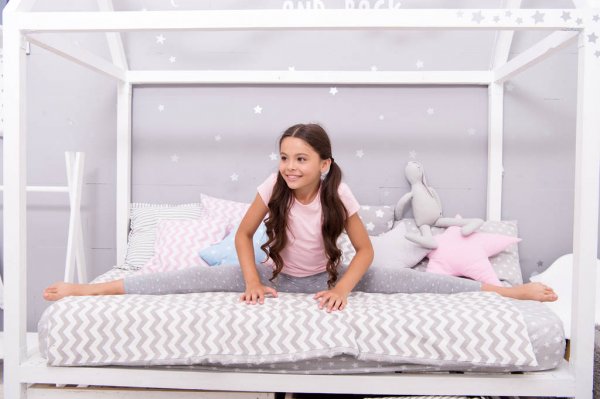
The same principle applies to their bed; soon, they'll outgrow their single beds, necessitating another important decision about their sleeping arrangements.
Although it's not strictly necessary, nowadays, children increasingly choose double beds rather than single beds, which is a preference you'll likely have to consider and potentially accommodate.
Fortunately, if they find them more comfortable and suitable for their needs, double beds may prove to be a good investment for the future, serving them well through their teenage years and potentially into young adulthood.
Children nowadays are choosing double beds rather than single beds, reflecting a broader trend in modern living where personal space and comfort are increasingly prioritised..
It's not as if a double bed will cause significant financial strain on your budget. You can acquire a small double bed - which sits comfortably between a single and a standard double in terms of size - for a mere £112, representing just a £13 increase from the cost of a regular single bed.
When you analyse this investment from a long-term perspective, you'll be gaining numerous additional years of comfortable sleep for what amounts to less than a pound per year.
This minimal price difference makes it an incredibly cost-effective decision, especially considering the enhanced comfort and versatility a larger bed provides.
When it comes to couples sharing a bed, the fundamental consideration ultimately boils down to the amount of personal space each person requires. While this may seem like an obvious factor to consider, it's surprising how many people overlook this crucial aspect when attempting to maximise their bedroom space.
Some couples make the unfortunate mistake of compromising on sleeping space to accommodate a smaller bed, which is absolutely counterproductive to achieving quality rest.
While romantic intimacy and physical closeness are wonderful aspects of a relationship - and you might indeed be the most affectionate couple in existence - that loving sentiment can quickly dissipate when you're constantly disturbing each other's sleep with unconscious movements throughout the night.

The reality is that our patience and consideration for our partner's comfort tend to diminish significantly at 3 am compared to when we're settling in at 10 pm, making adequate personal space essential for maintaining both relationship harmony and sleep quality.
For couples seeking the ideal sleeping arrangement, either a King Size Bed or a Super King Size Bed should be the primary consideration. These larger options provide substantially more space than a standard double bed and represent a worthwhile investment in your sleep quality and overall well-being.
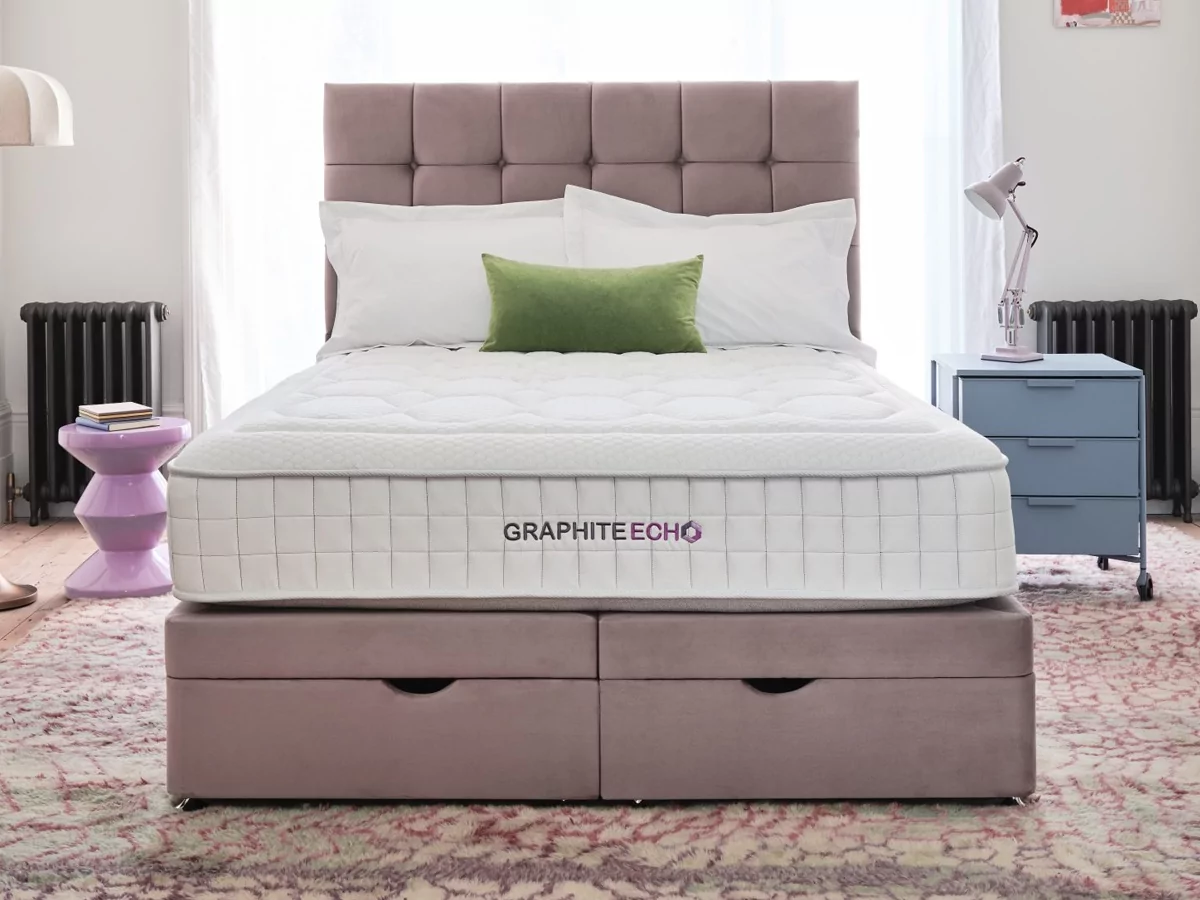
The additional space allows both partners to maintain their preferred sleeping positions without encroaching on each other's comfort zones, leading to more restful nights and more harmonious mornings.
When you carefully consider the benefits, the slightly higher initial investment delivers exceptional value in terms of comfort and space. With prices beginning at £185, these larger options present an unmatched combination of practicality and comfort.
Therefore, rather than constraining yourselves in a smaller bed, embrace the opportunity to spread out and enjoy truly restorative sleep. The extra investment in a larger bed size can significantly impact your daily life, as quality sleep forms the foundation of good health and relationship satisfaction.
There are numerous compelling reasons to consider a King-size bed if your bedroom dimensions can accommodate one. These benefits extend beyond mere comfort, encompassing practical advantages that can enhance various aspects of your daily life and family dynamics.
Extra Comfort
The enhanced dimensions in both width and length become immediately apparent when you stretch out your limbs, contributing to a notably superior quality of sleep. Scientific research has shown that the average person makes between 60-70 position changes during a typical night's sleep.
The expanded surface area of a King-size bed allows for these natural movements without disturbing your partner's rest, providing ample space for two adults to sleep comfortably.
This additional space can even accommodate a third person when necessary, making it particularly practical for families with young children.
Enough Room for The Family
For households with children, a King-size bed serves as an ideal gathering space for family bonding and relaxation during cosy weekend moments. It creates the perfect setting for enjoying family entertainment, such as watching films together or sharing precious moments of connection.
The generous dimensions make it an excellent environment for bedtime storytelling sessions, allowing the whole family to gather comfortably without feeling cramped. Additionally, many parents are familiar with the common occurrence of children seeking comfort in their parents' bed during the night.
Having sufficient space ensures that these occasional night-time visits don't result in disrupted sleep for anyone, allowing the family to maintain healthy sleep patterns even when sharing the sleeping space.
It fits nicely in the Main Bedroom
The aesthetic and functional harmony of your bedroom furniture arrangement is crucial for creating a welcoming and practical space. In primary bedrooms, particularly, you'll want to create that impressive visual impact that makes the room feel special.
A King-size bed naturally commands attention and can serve as a stunning focal point for your bedroom design. The variety of available styles and colour options allows you to select a bed that perfectly complements your existing décor while maintaining its position as the centrepiece of your bedroom sanctuary.
Health Conditions
If you or your partner experiences chronic health conditions such as back pain, arthritis, or persistent muscular discomfort, the impact on sleep quality can be significant and far-reaching.
These conditions often necessitate frequent position changes throughout the night, leading to restless sleep patterns that can affect both partners.
The continuous movement and repositioning not only disturb the person experiencing the discomfort but can also significantly impact their partner's sleep quality, creating a cycle of disrupted rest that affects both individuals' well-being and daily functioning.
The relationship between physical discomfort and sleep quality is particularly complex, as pain can make it challenging to find and maintain comfortable sleeping positions.
This often results in a pattern of constant adjustments and movements throughout the night, which can be especially problematic in smaller beds where space is limited.
The restricted movement area in smaller beds can exacerbate the situation, as individuals may feel constrained in their attempts to find relief from their discomfort.
To address these challenges effectively, investing in a larger bed becomes not just a luxury but a practical necessity.

A more spacious sleeping surface provides the essential room needed for natural movement and position adjustments without causing disturbance to your sleeping partner.
This additional space allows individuals with health conditions to seek comfort through various sleeping positions while maintaining a respectful distance that prevents their movements from affecting their partner's sleep quality.
The optimal bed size for solo sleepers can vary significantly based on individual preferences, sleeping habits, and specific requirements. Several factors should be carefully considered when making this important decision, as your choice will directly impact your sleep quality and overall well-being.
Standard single: For many solo sleepers, a standard single bed proves to be an entirely adequate solution. This size is particularly well-suited to individuals who maintain relatively static sleeping positions throughout the night and prefer a more contained sleeping space.
It's also an excellent choice for those working with limited bedroom dimensions or those who prioritise maximising their available floor space. The compact nature of a single bed makes it an efficient option for smaller rooms while still providing comfortable sleeping arrangements for many individuals.
Small Double: The small double bed represents an excellent middle-ground option, offering additional space for movement without requiring the same room footprint as larger alternatives. This size is particularly beneficial for those who tend to be more active sleepers, requiring extra space for natural position changes throughout the night.
The additional width provides ample room for comfortable sleeping positions while also accommodating any furry companions who might share your sleeping space. This size proves especially practical for pet owners, as it offers sufficient room for both human and animal comfort without compromising either's sleep quality.
Standard Double: The standard double bed presents several compelling advantages for solo sleepers, making it an increasingly popular choice among individuals who prioritise comfort and versatility. The generous dimensions provide significantly more space than the small double, offering a luxurious amount of room for single occupancy.
This additional space can be particularly beneficial for those who enjoy spreading out while sleeping or require extra room for health-related reasons. Furthermore, the standard double represents a forward-thinking investment, as it easily accommodates future lifestyle changes, whether that involves sharing the bed with a partner or creating additional space for pets.
The versatility of this size makes it a practical long-term choice that can adapt to changing circumstances while maintaining optimal comfort levels.
When embarking on the journey of selecting a new bed, the multitude of available options can appear daunting. The decision-making process involves carefully weighing various factors, including size specifications, design aesthetics, and mattress characteristics.
With the market continuously expanding and offering an ever-growing range of choices, determining the most suitable option requires thoughtful consideration of several key aspects.
One of the most crucial decisions in this process revolves around determining the appropriate bed size. This choice should be informed by careful consideration of several practical factors, including the number of intended users and the spatial constraints of the room where the bed will be placed.
These considerations play a vital role in ensuring that your selection not only meets your immediate needs but also provides long-term satisfaction.
In the context of UK households, the double bed has emerged as the predominant choice, with standard dimensions measuring 135cm in width by 190cm in length (equivalent to 4 ft 6" by 6 ft 3").
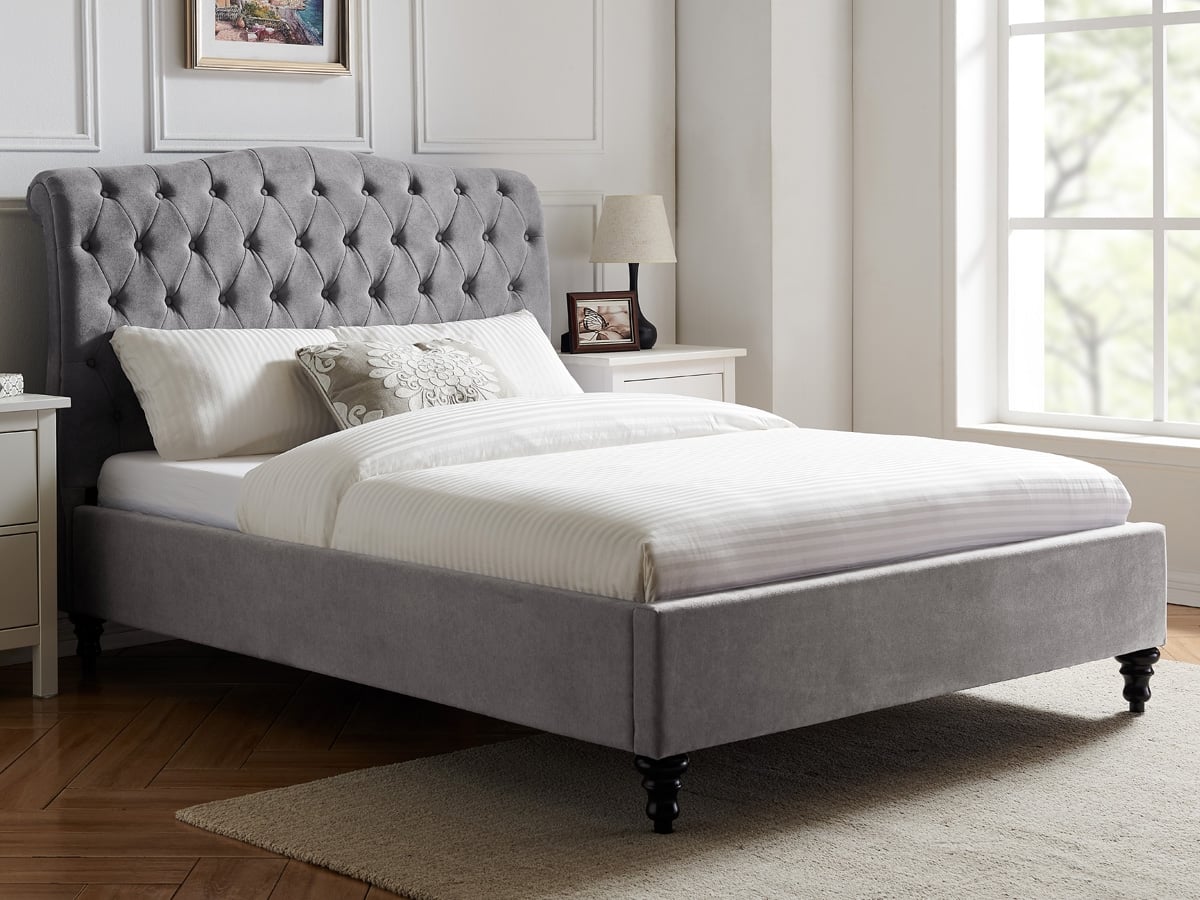
Understanding the factors contributing to this widespread popularity can provide valuable insights for those currently navigating their bed selection process.
The double bed's enduring popularity can be attributed to its exceptional versatility and practical dimensions. It presents an ideal solution for couples who share average-sized bedrooms, offering a comfortable sleeping arrangement that balances space efficiency with adequate room for two adults.
This size proves particularly advantageous in typical UK bedroom dimensions, where it provides sufficient sleeping space without overwhelming the room's proportions.
For couples working with spatial constraints, the double bed offers a pragmatic solution that doesn't compromise on comfort. Unlike its larger counterparts, such as king-size options, it maintains a more modest footprint while still providing adequate space for two adults to sleep comfortably.
This makes it an especially sensible choice for those who need to balance the desire for comfortable sleeping arrangements with the practical limitations of their bedroom dimensions.
Many parents are increasingly gravitating towards double beds as the preferred choice for their growing children, a trend that reflects both practical considerations and forward-thinking planning. This decision becomes particularly logical when considering the rapid physical development children undergo during their formative years.
As youngsters approach adolescence, the limitations of a single bed become increasingly apparent, with their growing frames often extending beyond the bed's modest dimensions.
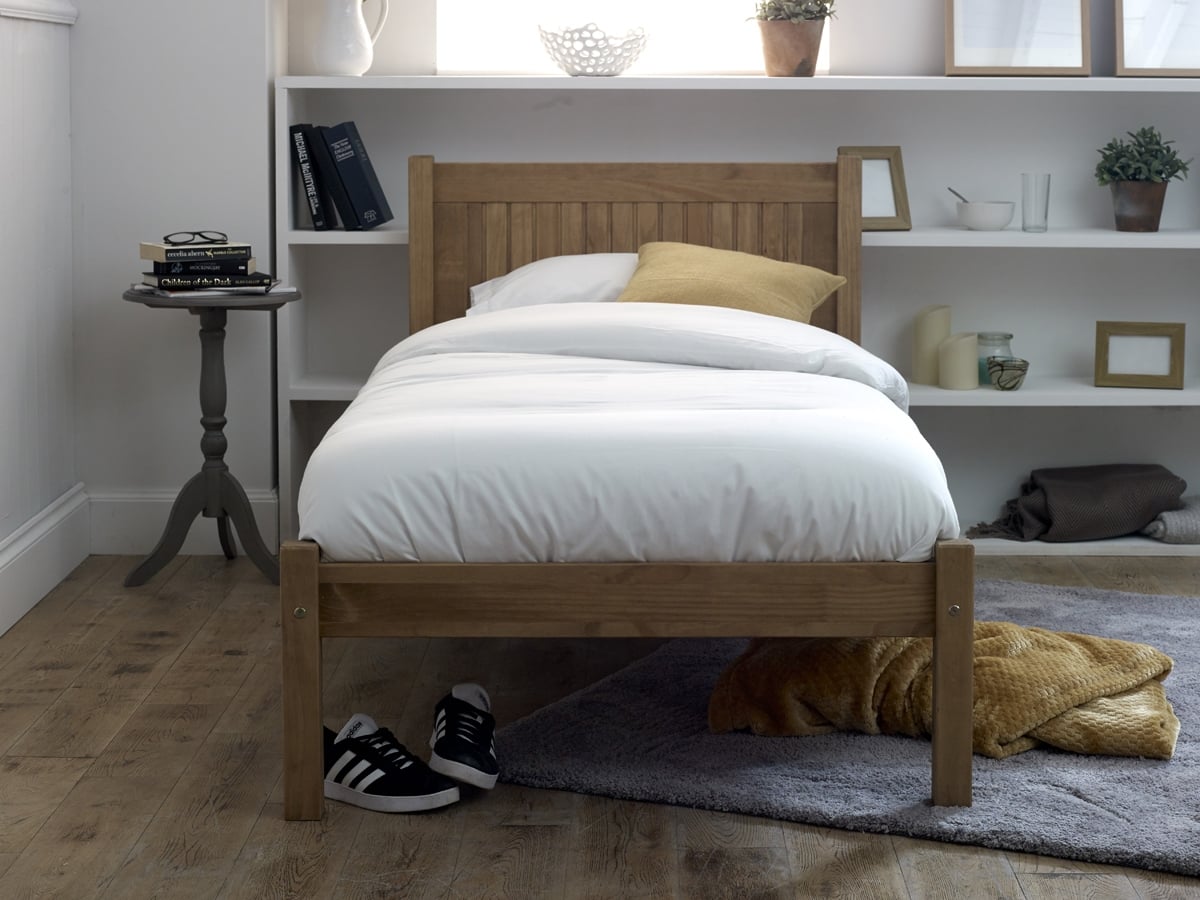
By making the investment in a double bed earlier rather than later, parents can implement a cost-effective solution that anticipates their child's future needs, especially considering that many children continue to occupy the same bedroom throughout their teenage years and beyond.
In contemporary housing developments, architectural designs often prioritise the quantity of rooms over their spatial dimensions, making double beds an increasingly practical solution for modern homes.
These beds have emerged as a versatile choice that effectively addresses the spatial constraints of more compact room designs. A double bed typically fits comfortably within these modest dimensions whilst providing adequate space for various usage scenarios.
This adaptability makes it an ideal choice whether the bed is intended for couples sharing intimate space, growing children and teenagers requiring additional room, occasional guests seeking comfortable accommodation, or individual sleepers who appreciate the luxury of extra space during their rest.
The widespread appeal of the traditional double bed becomes readily apparent when considering these numerous advantages. Its dimensions strike an optimal balance between providing generous sleeping space and maintaining practical room proportions, making it a consistently popular choice among consumers.
The double bed's enduring popularity can be attributed to its remarkable ability to accommodate diverse needs while remaining spatially efficient, a combination that proves particularly valuable in contemporary living situations.
For individuals of larger stature or those exceeding six feet in height, the consideration of a king size bed becomes increasingly relevant, provided the room dimensions can accommodate this larger option.
This recommendation stems from the understanding that taller or heavier individuals often require additional space to achieve optimal comfort during sleep.
The extra length and width offered by a king size bed can significantly enhance sleep quality for these individuals, allowing for more natural movement and comfortable positioning throughout the night.
The decision between a double and king size bed should ultimately be guided by a careful assessment of individual needs, room dimensions, and practical considerations.
While the double bed remains the most versatile and popular choice for many households, the importance of selecting a bed size that adequately addresses specific physical requirements cannot be overstated.
This thoughtful approach to bed selection ensures that the chosen option provides the necessary comfort and support for quality rest, regardless of individual circumstances.