


403 Forbidden
ERR_WEB_NGX_403
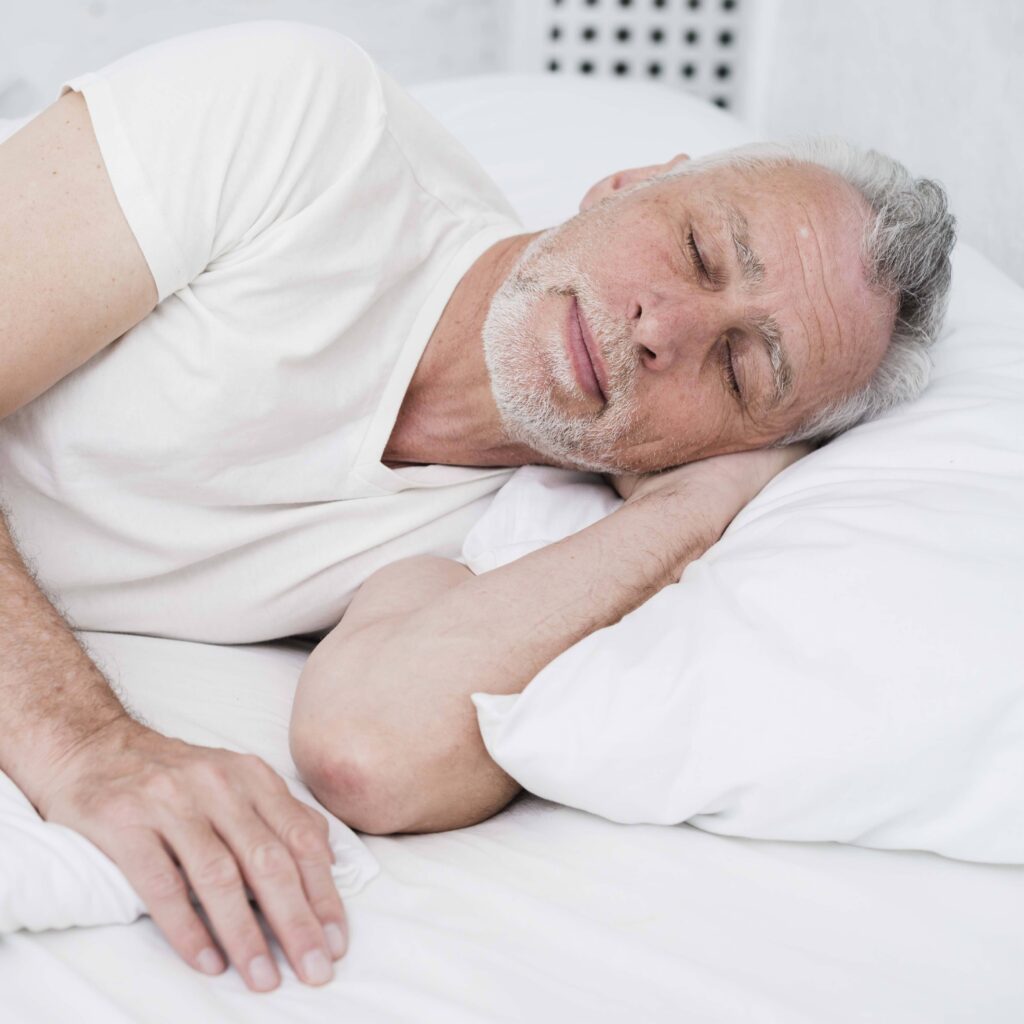
As you age, you feel more aches and pains because your muscle fibres become less dense and more injury-prone. Waking up with aches is particularly frustrating because it sets you up for a day of discomfort and poor mobility.
A softer mattress can help by giving your body something soft to squish into, reducing pressure on your muscles and joints. However, too soft a mattress can make you ache more by not supporting your spine and pelvis.
This article will help you choose the right mattress to reduce aches and pains.
Softer mattresses are better for older people, but you don’t want them too soft. We recommend medium-soft. Medium-soft mattresses have plusher (thicker) layers of cushioning than medium mattresses but still maintain good support. You sink into them a little more without sacrificing support.
Avoid firm and medium-firm mattresses if you get aches and pains while sleeping because they can aggravate muscle soreness.
Orthopaedic mattresses are often incorrectly recommended to older people. These mattresses are very firm with hardly any cushioning, designed to keep the spine in a neutral position, and they are too hard for most people.
You should only get an orthopaedic mattress if you have a back injury that requires one, and your doctor recommends one; otherwise, you should avoid them.
Hard mattresses are supportive and work for many people. Still, when they are overly firm and stiff, they put extra pressure on the tailbone, pelvis and shoulders, which causes body aches and can aggravate injuries.
If you have a hard mattress and wake up with aches and pains, switching to a softer mattress could alleviate your problems.
Contrary to popular belief, pure foam mattresses such as memory foam and latex foam are relatively dense, so they don’t provide the softest sleeping experience (for example, memory foam mattresses are typically medium to medium-firm).

For the softest sleep, you want a sprung or hybrid mattress. Sprung mattresses have coil springs (a bed of interlocked springs) or pocket springs (individual springs sewn into pockets) with layers of foam and cushioning.
Hybrid mattresses have a compact spring system with more layers of foam, creating a less bouncy and more squishy mattress.
Here are some of the signs your mattress is too firm:
The last point is crucial – if you sleep better on a softer mattress or even a softer couch, this is all the answer you need to get a new mattress.
Medium-soft mattresses are best for side sleepers and front sleepers. A medium mattress will provide more support if you sleep on your back. However, most people sleep in several positions at night, so don’t worry too much.
When choosing a softer mattress, medium-soft is the limit for support and cushioning. But what about a medium mattress?
Medium mattresses are the best for most people, delivering a perfectly balanced ratio of support and cushioning. In comparison, medium-soft mattresses have more cushioning, with a more pliable support layer.
For older people, medium-soft is often better because it reduces pressure on the spine, tailbone, pelvis, muscles and joints. However, a medium firmness is better if you have a bad back and need support. We recommend giving both a try!
A softer mattress can help you sleep better as you age by reducing the aches and pains associated with a hard mattress. If you sleep better on softer surfaces, upgrading to a softer mattress could transform your comfort levels.