


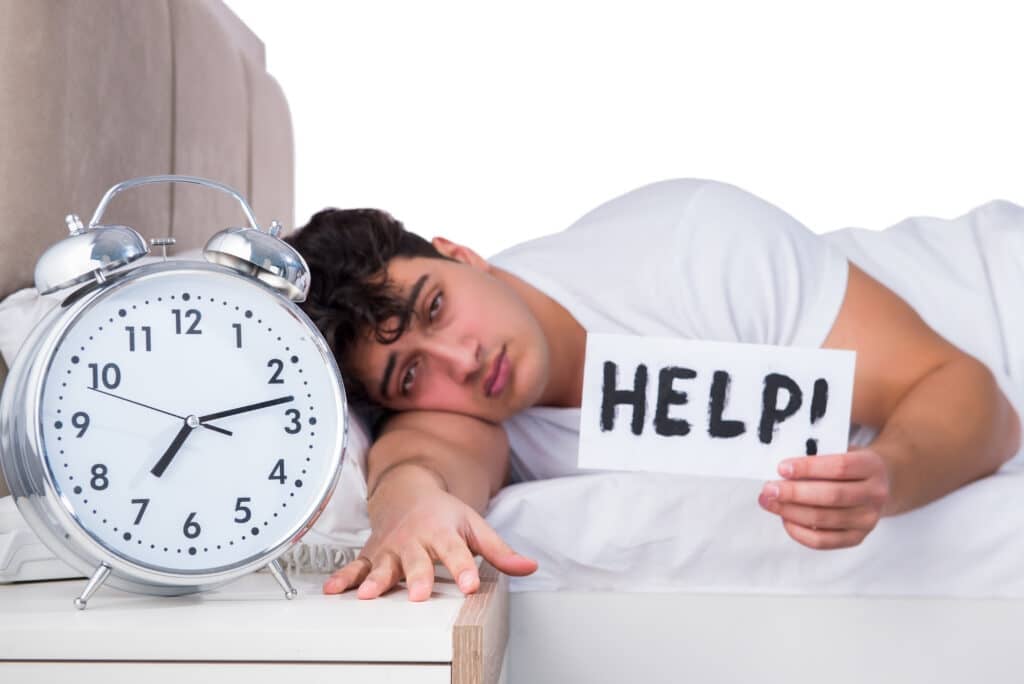
If you wake up in the middle of the night and can't seem to fall back asleep, here are a few strategies on how to go back to sleep that may help you learn how to go back to sleep quickly:
- Relaxation Techniques:
- Deep Breathing: Practice slow, deep breaths, focusing on your breath as it enters and exits your body.
- Progressive Muscle Relaxation: Tense and relax different muscle groups in your body, starting with your toes and working your way up to your head.
- Visualisation: Imagine a peaceful and calming scene, such as a beach or a forest.
- Create a Relaxing Environment:
- Darkness: Make sure your room is dark. Use blackout curtains or an eye mask to block out any light.
- Quiet: Minimise noise distractions. Use earplugs or a white noise machine to block out disruptive sounds.
- Temperature: Keep your room cool and comfortable.
- Avoid Stimulants:
- Avoid Screens: The blue light emitted from electronic devices can interfere with sleep. Avoid screens for at least an hour before bed.
- Limit Fluids: Avoid drinking too much fluid before bed to prevent nighttime bathroom trips.
- Get Out of Bed (if necessary):
- If you can't fall asleep within 20 minutes, get out of bed. Go to another room and do a quiet, relaxing activity, such as reading or listening to calming music.
- Return to bed when you feel sleepy.
- Rule Out Medical Conditions:
- If you consistently have trouble sleeping, consult a doctor to rule out any underlying medical conditions that may be affecting your sleep.
How to Go Back to Sleep After Night Terrors

Night terrors are a type of sleep disorder characterized by intense fear and panic during sleep. They are different from nightmares in that they occur during non-REM sleep, often in the first few hours of sleep. Learning how to go back to sleep after a night terror can be crucial for restful nights.
Symptoms of night terrors include:
When you experience night terrors, practising how to go back to sleep can be a challenge, but employing calming techniques can aid in this process.
- Sudden awakening from sleep
- Intense fear or terror
- Screaming or crying
- Thrashing or flailing
- Sweating
- Rapid heart rate
- Confusion or disorientation
Causes of night terrors are not fully understood, but may include:
- Stress or anxiety
- Sleep deprivation
- Fever or illness
- Certain medications
How to stop night terrors:
- Maintain a regular sleep schedule: Go to bed and wake up at the same time each day, even on weekends.
- Create a relaxing bedtime routine: Wind down before bed with a warm bath, reading, or listening to calming music.
- Avoid caffeine and alcohol: These substances can interfere with sleep.
- Get regular exercise: Physical activity can help improve sleep quality, but avoid strenuous exercise close to bedtime.
- Practice relaxation techniques: Deep breathing, meditation, and yoga can help reduce stress and promote relaxation.
Sleep paralysis
Sleep paralysis is a temporary inability to move or speak that occurs when waking up or falling asleep. During an episode, you might feel conscious but unable to move or speak for a few seconds up to a few minutes. You might also feel pressure or a sense of choking, or have hallucinations.
Causes of Sleep Paralysis
- Disturbed REM sleep: Sleep paralysis is thought to be linked to a disturbed rapid eye movement (REM) sleep cycle. During REM sleep, your brain paralyzes your muscles so you don't act out your dreams. In sleep paralysis, this paralysis persists even though you are awake or partially awake.
- Other sleep disorders: Sleep paralysis can sometimes be associated with other sleep disorders, such as narcolepsy, insomnia, and sleep apnea.
- Mental health conditions: Certain mental health conditions, such as anxiety, depression, and post-traumatic stress disorder (PTSD), may increase the risk of sleep paralysis.
- Substance use: Using alcohol or recreational drugs can also increase the risk of sleep paralysis.
Tips to Reduce the Risk of Sleep Paralysis
Relaxation techniques: Practicing relaxation techniques such as deep breathing or meditation may also help.
Maintain a regular sleep schedule: Go to bed and wake up at the same time each day, even on weekends.
Improve sleep hygiene: Create a relaxing bedtime routine, avoid caffeine and alcohol before bed, and make sure your bedroom is dark, quiet, and cool.
Address underlying conditions: If you have other sleep disorders or mental health conditions, treating those conditions may help reduce the frequency of sleep paralysis episodes.
Sleep apps
Here are a few popular and highly-rated options of sleep apps with free versions that offer helpful features to help you get back to sleep:
- Calm: Known for its guided meditations, sleep stories, and relaxing soundscapes. The free version offers a limited selection but is still a great starting point.
- Headspace: Another popular meditation app with a focus on mindfulness. Their free version includes a few introductory meditations and sleepcasts.
- Pzizz: Uses psychoacoustic technology to generate unique soundscapes that can help you fall asleep and stay asleep. They offer a free trial with limited features.
Things to Consider When Choosing:
- Your Needs: Do you primarily need help falling asleep, staying asleep, or both?
- Features: Look for features like guided meditations, sleep stories, white noise generators, and sleep tracking.
- User Interface: Choose an app with a user-friendly interface that's easy to navigate.