


Sleep Apnea and Asthma Symptoms
Sleep is inherently linked to our health, with the human body performing nocturnal maintenance that is impossible while awake.
For example, sleep is necessary for the immune system and metabolism regulation, and it is the only time the body can regenerate cells rapidly.
Asthma and sleep have a bi-directional relationship, with lower sleep frequency associated with asthma attacks and asthma attacks with poor sleep.
An analysis of National Health Nutrition Examination Survey data found those with asthma are significantly more likely to sleep less than 6 hours. This creates a solid link that reduced sleep frequency can make asthma worse.
Asthma and sleep – the link
The biggest asthma triggers include smoke, dust mites, outdoor air pollution, pollen, chemical cleaning, and disinfection. Based on recent scientific evidence, sleep is not considered a significant trigger, but a rethink is needed.
66% of people with asthma suffer from poor sleep, leading to an increased risk of asthma attacks. People with asthma are also more likely to have obstructive sleep apnea and suffer from excessive daytime sleepiness.
Research into insomnia and asthma found that those with insomnia have a 2.4-fold increased risk of not having well-controlled asthma and a 1.5-fold increased risk for asthma-related healthcare utilisation.
Another study on asthma and insomnia found that thirty-seven percent of asthma patients have clinically significant insomnia.
Additional research in 2020 found that too little and occasionally too much sleep can negatively impact adults with asthma.
The bottom line is that sleep and asthma are inherently linked, albeit in a modest way. You are unlikely to have serious asthma complications after one night of poor sleep, but poor sleep could worsen your condition over time.
How about nocturnal asthma?
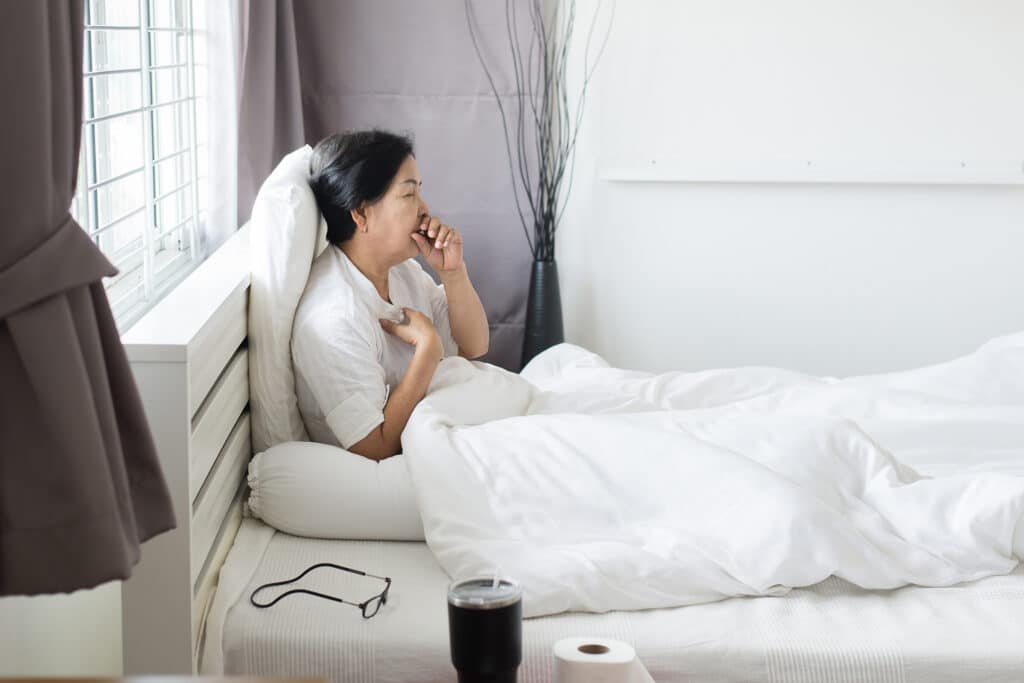
Nocturnal asthma is a curious condition where asthma symptoms flare up or get worse at night, with seemingly no reason other than the time.
The latest statistics show 75% of people with asthma are woken at night by asthma symptoms at least once per week.
The most common reason for nocturnal asthma is pet allergies and indoor air quality, especially when pets are allowed in the bedroom.
Other triggers include dust mites, residual smoke, medications that tighten the airway, cold temperatures, and high humidity.
You have nocturnal asthma if you wake up at night with asthma symptoms. The solution is to find the trigger and remove it. Most problems are from low indoor air quality, which has an easy solution – an indoor air purifier.
It is common for asthma symptoms to come on at night, so we recommend keeping a reliever inhaler close by and taking your preventer before bed. You can also ask your doctor about Montelukast, a tablet for asthma.
Asthma prevention
Asthma does not have to rule your life. There are several reliable ways to prevent asthma in and outside your home:
- Take your preventer inhaler twice per day.
- Recognise asthma symptoms early and take your reliever.
- Consider 'add-on' medication like Montelukast tablets.
- Find your most common triggers (e.g., pets, cleaning products).
- Sleep for seven to eight hours every night.
- Recognise your physical limits.
- Monitor your heart rate with a fitness tracker or smartwatch.
- Don't panic if you start experiencing symptoms.
- If you have an asthma attack and do not have your reliever inhaler, stop what you are doing, sit upright, remain calm, breathe deeply and slowly, and, if possible, move into clean air in an air-conditioned environment. Call for help.
Summing up
Poor quality sleep can exacerbate asthma symptoms, and an unhealthy sleep environment can also trigger symptoms and make asthma worse.
You should remove common asthma triggers like chemical cleaners, non-hypoallergenic bedding, pets, and smoke from your bedroom. You should also try improving your sleep quality with these ten sleep tips.
Lastly, if your asthma worsens, speak to your doctor as soon as possible because they might prescribe more vital medication to manage your symptoms.