



Table of Contents
Bedroom Furniture Layout
Your bedroom furniture layout can make or break the quality of your sleep and overall comfort. You spend roughly a third of your life in this space, so getting the arrangement right isn't just about aesthetics—it's important for your wellbeing.
The perfect bedroom furniture layout ideas require careful planning, whether you're working with a compact space or a generous master suite.
The right bedroom arrangement ideas can revolutionize your room from cramped to cosy or chaotic to calm. This applies to everything from small bedroom furniture layout solutions to master bedroom furniture layout ideas. Here are 17 bedroom layout ideas that will help you create your perfect sanctuary.
Bed Centred on the Longest Wall
Layout Description
The most common bedroom furniture layout worldwide places your bed in the center of the longest uninterrupted wall. This arrangement puts the headboard against the main wall with equal space on either side. Matching nightstands fit on both sides and create visual symmetry.
The bed becomes the room's focal point, with the solid wall serving as a backdrop for artwork or lighting above the headboard.
Key Benefits
This bedroom layout idea delivers several advantages. Couples gain equal access to both sides without climbing over each other during the night. The symmetrical arrangement with flanking nightstands produces a balanced, photogenic appearance that appeals to most homeowners.
Polls show approximately 75% of people in the UK, Russia, the United States and several other countries favour this bed position.
On top of that, the solid wall behind your head provides psychological security. This matches feng shui principles that recommend a stable backing to sleep well. You can see the door whilst in bed. This creates what's known as the 'command position' without positioning your head along the same wall as the entrance.
Ideal Room Types
Rectangular bedrooms suit this master bedroom furniture layout ideas best. The longer wall provides adequate space for the bed and nightstands. Square rooms also work well, as the central axis placement creates natural balance. You'll need a minimum wall width of 12'4" for king-sized beds with 30" nightstands, or 10'4" for queen-sized arrangements.
Implementation Guide
Measure your longest wall to confirm it accommodates your bed plus nightstands with breathing room. Leave at least 70cm on each side to move comfortably. Position the bed so you have a clear view of the door but avoid direct alignment where your feet point straight at the entrance. Install a solid headboard to reinforce stability and complete the look with matching bedside tables and lamps to create symmetry.
Off-Centre Bed Aligned with Wardrobe
Layout Description
Off-centre bed placement paired with wardrobe line up creates a cohesive bedroom furniture layout when architectural features prevent traditional centring.
This arrangement positions the bed asymmetrically on one wall while it lines up visually with a wardrobe unit on the same or adjacent wall.
Fitted wardrobes flanking the bed produce a built-in appearance that disguises the off-centre positioning, especially when you have overbed storage units that frame the sleeping area. The wardrobe becomes part of the design composition rather than an afterthought.
Key Benefits
This bedroom layout idea solves practical constraints while it maintains visual harmony. Off-centre placement isn't a design faux pas, especially when executed with intention through coordinated wardrobe positioning. The arrangement frees floor space to circulate, which proves useful when multiple doors (closet, bathroom, entrance) dictate furniture placement.
Asymmetrical balance achieves stability through equivalence rather than equality. Visual weight feels balanced even when elements differ in form. Corner wardrobe units with integrated bedside tables maximise storage in compact spaces and eliminate the need for standalone furniture that clutters limited floor area.
Ideal Room Types
Rooms with awkward window placement, angled walls, or multiple doorways benefit most from this bedroom arrangement ideas approach. Spaces built in the 1990s and early 2000s with unconventional architectural planning often require creative furniture placement solutions.
Small bedrooms gain particular advantage, as fitted wardrobes reaching floor to ceiling maximise vertical storage without increasing the room's footprint.
Implementation Guide
Audit your wardrobe needs before you select units and think about hanging space versus drawer requirements. Measure clearance zones with care: hinged-door wardrobes require front space that's substantial, while sliding-door models work better in tight areas.
Leave 70-90cm for primary walkways. Position wardrobes to avoid blocking natural light. Ensure adequate standing room to view your reflection if you use mirrored wardrobe doors. Balance the off-centre bed with matching materials or finishes between the bed surround and wardrobe to create intentional cohesion.
Small Bedroom Furniture Layout with Storage Bed
Layout Description
Storage beds transform underutilised space beneath your mattress into functional compartments and eliminate the 'dead space' typical of standard bed frames.
Ottoman beds employ hydraulic lift mechanisms that raise the entire mattress platform and reveal full-length storage underneath.

Divan beds feature built-in drawers along the sides or foot and offer 2-drawer or 4-drawer configurations. Platform beds incorporate cubbies and shelves within the frame structure, sometimes with integrated desks.
This small bedroom furniture layout prioritises vertical storage capacity and maintains a compact floor footprint.
Key Benefits
Newly built UK homes have decreased in size by 20% in the last 40 years. This makes storage beds especially valuable. You can potentially eliminate bulky wardrobes or chest of drawers when you store items beneath your bed.
The freed floor space makes bedrooms appear larger. Beautifully fitted bed storage can provide on average 40% more space than standard one-size-fits-all designs.
Ottoman beds suit storing bulky seasonal items like duvets and winter clothing, whilst divan drawers work better for daily-access items such as books or clothes. Everything remains dust-free and organised compared to exposed under-bed bins.
Ideal Room Types
Compact bedrooms without adequate closet space benefit most from this bedroom arrangement ideas approach. Single storage beds suit children's rooms or guest bedrooms.
Small doubles fit modest master bedrooms, whilst king and super king sizes provide extensive storage for larger households. Rooms with slanted ceilings should opt for side-opening ottomans rather than end-lift models.
Implementation Guide
Measure before purchasing. Ottoman beds require at least 60cm clearance on the opening side, plus adequate ceiling height for the lift mechanism.
Divan drawers need similar side clearance to open. Organise contents using labelled storage boxes, roll bulky bedding rather than folding, and position frequently used items near the access point.

Zoned Master Bedroom with Separate Dressing Area
Layout Description
Larger bedrooms allow for zoning, an interior design technique that creates distinct functional areas without building solid walls.
This master bedroom furniture layout ideas approach uses partitions to separate a dressing area from the sleeping zone.
The result is an open-plan design that exudes sophistication. Partitions vary from floor-to-ceiling dividing walls to partial height screens, floating walls positioned behind the bed, or even wardrobe units acting as architectural dividers.
The dressing area can function as a walk-through space or feature its own entry point. Designers reposition the bed by turning it 90 degrees, which creates space to section off a dressing zone behind a false wall.
Key Benefits
When you remove wardrobe clutter from the sleeping area, your bedroom transforms into a tranquil retreat focused on rest.
A separate dressing room provides dedicated space for clothing organization, accessories, and getting ready without interruptions.
This bedroom layout idea delivers better efficiency when preparing for work or social events. Dressing rooms increase property value by a lot by offering a desirable luxury feature that attracts potential buyers. The setup evokes high-rise apartment living and creates smooth flow from bed to clothing collection.
Ideal Room Types
This bedroom arrangement ideas suits generously proportioned master bedrooms with enough square footage to accommodate both zones. Rooms with unused spare space, awkward L-shaped layouts, or areas above garages work especially well. Even modest-sized bedrooms can incorporate a dressing zone if a partition wall is installed.
Implementation Guide
Assess your available space and decide between full partitions for complete separation or partial dividers that maintain light flow. Position wardrobes with designated sections for different clothing categories and accessories. Include a full-length mirror and seating area for trying on outfits. Install layered lighting that combines ambient fixtures with task lighting near mirrors.
Bed Positioned for Maximum Natural Light
Layout Description
A bed near or in front of windows maximizes natural light exposure throughout the day. This bedroom furniture layout positions the headboard against a window wall or next to windows. Morning sunlight filters into the sleeping area.
Beds can sit centered on a window wall, offset to one side, or turned sideways to preserve the window's full visual and capture light. Low-profile beds work well here. The window frames the bed and acts as a visual headboard.
Key Benefits
Natural light creates the strongest advantage of this bedroom arrangement ideas approach. Morning sunlight produces gentle wake-up conditions and makes bedrooms feel larger and brighter.
Rooms with scenic views become more enjoyable when beds face toward these outlooks. Natural light boosts your mood and balances your circadian rhythm.
This benefits physical and mental wellbeing. Mirrored surfaces positioned well bounce sunlight throughout your space. They encourage light appreciation and support sleep hygiene.
Ideal Room Types
Small bedroom furniture layout configurations benefit from window-adjacent bed placement. This prevents furniture from blocking natural light sources.
Rooms with double-corner windows allow you to position the bed in front of one and maintain views through the other. Spaces with limited solid wall options or awkward architectural features often need this arrangement.
Implementation Guide
Select sheer curtains for privacy and natural light penetration. Hang curtains higher than the window frame to avoid a blocked appearance.
Low beds allow more light passage over the frame. If your windowsill sits at the right height, use it as a bedside table. For smaller windows, extend curtains wider than the bed itself to create visual width.
Floating Wall Behind Bed for Drama
Layout Description
Wall-mounted headboards attach to the wall rather than the bed frame and create a striking floating appearance that reshapes the wall behind your bed into a dramatic focal point.
This bedroom furniture layout approach involves securing upholstered panels, wooden slabs, or custom-designed structures to the wall using mounting hardware such as French cleats, Z-clips, or interlocking flush mount brackets.
The headboard appears to hover, positioned at your desired height whatever the bed placement.
Key Benefits
This bedroom layout idea eliminates the instability and noise associated with bed-mounted headboards and provides excellent design flexibility.
Fixing the headboard to the wall lets you adjust bed position or change the bed base without replacing the headboard.
The floating effect opens up floor space and creates an airier feel, especially valuable when you have compact bedrooms.
Materials ranging from wood panels to luxurious velvet or linen upholstery allow complete customization to match your decor style. Wall-mounted designs prove more budget-friendly than traditional frame-mounted options.
Ideal Room Types
Modern and contemporary bedrooms benefit most from this master bedroom furniture layout ideas approach, as the clean lines complement minimalist aesthetics. Small bedroom furniture layout configurations gain visual dimension from the floating effect.
Implementation Guide
Locate wall studs using a stud finder to mount securely. Install mounting hardware at your preferred height and arrange the headboard's centre with the mattress's top. Lift and position the headboard onto wall brackets.
Bedroom Layout Ideas with Reading Nook

Layout Description
Bedroom corners dedicated to reading nooks transform underutilised spaces into functional retreats. Alcoves, bay windows, and areas under eaves provide natural opportunities. Unused closets can be repurposed by removing doors.
Position a comfortable armchair or chaise lounge in your chosen spot and face it away from television distractions to maintain focus. Window seats offer the ideal setup and provide natural sunlight with outdoor views.
Key Benefits
Reading nooks address wellbeing by creating dedicated spaces to unwind, which proves vital for mental and physical health. These designated areas help your nervous system reset and provide screen-free relaxation.
These areas also solve practical design challenges by making empty corners purposeful and interesting. Books centralised in one location reduce household clutter and simplify book retrieval.
Ideal Room Types
This bedroom arrangement ideas approach suits spaces with architectural quirks that require thoughtful solutions. Bay windows, chimney breasts, and awkward corners become assets rather than obstacles. Small bedrooms benefit too, given that minimal space is enough to create cosy reading corners.
Implementation Guide
Select seating that matches how you relax, whether curled up or with legs draped over armrests. Add a side table for books and drinks, plus an ottoman for elevated comfort. Layer cushions and throws in tactile fabrics. T
ask lighting through floor lamps or sconces works well for evening reading, whilst natural light should be maximised during daytime. Plants boost mood and reduce stress.
TV Unit as Room Divider Layout
Layout Description
Freestanding TV units positioned perpendicular to walls define space without constructing permanent partitions. This bedroom furniture layout works by placing a TV-equipped divider between your sleeping area and another zone, such as a dressing area or home office.
Units feature integrated cable management systems, mounting brackets for flat-screen televisions, and rotating mechanisms that allow dual viewing from separate spaces.
The partial openness maintains an airy atmosphere while permitting light passage. Designs range from floor-to-ceiling installations to shallow cabinets with storage compartments, shelves, and closed cupboards on both sides.
Key Benefits
This bedroom arrangement approach works with your space, especially when flexibility proves essential. TV panels that rotate serve two rooms at once. To name just one example, they work for both a master bedroom and adjacent lounge area.
Storage components maximize functionality and provide shelving for plants, accessories, and media equipment.
Dividers maintain open-plan flow while creating privacy and zoning, unlike solid walls. The setup eliminates awkward TV placement questions and adds valuable storage capacity.
Ideal Room Types
Open-plan bedrooms, studio apartments, and master suites benefit most from this bedroom layout solution. Spaces that require multi-functional areas without sacrificing natural light flow suit this approach.
Implementation Guide
Plan cable management through floor outlets or ceiling feeds to enable smooth TV rotation. Select units with adequate storage matching your needs. Position dividers to allow comfortable viewing angles from both sides.

Minimalist Layout with Wall-Mounted Furniture
Layout Description
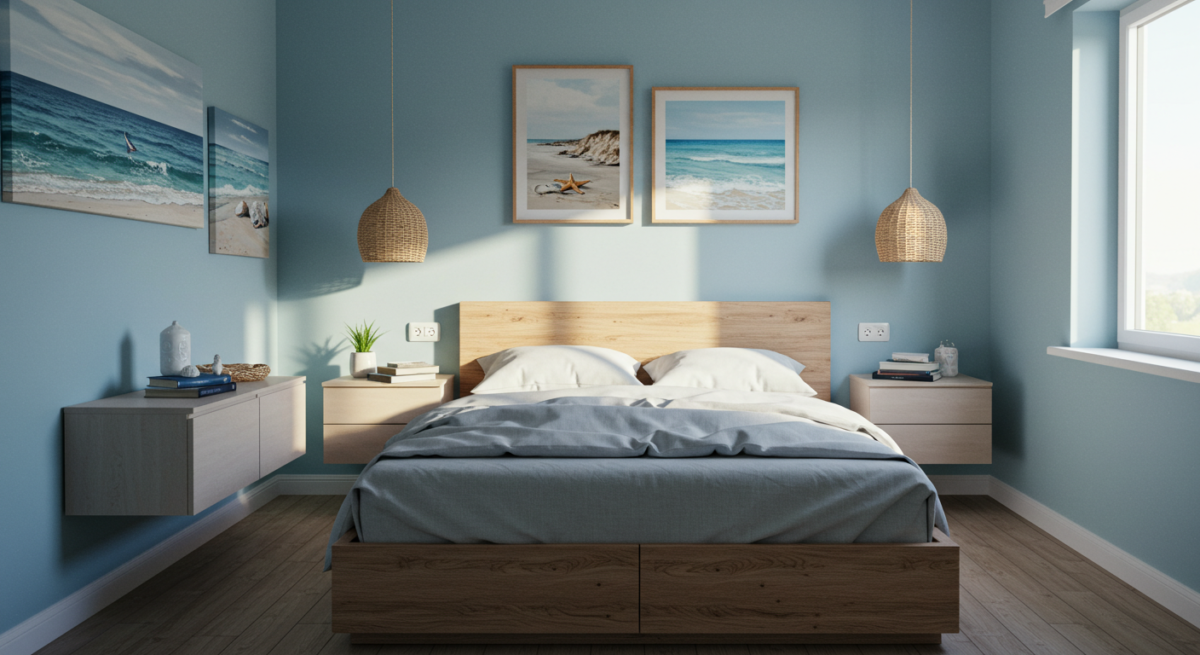
Wall-mounted furniture attaches to walls, creating a floating appearance that defines minimalist bedroom arrangement ideas. Floating beds suspend without visible legs or traditional frames. Wall-mounted nightstands eliminate floor contact.
Headboards fix to walls independently of bed frames. This bedroom furniture layout delivers clean lines and unobstructed floor visibility.
Key Benefits
Floating furniture frees floor space and makes rooms feel more spacious. The elevated design simplifies cleaning underneath without moving heavy pieces. Wall-mounted nightstands provide storage without cluttering limited floor area.
Low-profile beds create visual spaciousness by keeping sightlines open across rooms. This proves especially valuable for small bedroom furniture layout configurations.
The minimalist aesthetic produces clutter-free environments. Mounting furniture at customized heights improves accessibility and comfort.
Ideal Room Types
Modern and minimalist bedrooms benefit most from this bedroom layout ideas approach. Small apartments and compact rooms gain the most important advantage from the space-saving design. Studios where every floor inch counts perform well with this setup.
Implementation Guide
Choose pieces proportionate to your room size. Oversized floating furniture creates cramped feelings. Secure wall-mounted items using proper anchors and brackets rated to support furniture weight.
Position floating nightstands symmetrically on either side of beds.
Select modular wall-mounted storage in various sizes and configurations that match your requirements.
Bedroom with Freestanding Bathtub Feature
Layout Description
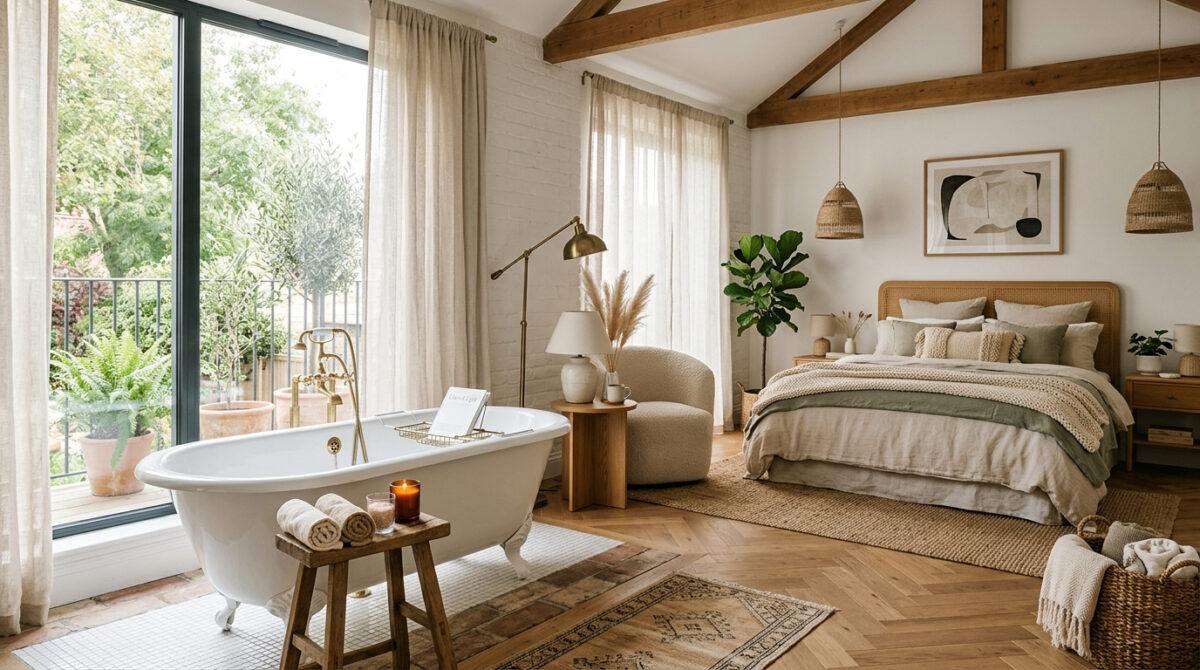
A freestanding bathtub in your bedroom recreates the luxury hotel experience at home. This bedroom furniture layout positions the tub at the end of the bed to maximize underutilized space, or near windows for views, or in corners for privacy. Dividing screens between bed and bath create defined zones.
This taps into broken-plan living trends rather than open layouts. Boutique hotels popularized this arrangement during the 1990s, reviving a concept traced back to the Middle Ages when lords bathed in their chambers.
Key Benefits
This bedroom arrangement ideas approach solves spatial constraints when en-suites lack room for both shower and bath. The setup delivers convenience and allows smooth transitions from bed to bath. It creates a serene self-care sanctuary separate from toilets and bathroom clutter.
Freestanding baths showcase beautiful designs that deserve centre stage positioning. Properties gain desirable luxury features that improve appeal, especially when you have countryside views or windows nearby.
Compact baths like The Albion Bath Co.'s range from 1200mm to 2000mm accommodate various room sizes.
Ideal Room Types
Large master bedrooms with adequate square footage suit this master bedroom furniture layout ideas best. Rooms lacking en-suite space benefit equally, as the tub provides an alternative luxury bathing solution. Mezzanine levels in bedrooms offer creative placement options when floor space proves limited.
Implementation Guide
Proper plumbing must be in place (floor-based supply rather than wall-mounted) and waterproof flooring using tiles, stone, or LVT instead of carpet.
Adequate ventilation through windows or extractor fans prevents condensation damage. Electrical outlets should be positioned away from splash zones. Privacy needs window treatments and bedroom door locks to consider.
Bedroom Arrangement Ideas for Narrow Rooms
Layout Description
Narrow bedrooms present arrangement challenges that require strategic furniture positioning rather than conventional centring.
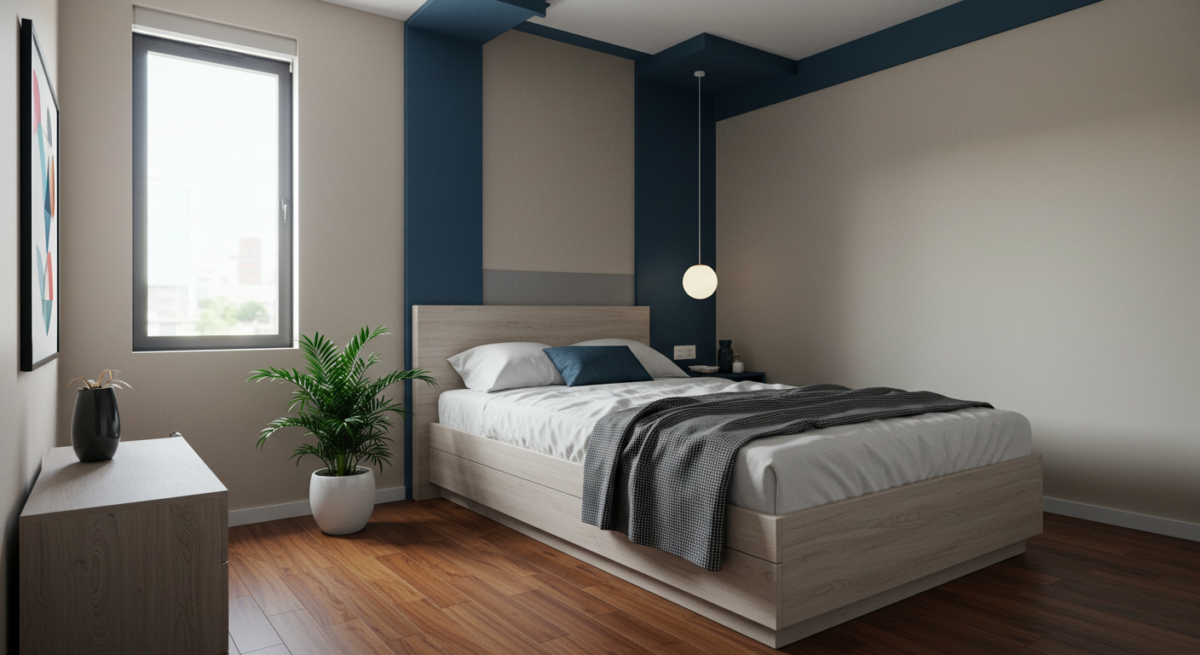
This bedroom furniture layout involves placing your bed lengthwise with the headboard against an end wall instead of a long wall, which prevents drawing attention to the room's narrow width.
You can divide the space into distinct sections and create functional zones to sleep, dress, and store items. Use furniture as natural barriers while you maintain flow. Open pathways running from the door to the opposite wall produce harmonious circulation, especially when you have doors that sit in corners.
Key Benefits
This bedroom arrangement ideas approach makes narrow spaces feel less cramped and more purposeful. Strategic bed rotation helps draw out the room's length visually.
Zoning techniques create multiple functional areas without solid partitions and make rooms feel larger. Vertical furniture choices like tall narrow dressers and floor-to-ceiling wardrobes maximise storage without increasing footprint.
Ideal Room Types
Long rectangular bedrooms with limited width benefit most from this small bedroom furniture layout strategy. Spaces where traditional centred bed placement creates awkward proportions suit this approach.
Implementation Guide
Leave approximately 50cm on each side of your bed to move comfortably. Position tall wardrobes opposite windows to avoid blocking natural light.
Select sliding-door wardrobes over hinged models to save clearance space. Paint longer walls in light colours and shorter walls darker to balance proportions.
Install mirrors opposite windows to reflect sunlight. Choose multi-functional pieces: desks doubling as nightstands or storage beds that eliminate bulky dressers.