



Table of Contents
Pattern mixing might feel daunting at first, but it's actually one of the most rewarding decorating skills you can master.
"A splash of leopard print, a few stripes, some florals – you don't have to choose your favourite any more; with some careful balancing you can have them all!" Whether you're wondering how to mix patterns or if it's even possible, there's a surprisingly simple approach. Design experts recommend a straightforward formula: combine three different prints – "one large-scale print, one medium and then one small."
Success comes down to following some key principles. The most important? "Anchoring the space with substantial, solid-coloured furnishings that provide a necessary visual rest." This creates balance and prevents your bedroom from feeling chaotic. Remember, "if you are going to go for mixed patterns in a bedroom, then you need to keep the rest of the space in good order."
Worried about getting it wrong? Start small with accent pieces and build your confidence as you discover just how exciting pattern mixing can be. Ready to create a beautifully layered bedroom that perfectly expresses your style?
Start with a pattern you love
Pick a hero fabric or wallpaper
Every successful bedroom pattern mix starts with one standout design that makes your heart sing. This is what designers call your "hero" pattern – and it should be something you absolutely adore.
Choose a medium to large-scale pattern with multiple colours as your starting point. Think bold florals, intricate toiles, or striking geometric designs that immediately catch your eye. Your hero pattern becomes the star of the show – the element visitors notice first when they step into your bedroom.
Don't second-guess yourself here. If a pattern speaks to you, trust that instinct. You'll be living with this choice, so it needs to be one you won't tire of quickly.
Build your colour scheme from this pattern
Here's where the magic happens. Your hero pattern becomes your personal colour palette roadmap, taking all the guesswork out of coordinating your room.
Look closely at your chosen pattern and pick out 4-5 key colours within it. These colours will form your entire bedroom's colour scheme, creating a cohesive look that feels intentional rather than accidental. When colours are pulled directly from your hero pattern, they're guaranteed to work beautifully together.
This approach makes decorating so much simpler – no more standing in paint aisles wondering what will work!
Use it as the anchor for the rest of the room
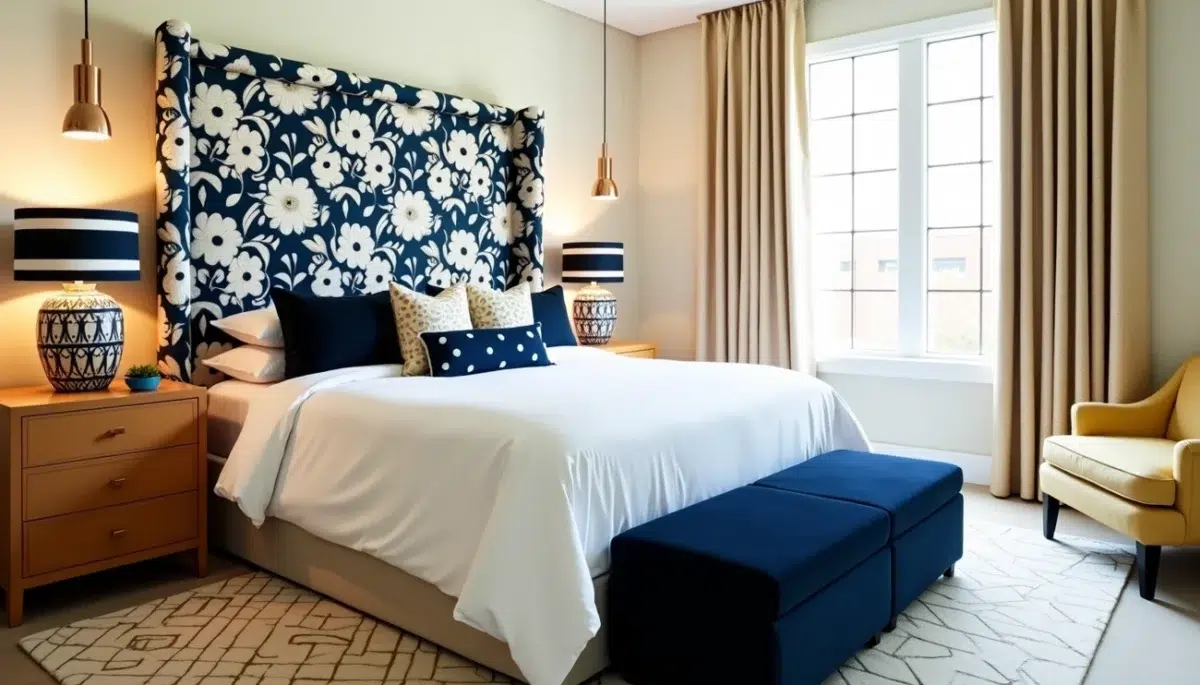
Your hero pattern deserves a place of honour. Consider featuring it prominently as curtains, a statement headboard, or even an accent wall behind your bed.
Think of your hero pattern as the lead actor, with all other patterns playing supporting roles. They should complement, not compete with your star performer. Place your hero pattern at major focal points like headboards or large windows where it can truly shine.
Once your anchor is in place, you can confidently introduce smaller supporting patterns on cushions, throws and accessories – all unified by those colours you've extracted from your hero piece.
The beauty of starting with one pattern you truly love? It gives you the confidence to mix patterns throughout your bedroom without second-guessing every decision.

How do you balance patterns with colour and solids?
Your hero pattern sets the stage, but it's how you handle colour that makes or breaks your bedroom design. Get this balance right, and you'll create a space that feels both exciting and restful.
Choose colours that work together
Start by picking 4-5 key colours from your hero pattern - these become your bedroom's colour palette. Interior experts suggest sticking to no more than three main colours plus neutrals like black, white, and grey. This keeps things cohesive without overwhelming your senses.
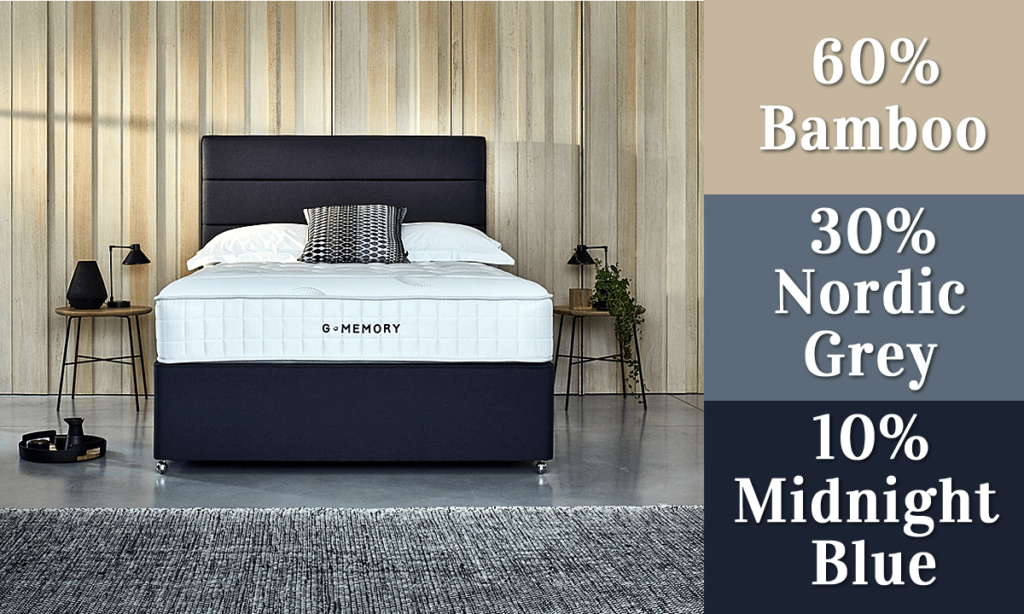
Many designers swear by the 60-30-10 rule: 60% foundation colour, 30% secondary colour, and 10% accent. It's a simple formula that creates visual harmony whilst keeping things interesting. Try working with colour families - colours that share the same undertones - to maintain cohesion throughout your bedroom.
Give your eyes somewhere to rest
Even if you love patterns, your bedroom needs breathing space. Solid colours create those essential visual pauses that let your patterned pieces shine. "To achieve balance in pattern-heavy interiors, follow the golden rule of anchoring the space with substantial, solid-coloured furnishings that provide a necessary visual rest".
Consider adding:
• A solid-coloured headboard or seating
• Crisp white bedding against patterned cushions
• Neutral walls to balance a patterned feature wall
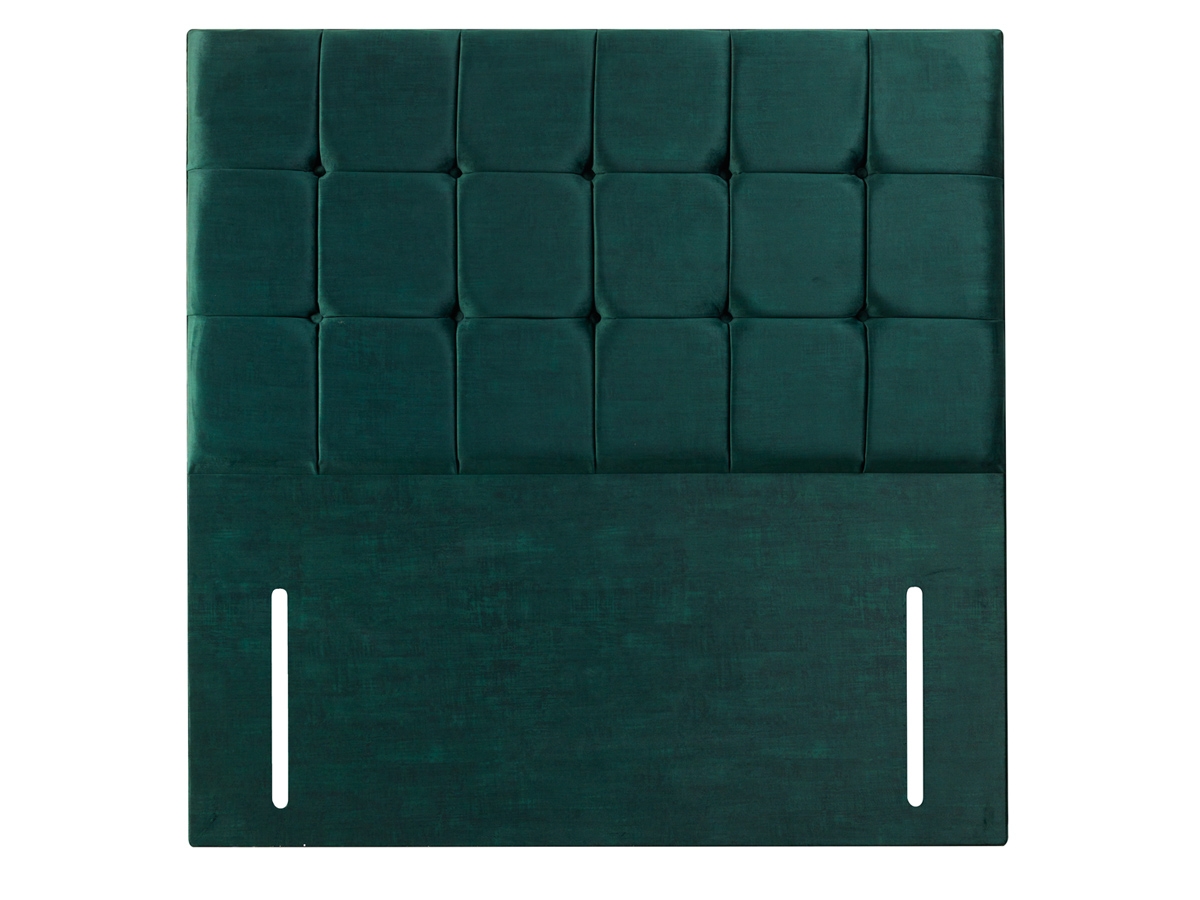
These solid elements prevent pattern overload and give your carefully chosen patterns room to breathe.
Repeat your colours strategically
Want your patterns to look intentional rather than random? Repeat colours across different elements throughout your bedroom. When the same colour appears in various patterns, it creates a visual thread that ties everything together.
If your curtains feature bold blue stripes, echo that blue in a floral cushion and perhaps again in a geometric throw. Interior designer Penny Morrison demonstrates this beautifully with multiple red patterns in one bedroom, noting that "varying pattern scales allow the eye to dance around the room, rather than one single element dominating".
This colour repetition technique works especially well when you vary the scale of your patterns - it creates unity whilst maintaining visual interest.
What patterns should you mix together?
Once you've chosen your hero pattern, it's time to have some fun. The beauty of pattern mixing lies in creating what interior designer Sophie Ashby calls "happy clashing" where you might combine "a floral with a stripe and then maybe an abstract pattern and something more vintage and ethnic".
Think of it as building your own pattern family:
- Florals bring softness and natural movement to your space
- Geometrics add structure and contemporary edge
- Stripes offer timeless versatility that works with almost anything
- Animal prints inject a bold, confident statement
Don't be afraid to experiment – your bedroom should reflect your personality after all.
Why scale matters more than you think
Here's where many people go wrong with pattern mixing. Scale is absolutely essential when combining different designs. The golden rule? Use large, medium, and small-scale patterns for perfect balance. This prevents your eye from becoming overwhelmed and creates visual hierarchy. As one designer notes, varying scales "allow each pattern to breathe and not fight against its surroundings".
The one rule you must never break
Never, ever place two dominant patterns side by side. "If you're going to have a really large scale floral, then don't use another large scale floral". Instead, pair your hero pattern with complementary smaller designs. This prevents visual competition and ensures each pattern has space to shine properly.
Create magic with opposing patterns
Want to know a designer secret? Combine structured patterns (like geometrics or stripes) with flowing ones (such as florals). This creates what designers call "dynamic tension" – where opposing elements balance each other perfectly. Geometric patterns provide structure whilst florals add softness, creating that professionally designed look you're after.
How should you layer patterns throughout your bedroom?
You've chosen your patterns and colours – now comes the exciting part. Layering patterns strategically creates depth and visual interest without making your bedroom feel chaotic.
Start with soft furnishings like cushions
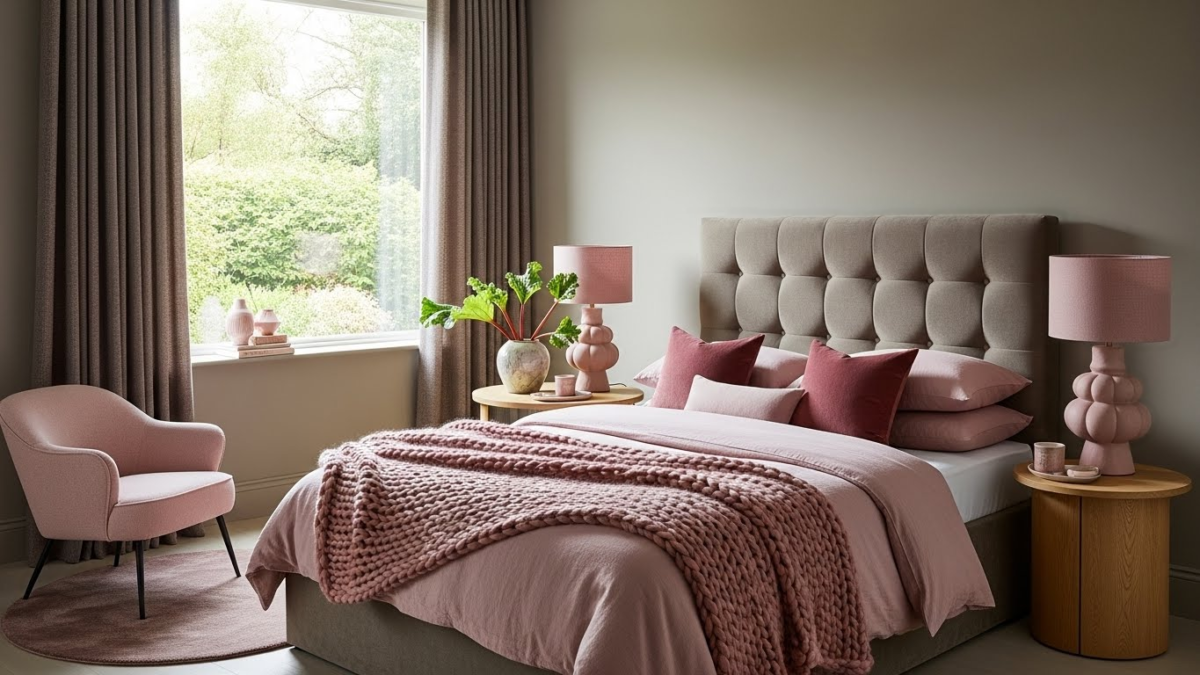
Cushions are your best friend when experimenting with pattern mixing. They're low-commitment, easily swapped out, and perfect for testing bold combinations. Follow this simple formula: one large-scale pattern, one small-scale pattern, and one solid or textured piece. Place larger cushions at the back, gradually layering smaller ones in front to create depth and that effortlessly stylish look you're after.
Add rugs, lampshades and curtains
Why not start with a patterned rug? It anchors your entire bedroom and gives you confidence to build upwards. When choosing window treatments, either complement or contrast your rug – if your curtains feature a bold pattern, balance with a subtler rug design. Don't forget lighting fixtures with textured shades can introduce pattern subtly.
Takeaway Tip: A patterned rug works particularly well in smaller bedrooms as it draws the eye down, making the space feel larger.
Use texture to add depth and contrast
Texture works as a subtle form of pattern that adds interest without overwhelming your space. Mix slubby linen with quilted cotton throws and waffle-knit cushions to break up large expanses of print. Texture becomes essential in neutral bedrooms – combine woollen rugs underfoot, crisp sheets, and thick throws to create tactile interest.
Distribute patterns evenly across the room
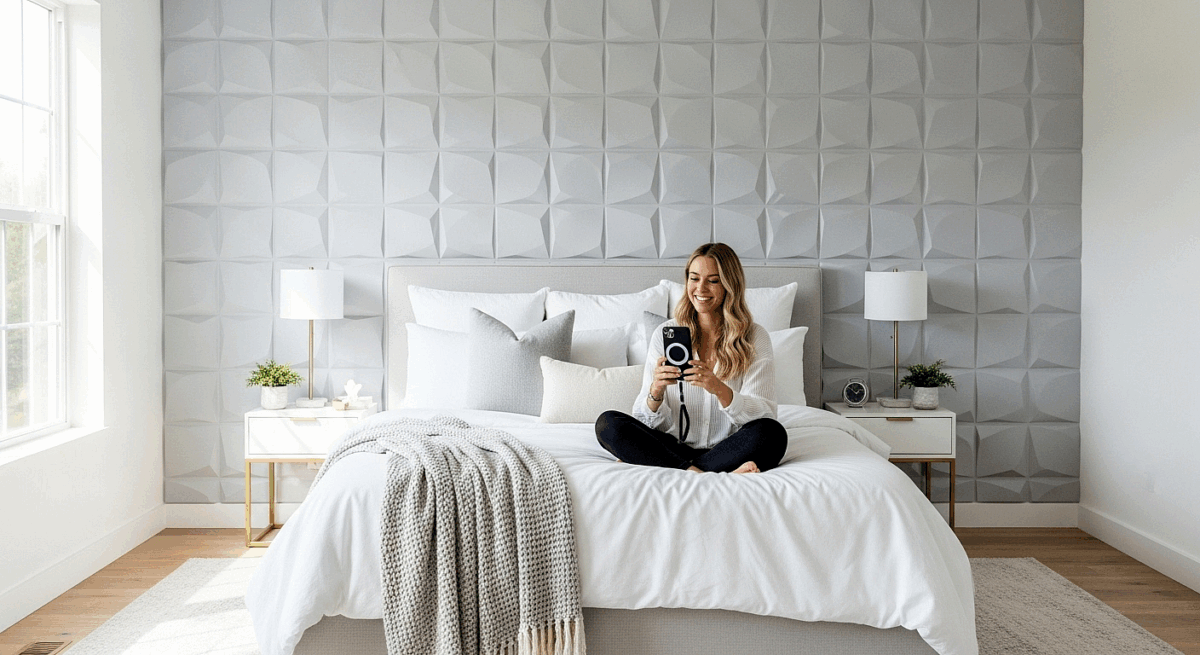
Avoid clustering all your patterns in one corner. Distribute them evenly throughout your space to create balance. This prevents that lopsided appearance and helps establish visual harmony across your entire bedroom.
Keep furniture neutral to avoid overload
Remember to reserve approximately 40% of your room for solid colours – your eyes need somewhere to rest. Keep larger furniture pieces in neutral tones, allowing your patterned accessories to shine without competition. This thoughtful restraint ensures your bedroom feels intentional rather than chaotic.
Conclusion
Mixing patterns effectively transforms your bedroom from ordinary to extraordinary with just a few thoughtful decisions. The journey begins with a hero pattern you truly love, which then guides all your subsequent design choices. This foundational element naturally provides the colour palette that ties everything together throughout your space.
Balance remains the key principle when working with multiple patterns. Accordingly, solid colours serve as visual resting points that prevent your bedroom from feeling chaotic. Remember that approximately 40% of your room should feature solid elements to create necessary breathing space between patterns.
Scale differences certainly matter when combining various pattern types. Large florals, medium geometrics, and small stripes work harmoniously together, while two competing large-scale patterns fight for attention. Additionally, texture acts as a subtle pattern form, adding depth through quilted throws, slubby linens, and waffle-knit accessories.
Most importantly, pattern mixing should feel enjoyable rather than intimidating. Start small with cushions or a statement rug if you're hesitant. After that, gradually build confidence by introducing complementary patterns that share colours from your hero piece. Before long, you'll discover how layering patterns creates a bedroom that feels both professionally designed and personally meaningful.
Your pattern-rich bedroom ultimately reflects your unique style and personality. Through careful colour management, thoughtful scale variation, and strategic placement, you can create a space that feels both cohesive and creatively expressive—a true sanctuary that welcomes you home each day.
Why mix patterns in your bedroom?
Your bedroom deserves more than safe, single-pattern choices. Pattern mixing is one of the most exciting ways to create a space that truly reflects your personality – and it's far easier than you might think.
Here's what you need to know to get it right:
• Choose one pattern you absolutely love as your starting point, then pull 4-5 colours from it to create your room's colour scheme.
• Mix large, medium, and small-scale patterns together – but never pair two large patterns side by side as they'll fight for attention.
• Keep 40% of your space in solid colours and neutral furniture to give your eyes somewhere to rest between all those beautiful patterns.
• Layer your patterns through cushions, rugs, and curtains, spreading them evenly around the room for perfect balance.
• Combine different pattern families – florals with stripes, geometrics with textures – to add depth without overwhelming your space.
The result? A bedroom that feels both professionally designed and uniquely yours – a space that welcomes you home each day with personality and style.
FAQs
Q1. How can I effectively mix patterns in my bedroom? Start with a hero pattern you love and use it to build your colour scheme. Combine different pattern types and scales, such as florals, stripes, and geometrics. Balance patterns with solid colours and distribute them evenly across the room for a cohesive look.
Q2. What is the 60-30-10 rule for bedroom colour schemes? The 60-30-10 rule suggests using 60% of a dominant colour, 30% of a secondary colour, and 10% of an accent colour in your bedroom. This balanced approach ensures visual harmony while maintaining interest in your space.
Q3. How many patterns should I use in my bedroom? A good rule of thumb is to use three different patterns: one large-scale, one medium-scale, and one small-scale. This variety creates visual interest without overwhelming the space. Remember to tie them together with a cohesive colour palette.
Q4. Can I mix patterns if I have a small bedroom? Yes, you can mix patterns in a small bedroom. Start with smaller elements like cushions or a patterned rug. Use larger patterns sparingly, such as on curtains or an accent wall. Keep the rest of the space neutral to avoid visual clutter.
Q5. How do I prevent my bedroom from looking chaotic with mixed patterns? To prevent chaos, use solid colours for about 40% of your room to give the eye a rest. Keep larger furniture pieces neutral, and distribute patterns evenly throughout the space. Stick to a cohesive colour palette and vary pattern scales to create balance.