




Sleeping with a bad neck
Sleeping with a bad neck is one of the most uncomfortable experiences, especially when it stops you from sleeping in your favourite position.
The most significant thing to remember is that the number and type of pillows you use play the most crucial role in relieving pain.
For example, sleeping with no pillow with your head flat against the mattress could relieve pain if you sleep on your back, but if you are a side sleeper, a firm pillow that keeps your head in line with your upper back is probably best.
This article provides top tips for sleeping with a bad neck. Hopefully, we can help you get the shuteye you need on your recovery journey.
Let’s jump in!
Try sleeping on your side and back.
The best sleeping positions for relieving neck pain are on your side and back, but only one of these positions is likely to alleviate your specific pain.
You need to experiment and see what works for you. Back sleeping is usually best for muscular and ligament injuries, while side sleeping is usually best for spinal injuries, but the opposite might be true for you.
Use one firm pillow
One firm pillow is best for side and back sleeping because it places the head in line with the upper spine, supporting a natural position that should relieve pain.
However, if you find one pillow isn’t high enough, you can add a soft pillow on top – this will raise your head and give you a squishier surface.
The best material for a firm pillow is memory foam, which will be dense but squishy to relieve pressure on your head. Avoid firm feather pillows because these compress and lose their firmness very quickly.
Try a Groove Pillow.
The Groove Pillow is a charcoal-bamboo memory foam pillow with a cervical design that elevates the neck and cradles the head. It has excellent reviews and is known to relieve adult neck and upper back pain.
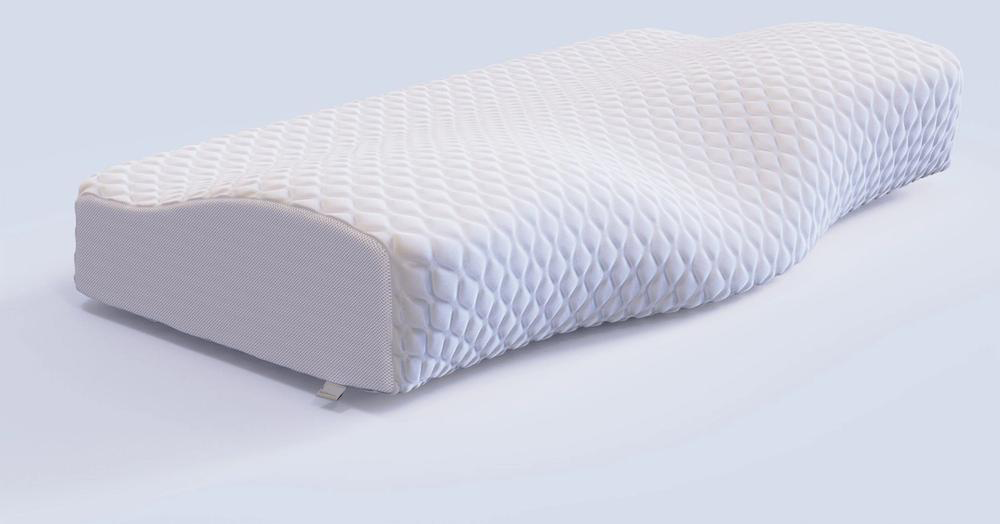
For around £30, you get a high-quality pillow that contours to your head and puts your neck in a natural position all night. It’s worth a go!
Try a U-shape support pillow.
U-shape support pillows (travel pillows) are perfectly safe to sleep with. Many people with neck pain swear by them - they appear to help with neck pain by supporting the upper vertebrae.
However, they are only suitable for back sleepers, and you might find that the pillow digs into the back of your head if it’s firm. Ensure the travel pillow you buy has a soft cover and no rough edges on the stitching and labels.
Stretch your neck before bed
With adequate mobility, you can do light, and basic neck stretches before bed to help loosen your neck up.
WebMD has a series of tutorials to try. Our favourite stretching exercises are extensions and flexions (nodding and bending your head side to side).
We recommend stretching in the morning, afternoon, and night. However, if you have an injury, speak to a physio first.
Get your pain medication right.
Paracetamol and Ibuprofen work best taken together around an hour before bedtime and should give you a decent pain buffer.
However, Ibuprofen is unsuitable for pregnant women and isn’t recommended for people with irritable bowel syndrome or ulcerative colitis.
A more effective form of pain relief is a topical treatment, such as ibuprofen gel, which can treat pain at the source. Heat packs can also relieve pain by increasing blood flow, although the relief only lasts while the packs are on.
Summing up
It may be a pain in the neck, but there are ways to sleep with neck problems. Look into the different types of pillows for optimal support, and make sure you apply topical pain relief to take the edge off the pain and improve mobility.