



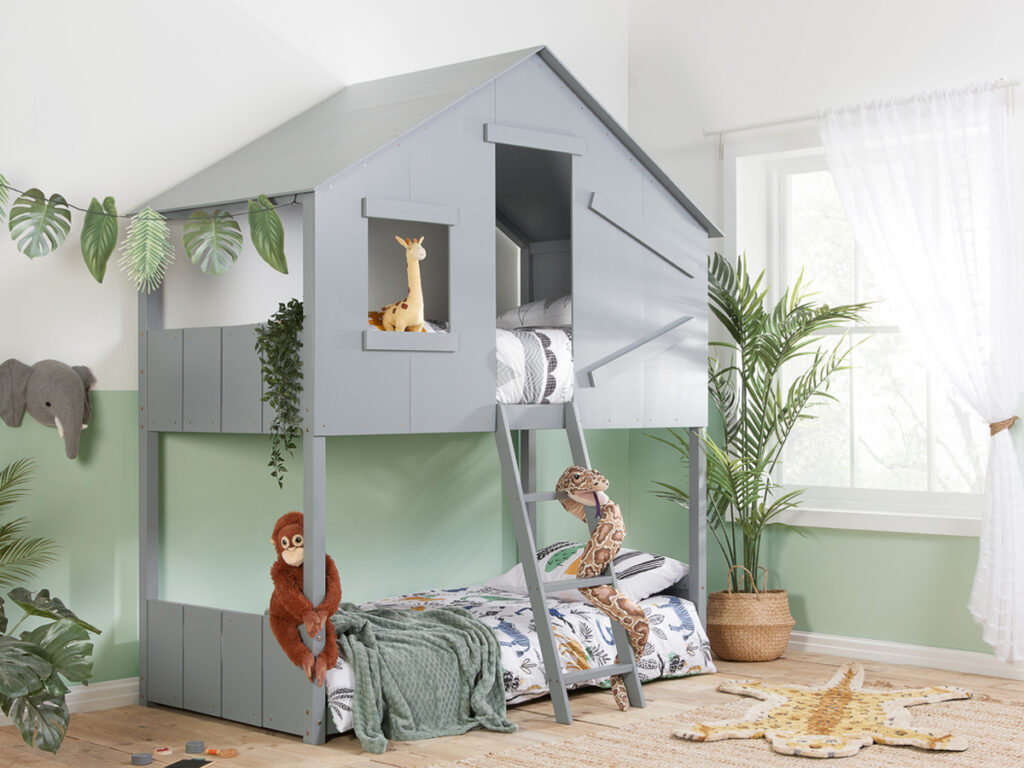
Kid's Bed
Choosing the right kids bed can be a tricky task. Not only do you need to find a size and bed frame style that suits your child's age, but the mattress also needs to deliver optimal comfort.
To top it off, you might be working with a tight budget or have no idea where to start choosing a kid's bed.
In this article, we'll break down the essential factors to consider when choosing a kids' bed to help you choose a bed and mattress they will love.
Let's jump in!
Bed size
Make sure the bed is large enough to accommodate your child comfortably at their current age and size and that they'll have room to grow.
Children age four should transition from a cot bed or a small single bed to a full-size single bed with a mattress measuring 90cm x 190cm.
A single bed suits children into their teenage years, although some teenagers might want a small double bed so they have space to spread out.
When sizing up for a bed frame, measure the available space in the bedroom, and do not mistake mattress dimensions with bed frame dimensions. Bed frames are always 3 cm (or so) wider and longer than the mattress.
Bed type
Children's beds include standard bed frames, bunk beds, cabin beds, triple sleepers, mid-sleepers, and high sleepers. Each has its pros and cons:
- Standard bed frames are timeless.
- Bunk beds are ideal for two children sharing and sleepovers. Reach our bunk beds guide for pointers.
- Triple sleepers sleep three. Check out the pros and cons here.
- Cabin beds are ideal for small bedrooms due to storage.
- Novelty beds make bedrooms extra unique for young children.
- Mid-sleepers often include a desk and drawers.
- High sleepers have space underneath the top bunk for anything.
Adding a bed unlocks more sleeping and workspace, although children can grow out of these beds as they age.
Design and colour
While your child's tastes may still develop, choosing a design that reflects their personality or interests can be a fun way to make the bed their own and get them excited about sleeping in it.
The most common colours for children's beds are white, silver, and grey. However, there are many more to pick from, including bright and cheerful colours like pink, yellow, green, and blue if you want to cheer things up.
You can also choose from various materials, such as wood, metal, and fabric, with wood and metal being the most popular.
The mattress
Pay attention to the height of the mattress if the bed frame has guard rails. Too high a mattress is a safety risk for bunk beds or other beds with guard rails because your child could fall out of bed, causing serious injury.
Additionally, will the bed provide adequate support and cushioning? Is the mattress firm enough for your child to sleep comfortably? Most children do best with a medium or medium-firm mattress for balanced support.
You should also consider the mattress composition:
- Open coil mattresses are affordable and bouncy but lack longevity.
- Pocket spring mattresses offer excellent support and longevity but are more expensive, usually around 20% more than open coils.
- Pure foam mattresses have no bounce and excellent motion isolation, but they are thinner with lower durability.
Finally, determine if the mattress has allergen-resistant and dust-mite-resistant fabrics, as these are important considerations if your child has allergies or asthma.
Our mattress buyer's guide has more tips.
The bedding
When it comes to bedding, pick items that will last.
Hollowfibre (polyester fibre) is the best material for cheap, durable duvets and pillows, which you can get with outer cotton covers for a luxurious feel. Thick, durable fabrics like cotton and linen are preferable to synthetic outer materials prone to wearing out quickly.
The same applies to duvet covers, pillowcases, and bedsheets – cotton and polycotton are the best options for soft, durable kid's bedding.
Discover the best kid's beds for sleepovers if you enjoyed this article.