


Sleep Talk Blog, Health & Wellbeing
How to Choose a SAD Lamp for Your Bedroom: A Sleep Expert's Guide
Oct
Table of Contents
Your bedroom should be your own personal sanctuary. A space where you can escape the winter blues and wake up feeling refreshed. But did you know that one in 20 people in the UK become affected by Seasonal Affective Disorder every winter? With fewer than eight hours of sunlight on the shortest day of the year, finding an effective seasonal affective disorder lamp can make all the difference to your mental wellbeing during the darker months.
Why struggle through winter when light therapy offers such a brilliant solution? The right light therapy lamp can work wonders for your mood and sleep patterns. Research shows that just 30 minutes of daily use can make a substantial difference. Most experts recommend a brightness level of 10,000 lux, though even lamps providing 2,500 lux can still be beneficial.
You have several ways to combat SAD symptoms, of course. Making the most of natural daylight, regular exercise, and creating bright environments can help you manage the condition. However, for approximately 3 in 100 people in the UK who suffer from SAD, a dedicated light box becomes an essential part of their wellbeing routine.
But here's the thing - choosing the best seasonal affective disorder lamp for your bedroom specifically can feel overwhelming. With so many models available, varying brightness levels, and different features to consider, you need guidance that makes sense of both the technical bits and the sleep science.
Don't worry though. We'll walk you through everything you need to know about selecting the perfect SAD lamp for your bedroom, how to use it effectively, and which features matter most for your specific needs. Rest easy knowing you'll have all the information to make the right choice for your winter sanctuary.
Understanding SAD and the Role of Light

The relationship between light and your mental wellbeing forms the foundation of how seasonal affective disorder lamps work. Understanding this connection helps explain why these specialised lights can effectively combat winter depression.
What is Seasonal Affective Disorder?
Seasonal affective disorder (SAD) is a type of depression linked to seasonal changes, typically beginning and ending at consistent times each year. For most people with SAD, symptoms emerge in autumn, intensify during winter, and resolve in spring and summer. Unlike typical depression, SAD follows a predictable seasonal pattern, with winter-pattern SAD being more common than summer-pattern SAD.
This condition occurs because reduced sunlight in fall and winter disrupts your body's internal clock (circadian rhythm), potentially triggering depressive feelings. Women are affected more frequently than men, with the condition rarely appearing before age 20.
How does light affect melatonin and serotonin?
Light exposure plays a crucial role in regulating two key hormones that affect your mood and sleep: melatonin and serotonin.
Melatonin, produced by your pineal gland, signals darkness to your body. Even ordinary room lighting (<200 lux) before bedtime can suppress melatonin onset by approximately 90 minutes compared to dim light environments. What's more, exposure to room light during normal sleeping hours can suppress melatonin by more than 50% in most people.
At the same time, reduced sunlight exposure can lower serotonin levels—a neurotransmitter affecting mood—potentially triggering depression. This imbalance explains why both hormones are implicated in SAD development.
Why are bedrooms critical for SAD management?
Your bedroom environment particularly influences SAD symptoms because it's where you spend significant time, especially as more people work from home. Research shows that natural lighting conditions in homes notably impact perceptions of happiness and sadness.
A properly lit bedroom helps balance wellbeing and sleep quality. Daylight exposure increases productivity, reduces seasonal depression, and supports your circadian rhythm. It helps your body produce serotonin during daytime, which later converts to melatonin—essential for quality sleep.
That's why many experts recommend using a seasonal affective disorder lamp in your bedroom to simulate sunlight, especially during darker months. This approach can effectively regulate your circadian rhythms and mood throughout the winter season.
Choosing your seasonal affective disorder lamp
Getting the right seasonal affective disorder lamp for your bedroom means understanding which features actually matter for your wellbeing. Focus on these key specifications to ensure you receive maximum benefit without disrupting your sleep patterns.
Brightness levels and lux rating explained
Lux measures light intensity and represents the most crucial factor in your lamp's effectiveness. Medical experts recommend devices delivering 10,000 lux for optimal therapeutic benefits. This brightness level mimics natural sunlight on a clear day—approximately 20 times brighter than standard indoor lighting.
Your exposure time depends on the lamp's intensity: 30 minutes at 10,000 lux equals about 60 minutes at 5,000 lux or two hours at 2,500 lux. Remember, light intensity follows the inverse square law—brightness decreases significantly as you move away from the source. Position matters just as much as raw brightness.
Light colour temperature and its impact on sleep
Colour temperature, measured in Kelvin (K), greatly influences both treatment effectiveness and sleep quality. For seasonal affective disorder lamps, choose cooler white lights between 5,000-6,500K that effectively mimic daylight.
Warm lights (3,000-4,000K) create a sunset-like atmosphere that promotes melatonin production and relaxation. Some advanced models offer adjustable temperatures—cooler settings (5,000-6,500K) for morning use to increase alertness, and warmer tones (3,000-4,000K) for evening. This flexibility allows your lamp to adapt throughout the day without disrupting your sleep cycle.
Timer and auto shut-off functions
Automatic timers prove invaluable for consistent treatment. Look for lamps with programmable settings allowing 5-60 minute increments. These features ensure you receive precisely the right exposure duration without needing to watch the clock. Auto shut-off functionality prevents accidental overexposure that could potentially disrupt sleep patterns or waste energy.
Size and portability for bedroom use
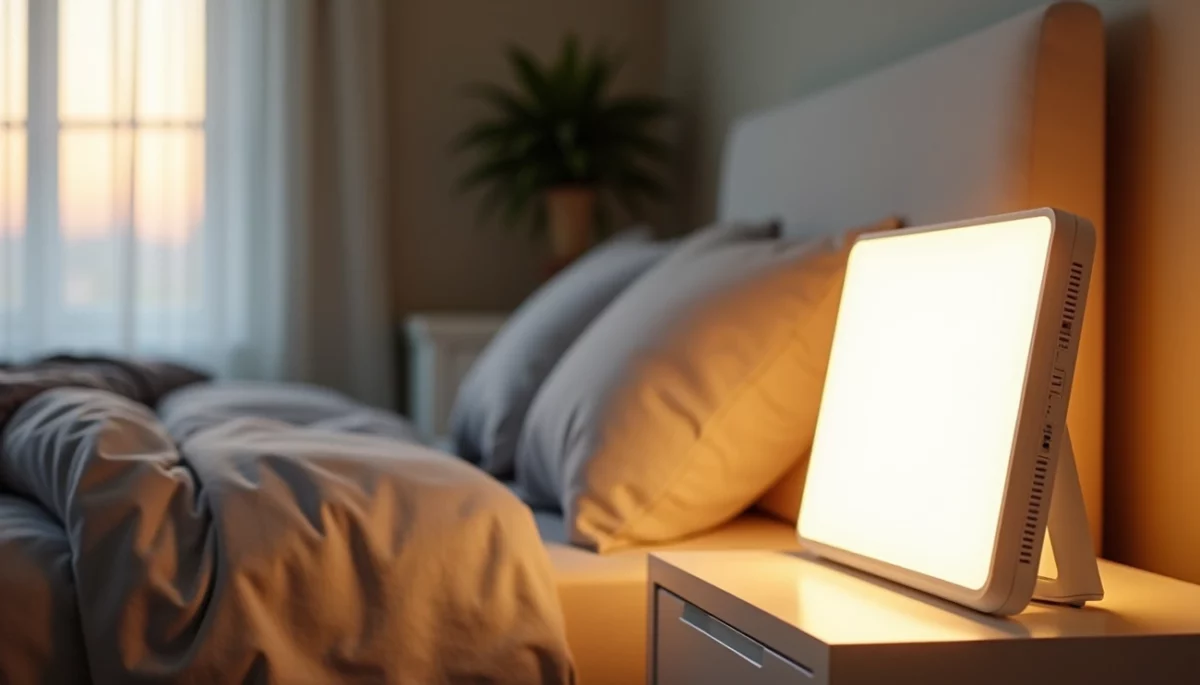
Consider where you'll place the lamp in your bedroom. Larger screens (at least 200 square inches or one foot square) distribute light more evenly and accommodate natural head movements during use. For flexibility, some models feature adjustable angles or wall-mounting options.
Space-conscious? Compact designs resembling tablets or e-readers offer excellent alternatives—though these typically require closer positioning to achieve full brightness benefits.
Takeaway Tip: If you're short on bedside table space, look for models that can be wall-mounted or positioned on a shelf above eye level.
How should you use your SAD lamp for the best results?
Getting the most from your seasonal affective disorder lamp isn't just about switching it on and hoping for the best. With the right approach, light therapy can work wonders for resetting your circadian rhythm and lifting those winter blues.
When's the perfect time to use your lamp?
Early morning works best for most people. Try to use your light therapy lamp within the first hour of waking, ideally before 8 am. This timing helps regulate your circadian rhythm by signalling to your brain that it's time to reduce melatonin (sleep hormone) production and increase serotonin (mood hormone) levels.
Here's something worth knowing: morning light therapy shows a significantly higher remission rate (53%) compared to midday (32%) or evening sessions (38%). If you work night shifts though, evening usage might suit you better.
Getting the distance and timing right
Position your seasonal affective disorder lamp 16-24 inches (41-61 cm) from your face. This sweet spot ensures you receive the optimal light intensity. For a standard 10,000 lux lamp, 20-30 minutes daily does the trick. Using a lower intensity lamp (such as 2,500 lux)? You'll need to extend your session proportionally—up to 2 hours.
Where should you place your lamp?
Place the lamp at eye level or slightly above, angled at approximately 15 degrees. The light should shine indirectly into your eyes without you looking directly at it. You don't need to stare at the lamp—simply position it so the light reaches your eyes while you read, eat breakfast, or work at your desk.
Pair it with good sleep habits for maximum impact
Your SAD lamp works best when you combine it with other healthy practices. Maintain consistent sleep schedules, create a restful sleep environment, and reduce screen time before bed. Regular outdoor activities, exercise, and mindfulness techniques can also boost the effectiveness of your seasonal affective disorder lamp treatment.
Takeaway Tip: starting light therapy early in autumn before symptoms fully develop can provide excellent preventative benefits.
Which SAD lamp will suit your bedroom best?
With so many options out there, making the right purchase decision means looking beyond just the basic specifications you've already learned about.
Comparing the top-rated SAD lamps
Lumie and Beurer lead the pack with highly-rated models that actually deliver results. The Lumie Vitamin L provides 10,000 lux at 20cm, whilst the more premium Lumie Halo offers touch controls with adjustable warmth settings. For portability, the Beurer TL30 delivers full brightness at just 10cm distance. Compact models like Lumie's mini light-therapy lamp offer the convenience of one-button operation plus a reassuring three-year warranty.
Budget vs premium options
Entry-level options typically start around £35-£65, offering basic functionality. Premium models range from £200-£280 with additional features like adjustable colour temperatures, stylish designs, and stronger warranties. Here's what's interesting though - according to multiple user experiences, budget-friendly lamps like Beurer TL30 remain effective despite their simpler construction.
When should you consult a sleep expert?
You'll want to speak with a healthcare professional if you have an eye condition, are taking photosensitizing medications, or have bipolar disorder. Generally, individuals with diagnosed SAD should prioritise medical-grade lamps rather than wellness-grade alternatives. Medical-grade lamps typically produce 10,000 lux from 12 inches away, whereas wellness-grade versions achieve this brightness only at closer distances.
Reading SAD lamp reviews like a pro
Focus on reviews that mention brightness consistency, ease of positioning, and actual mood improvements. Check whether the lamp is registered with the Medicines & Healthcare Products Regulatory Agency (MHRA) - this ensures it meets medical standards. Look for reviewers who mention how quickly they saw results - effective models typically show improvements within approximately one week.
Your perfect SAD lamp is within reach
Choosing the right SAD lamp for your bedroom is one of the smartest investments you can make for your winter wellbeing. With proper light therapy, you'll notice real improvements in your mood, energy levels, and overall quality of life when those daylight hours start disappearing.
Your ideal lamp needs 10,000 lux brightness, suitable colour temperature options, and helpful features like timers and adjustable positioning. Budget does matter, but even more affordable models can work wonders when you use them properly.
Here's what counts most for success: consistency. Those daily morning sessions of 20-30 minutes, with your lamp positioned 16-24 inches from your face, will give you the best results. Pair this with good sleep habits and you'll see the benefits multiply.
Think about your specific situation before you buy. Your bedroom size, daily routine, and any medical conditions should all influence your choice. While excellent options exist across all price ranges, it's worth speaking to a healthcare professional if you have diagnosed SAD or other health concerns.
You now have everything you need to choose a SAD lamp that will turn your bedroom into a bright haven during those challenging winter months. The right light therapy could be exactly what stands between struggling through winter and genuinely enjoying the season ahead.
Don't forget, you can transform your winter experience in just a Weekend Project. Your brighter mornings are waiting.
Key Takeaways
Understanding the technical specifications and proper usage of SAD lamps can transform your winter wellbeing and sleep quality during the darker months.
• Choose a lamp with 10,000 lux brightness positioned 16-24 inches from your face for optimal therapeutic benefits in just 20-30 minutes daily.
• Use your SAD lamp within the first hour of waking, ideally before 8am, to effectively regulate circadian rhythms and boost serotonin production.
• Look for adjustable colour temperature features: cooler whites (5,000-6,500K) for morning alertness, warmer tones (3,000-4,000K) for evening relaxation.
• Position the lamp at eye level or slightly above at a 15-degree angle, allowing light to reach your eyes indirectly whilst reading or working.
• Combine light therapy with consistent sleep schedules and reduced evening screen time to maximise effectiveness against seasonal depression symptoms.
Starting light therapy early in autumn, before symptoms fully develop, provides the best preventative benefits for managing SAD throughout winter.