



Table of Contents
Your bedroom should tell your story. And vintage bedroom ideas give you the perfect canvas to create something that feels both timeless and completely you. Think about it – vintage décor spans decades of inspiration, from pieces that are 20 to 99 years old.
There's something special about vintage and antique furniture that modern designs simply can't replicate – that authentic charm and craftsmanship that speaks to quality. The most beautiful vintage rooms aren't created overnight. They're gathered piece by piece, layering antiques, treasured finds, and meaningful items that give your space its unique personality.
Ready to create your own modern vintage bedroom?
We'll walk you through everything you need to know. From vintage bedroom design ideas that actually work, to selecting furniture that perfectly balances retro charm with the comfort you need today.
Plus, we'll show you how to choose colours and patterns for your vintage bedroom décor, and add those finishing touches that make antique bedroom ideas feel fresh and completely liveable.
Defining Your Modern Vintage Bedroom Style
What's the difference between vintage, antique, and retro? These terms get mixed up constantly, but understanding them will shape your entire approach to creating a modern vintage bedroom.
Understanding the Difference Between Vintage, Antique, and Retro
Antique pieces must be at least 100 years old. In 2026, this means anything made in 1926 or earlier qualifies as an antique. These pieces carry genuine history and often showcase exceptional craftsmanship – hand-carved details, solid wood construction, and materials that truly define their era.
Vintage items fall between 20 and 99 years old. This gives you incredible variety to work with, from 1920s Art Deco glamour to 1950s-1960s midcentury modern design, right through to 1990s pieces that now officially count as vintage. Vintage items capture the essence of their specific era and evoke that nostalgic feeling we're all drawn to.
Retro has nothing to do with age whatsoever. Retro refers to newly manufactured items designed to mimic older styles, typically from the 1950s through 1990s. You could buy a retro piece made yesterday that perfectly captures 1970s aesthetics. The advantage? Retro pieces offer affordability and availability whilst still delivering that nostalgic look.
Deciding on Your Era Mix
Here's where it gets interesting – your vintage bedroom décor doesn't need to stick rigidly to one period. Mixing eras creates visual interest, but some combinations definitely work better than others. Postmodern pieces pair beautifully with antiques, whilst midcentury modern generally struggles alongside heavy antique furniture.
However, postmodern designs complement midcentury pieces brilliantly, and retro 1970s elements look superb in monochromatic, organic-modern schemes.
Designer Philip Thomas Vanderford explains that antiques bring grandeur and history, whilst vintage pieces offer accessible nostalgia with a more relatable vibe.
An 18th-century Georgian dining table creates a completely different atmosphere than a 1960s Eames chair, but both can absolutely coexist when you balance them properly.
Consider contrast and balance when mixing periods. Highly ornamented antique pieces become more striking against minimalist backdrops. Similarly, a sleek modern bed gains instant warmth when paired with vintage accessories.
Identifying Which Elements Should Be Vintage Versus Modern
Designer Emily Henderson recommends leaning on vintage for accessories, lighting, and art, whilst using modern pieces as your base furniture. This approach keeps your bedroom genuinely functional whilst adding character through carefully chosen vintage touches.
Modern beds offer better support, standardised mattress sizes, and ergonomic designs that vintage frames often lack. Vintage dressers, though? They frequently showcase superior craftsmanship with solid wood construction and dovetail joints that surpass modern mass-produced pieces.
Balance proportions carefully to prevent either style from overwhelming your space. Some designers follow an 80/20 rule: 80% modern elements with 20% vintage accents. This prevents your bedroom from feeling like a museum whilst still capturing those antique bedroom ideas effectively.
Creating a Mood Board for Your Space
Why start with a mood board? It serves as your roadmap before you make any purchases. Start by gathering inspiration from design websites and magazines, focusing on images that genuinely appeal to you. Choose a specific era to guide your theme – whether that's the earthy tones of the 1970s or the clean sophistication of midcentury modern.
Collect images showing colours, patterns, textures, and furniture pieces. Include fabric swatches, paint samples, and product photos. Your mood board should feature your focal point, colour palette, and texture combinations. Digital tools like Pinterest and Canva make this process straightforward and shareable with contractors or partners.
Furniture Selection: The Art of Mixing Old and New
Your furniture pieces shape your bedroom's entire personality. And getting the mix right takes strategy, not impulse buying. The 80/20 rule gives you the perfect foundation: let one style lead whilst the other supports. Got modern architecture?
Use that as your base and layer vintage pieces as stunning accents. Living with period features? Let vintage furniture take centre stage, then add modern touches to keep things fresh.
Making the Bed Your Focal Point
Antique-style beds bring timeless beauty that works in any setting. Victorian-influenced designs showcase clean lines with elegant moulded detailing and curved top rails – their simplicity means they fit seamlessly into any décor. Want something more dramatic?
French Romantic period beds feature gorgeous, curvaceous detailing throughout wooden frames, often finished in metallic tones that feel completely contemporary.
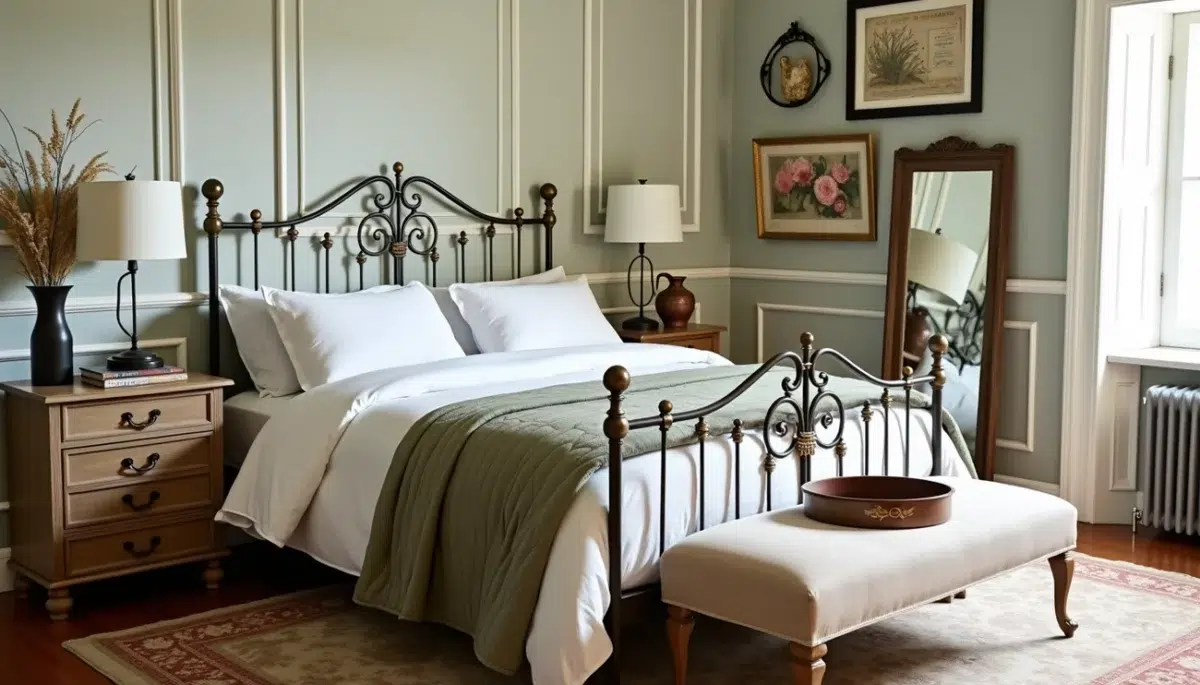
Here's something fascinating: brass and iron beds became hugely popular during the Victorian era for purely practical reasons. They were cheap to manufacture, easy to move on castors, and simple to clean when hygiene was absolutely crucial.
These metal frames look stunning in vintage schemes, especially when you dress them with velvet pillows and soft blankets. Natural oak wooden pieces give you that traditional appeal, whilst modern metal frames can deliver vintage aesthetics with all the functionality you need today.
Pairing Vintage Bedside Tables with Modern Lamps
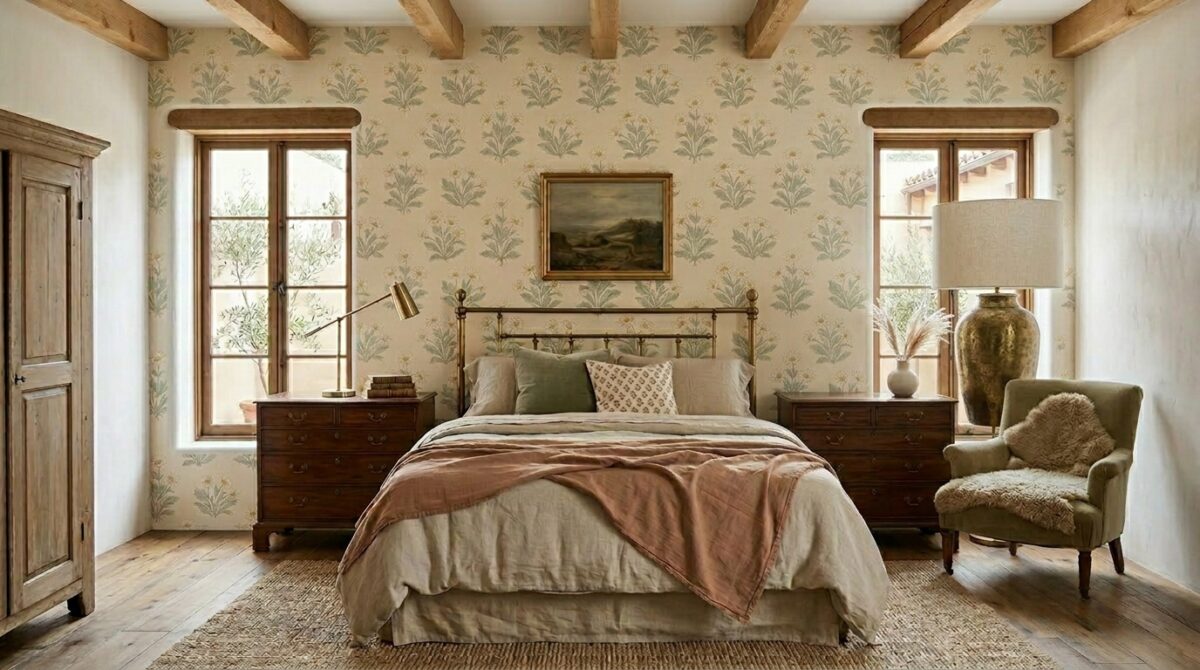
Vintage bedside tables offer superior quality compared to similar-priced modern alternatives. Antique bedside cabinets come in pairs, ranging from elegant Georgian mahogany pieces to Victorian designs with decorative veneers and brass handles.
Georgian furniture works particularly well in contemporary interiors because the lines stay beautifully straight and shapes remain light. Small Georgian bachelor chests function perfectly as bedside tables.
The secret? Pair these vintage tables with modern lamps to avoid that dated look. An oversized vintage brass lamp base paired with contemporary shades can move through different rooms whilst staying stylish. This contrast keeps your vintage furniture feeling fresh rather than stuck in the past.
Incorporating a Statement Antique Piece
Choose furniture with stories and sculptural quality. Antique armoires create elegant focal points when displayed in bedrooms. Vintage vanities add genuine glamour to your daily routines, taking you back to simpler times when getting ready at the bathroom mirror wasn't the norm.
Antique dressers and nightstands showcase craftsmanship that modern mass-produced pieces simply can't match – and you can easily source them from thrift stores and online marketplaces.
Balancing Heavy Vintage Furniture with Lighter Modern Pieces
Heavy vintage furniture needs lighter modern companions to breathe. Pair antique wooden pieces with sleek metal accents or glass surfaces. The contrast between aged wood and contemporary materials creates genuine visual depth.
Modern furniture's clean lines and open shapes work beautifully against antiques' deep finishes and curved silhouettes.
Using Modern Upholstery on Vintage Frames
Reupholstering vintage furniture keeps those unique shapes and craftsmanship whilst completely updating the appearance. A vintage armchair reupholstered in modern fabric shifts the mood instantly – just like a contemporary sofa layered with antique cushions.
Choose fabrics with Martindale Rub Test counts of at least 40,000 for daily-use upholstery, dropping to 25,000-40,000 for occasional chairs.
Traditional upholstery methods last over 50 years with recyclable, sustainable fillings. Want a contemporary feel? Try monochrome boucle on antique armchairs.
Prefer traditional aesthetics? Select heritage florals or classic stripes. Linen and cotton velvet remain popular upholstery choices – sophisticated and completely timeless.
Colour, Pattern, and Texture in a Modern Vintage Bedroom
Here's where the magic happens. Colour becomes your secret weapon for making vintage and modern pieces look like they were always meant to be together. Without the right palette, your modern vintage bedroom can quickly turn from curated collection into chaotic mess.
Choosing a Colour Scheme That Unifies Both Styles
Your colour scheme needs to do the heavy lifting here. Start with a unified palette that lets both styles complement each other. Got modern furniture in muted tones? Choose vintage pieces that pick up similar hues or accent shades. Keep it simple – stick to two or three main colours only.
This limited approach prevents visual overload, and soft neutrals with muted shades work beautifully in vintage bedroom décor.
Want to nail authentic vintage style? Each era had its signature palette. Victorians loved their drama with maroon, deep reds, burgundies, and rich chestnuts. The roaring twenties brought bold mustard yellows, deep navy blues, and glamorous champagne tones.
The 1930s shifted to poppy red, Egyptian blue, and fresh mint green. The 1950s softened things with pastels, whilst the 1960s embraced those natural, desert-inspired hues. Pull these complementary colours into your space through vintage rugs, then echo them in pillows, throws, or fresh flowers.
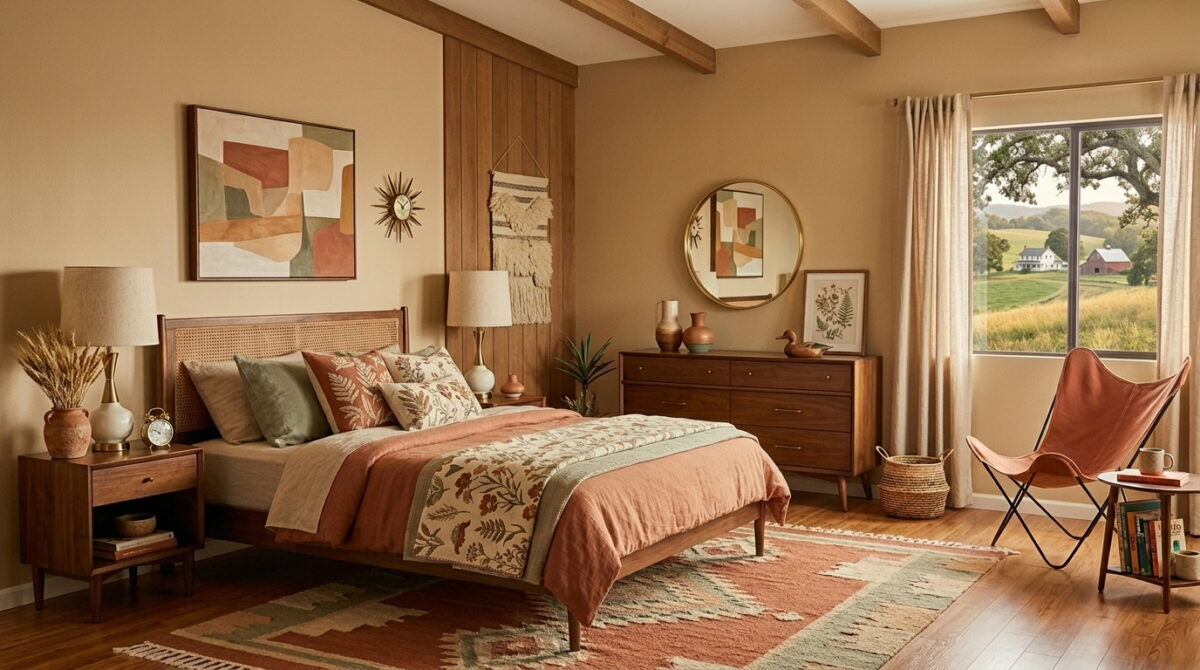
Layering Patterns Without Overwhelming the Space
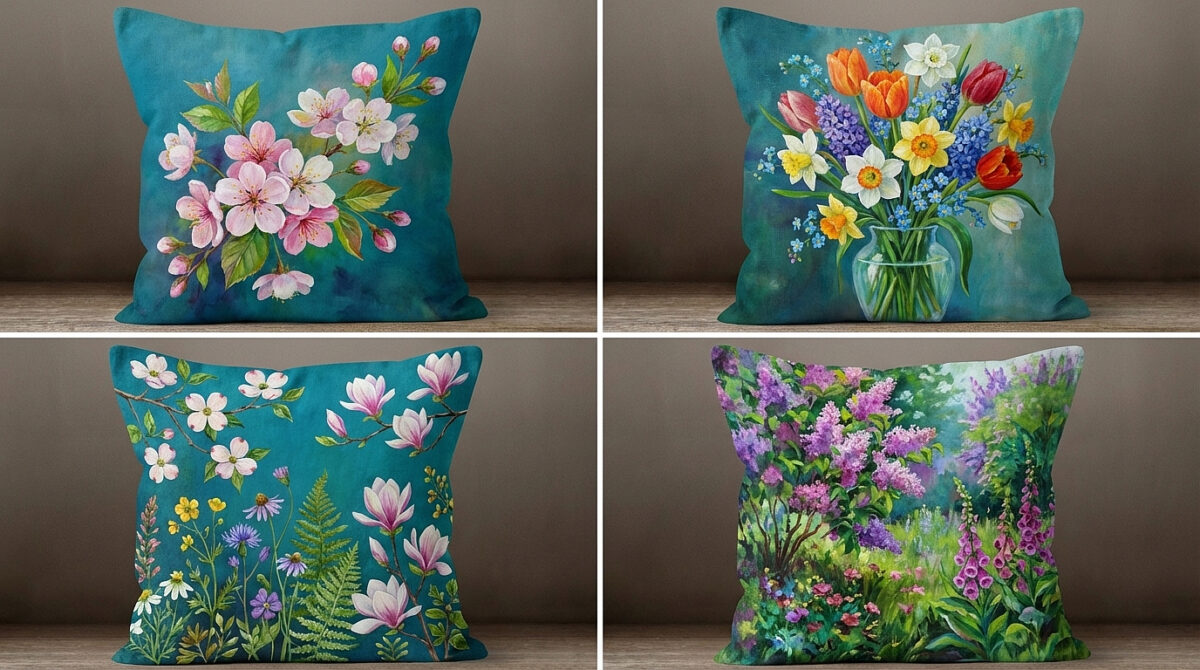
Pattern mixing might feel scary, but there's a simple rule that makes it work every time. Your patterns need to share at least one colour. This common thread helps your eye move smoothly around the room, making everything feel connected rather than random.
Think about patterns in three sizes: small, medium, and large. Small prints add texture from a distance, large prints become your statement pieces, and medium prints bridge the gap.
Here's your safety net: use solids to separate patterned areas. Plain sheets, solid curtains, or neutral throws give your eyes somewhere to rest. Spread these solid fabrics evenly throughout your space.
And here's a golden rule – choose ONE patterned wall element only. If your walls have pattern, keep bedding and curtains simple to prevent complete overload.
Adding Texture Through Vintage Textiles
Vintage pieces bring something modern furniture simply can't – rich textures and patinas that add instant warmth. Layer in distressed wood, aged leather, brass, and handwoven fabrics to create depth and visual interest.
Vintage textiles like quilts, throws, or patterned cushions work overtime, adding both warmth and texture. These soft materials offer comfort whilst showcasing the intricate craftsmanship of another era.
The real trick? Layer antique and modern fabrics to create conversation between different periods. Try placing contemporary rugs beneath antique furniture, or position vintage Persian rugs beneath sleek modern pieces to introduce history and warmth.
Keeping Modern Elements Simple and Clean-Lined
Balance makes or breaks your mixing styles success. Pair vintage treasures with contemporary pieces to create contrast and avoid that dated museum look. Your modern furniture should feature clean lines and minimalist profiles. This restraint lets your vintage textures and patterns take centre stage without overwhelming your retro bedroom atmosphere.
Wall Decor and Architectural Details
Your walls set the stage for everything else in your vintage bedroom. How you treat them can make the difference between a space that feels thoughtfully curated and one that looks cluttered. Architectural details add personality to your vintage bedroom décor whilst creating the perfect foundation for your design story.
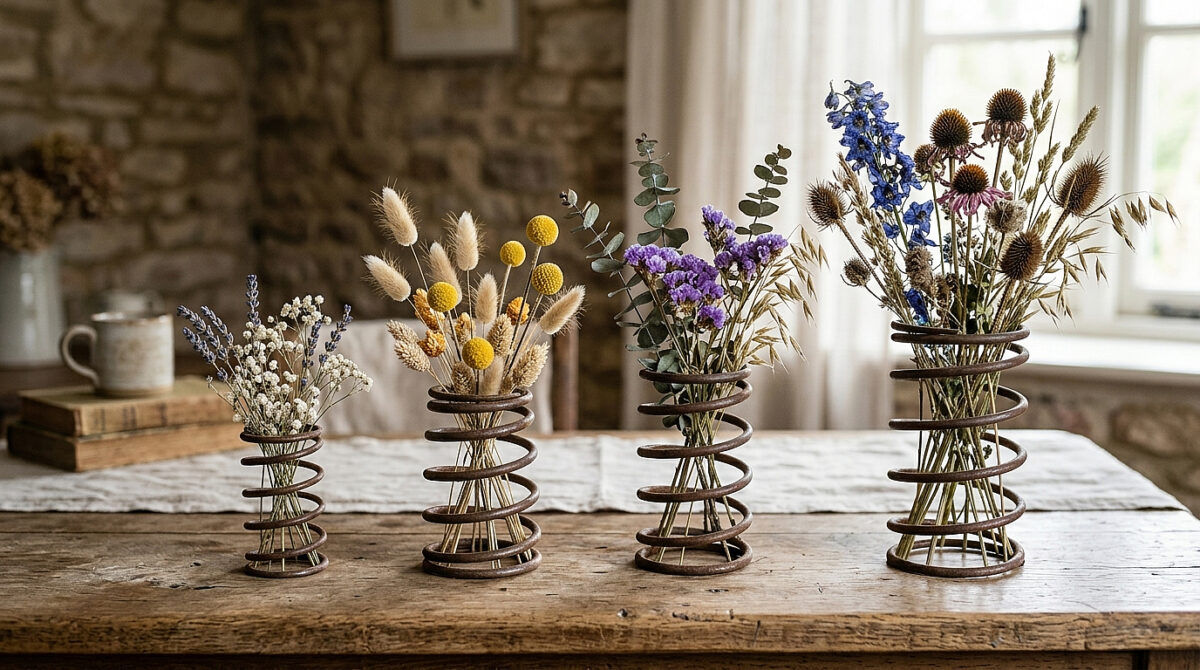
Adding Period Features Like Moulding or Panelling
Structural details can completely change your room's character. Exposed wooden beams on ceilings bring rustic allure and vintage charm, whilst shiplap on walls or ceilings adds those timeless aesthetics you're after.
Elaborate mouldings frame your bedroom beautifully, and antique-inspired mantels become striking centrepieces when you pair them with mirrors or wall sconces.
Here's what works for proportions: aim for skirting boards at approximately 7% of your ceiling height. With standard 2.4-metre ceilings, you're looking at 18-centimetre-high skirting. Crown moulding should sit slightly narrower than your skirting board.
Scale and proportion matter most when you're selecting moulding profiles. Georgian panelling remains the simplest to fit, covering walls in solid sheets.
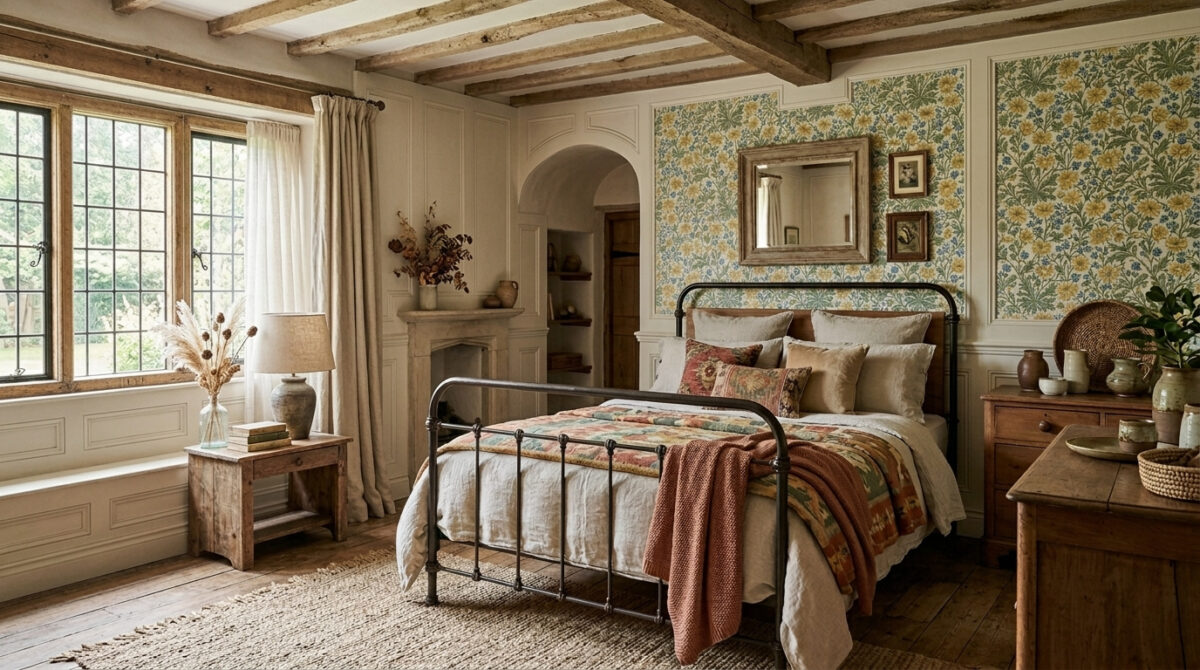
Creating Gallery Walls with Mixed Frame Styles
Gallery walls let you mix frame styles without the chaos. Position your collection's centre at eye level, around 57 inches from the floor. Give each piece breathing room with 2-3 inches between frames. Odd numbers work better than even – they're more appealing and memorable.
Start with your focal piece, whether that's your largest artwork or boldest frame, then build around it. Spread varying frame colours and sizes throughout your display rather than clustering them together. Remember, repetition looks intentional: three white frames work perfectly, one looks like a mistake.
Using Vintage Wallpaper as an Accent
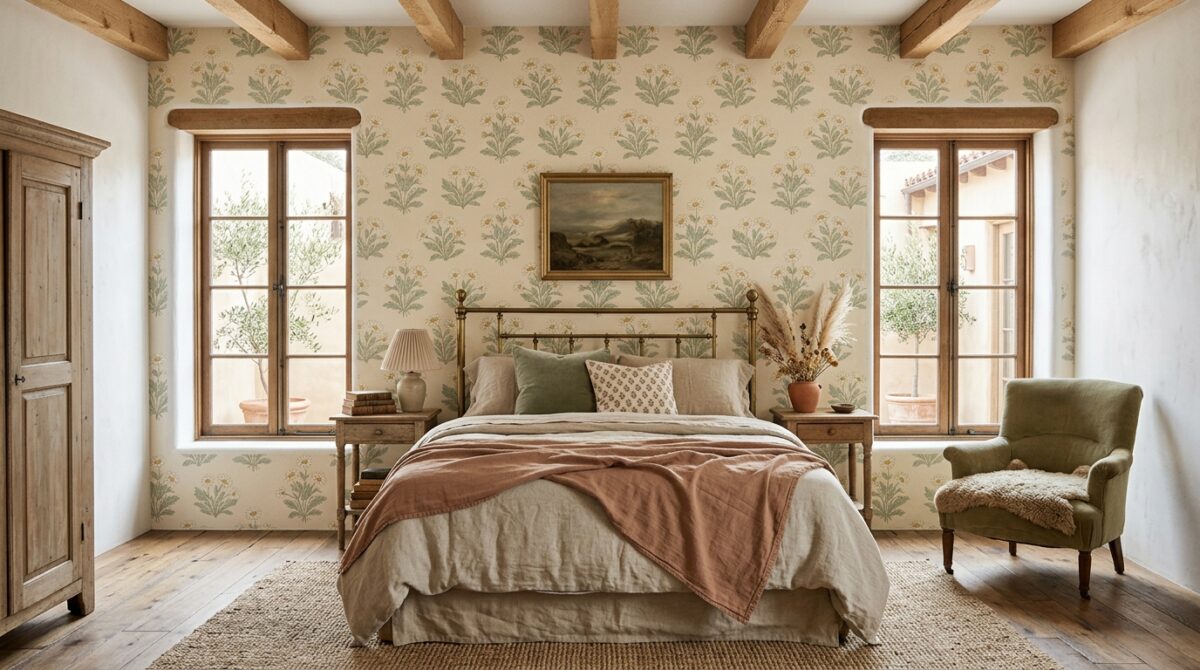
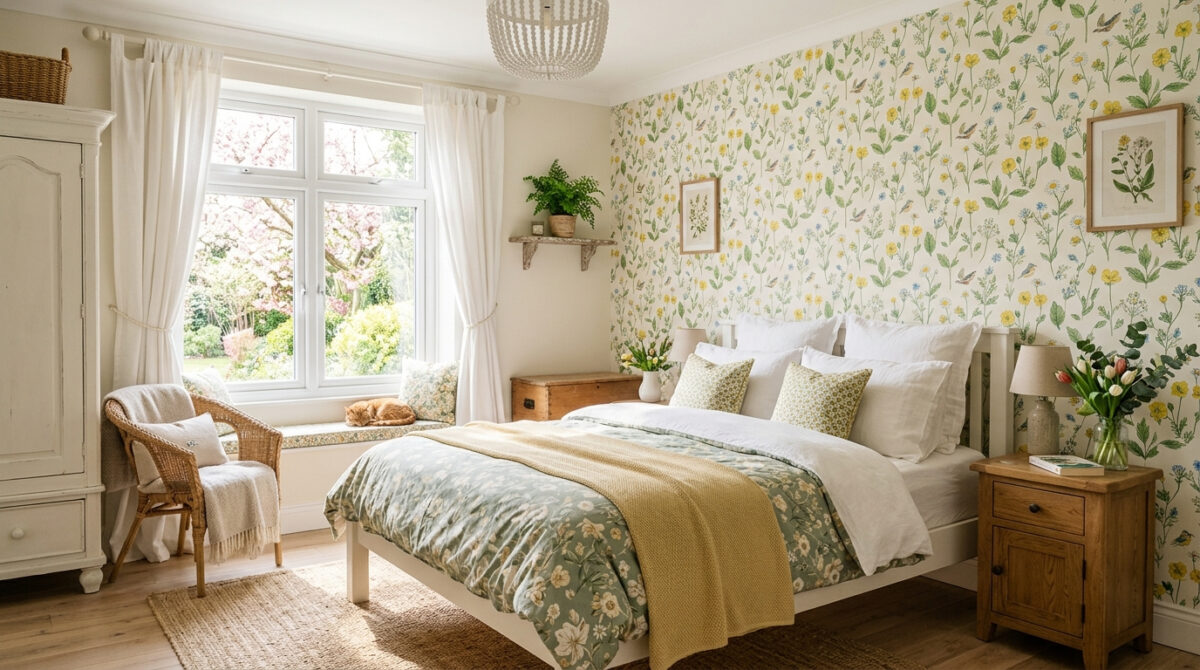
Wallpaper brings vintage bedroom design ideas to life instantly. Morris & Co's Daisy wallpaper offers elegant prints that work beautifully in guest bedrooms. Soft coral and manilla hues create warm, welcoming environments. From soft stripes and florals to block prints and toile, patterned walls add instant nostalgia.
Keep everything else neutral when you're using bold wallpaper. Paint your woodwork white and choose pale furniture so the look doesn't feel overwhelming. Accent walls work particularly well, creating focal points without taking over your space.
Displaying Heirlooms and Personal Collections
Frame those special pieces like vintage clothing, linens, or handwritten notes to add heart and history to your space. Shadowboxes, floating frames, and simple wooden frames work beautifully for showcasing keepsakes. Display your collections together where they can be seen and appreciated. Hutches filled with dishware or open shelves lined with vintage finds tell wonderful stories.
Installing Modern Shelving for Vintage Display
Modern shelving gives you clean platforms for your vintage bedroom décor displays. Vintage shelving units offer character whilst solving your storage needs. Use shelves to display vintage tableware, organise files, or showcase your collected treasures. Reclaimed wooden shelves made from old discarded wood blend sustainability with style.
Finishing Touches: Lighting, Accessories, and Styling
Your lighting can make or break your modern vintage bedroom. Get it right, and you'll have a space that feels both collected and cohesive. Get it wrong, and even the most carefully chosen furniture will look disconnected.
How do you choose lighting that works across different eras?
Think about shape rather than age when you're mixing lighting. Strong silhouettes create the cohesion you need, even when pieces come from completely different periods. Here's what works: let vintage fixtures take centre stage as decorative focal pieces – think chandeliers or statement pendants that draw the eye.
Meanwhile, modern lighting can handle your practical needs like task and ambient lighting. This way, your room looks beautiful and actually works for daily life.
Scale matters more than you might think. Generous modern fixtures anchor your space with even, reliable light, whilst smaller vintage pieces add those lovely soft details that make a room feel personal. Want an instant room update?
Swap out those vintage lamp bases with refined contemporary shades. You'll be amazed how replacing outdated plastic-lined shades with thoughtfully chosen alternatives can soften light and completely shift the mood.
Can you add modern conveniences without ruining the vintage feel?
Smart home technology fits beautifully into period bedrooms without changing their appearance. Smart lighting systems work seamlessly with your existing antique fixtures through simple apps or voice control.
You'll get dimming control, scheduling routines, and custom mood settings whilst keeping all your original fittings intact. Try installing tunable LEDs inside antique shades paired with smart dimmers at your switches.
What vintage accessories make the biggest impact?
Vintage accessories bring instant nostalgia through carefully chosen pieces like candle holders, frames, and decorative busts. Display your collections together on shelves or surfaces where they can tell their stories properly. Don't forget to layer in vintage textiles like lace doilies for that extra touch of elegance.
How do you keep everything functional?
Keep your surfaces tidy and uncluttered. Choose vintage pieces that pull double duty: vintage drawers can store mail, enamel trays display your favourite books, or old crates can organize blankets beautifully. Remember, functionality matters just as much as looks when you're creating successful vintage bedroom design ideas that you'll actually want to live with.
Conclusion
Your modern vintage bedroom should feel like you. When you mix antique charm with contemporary comfort just right, you create something that's both nostalgic and completely liveable.
Remember the 80/20 approach – it gives you the freedom to experiment whilst keeping everything cohesive. Let vintage pieces bring their character and craftsmanship, then balance them with modern functionality. A unified colour scheme and thoughtful layering will prevent your space from feeling like a museum.
Start with one statement vintage piece that speaks to you, build your palette around it, and gradually add accessories that tell your story. Don't rush the process. Your vintage bedroom should evolve naturally over time, gathering pieces that genuinely resonate with you rather than forcing a look.
The most beautiful vintage bedrooms aren't perfect – they're personal. So trust your instincts, take your time, and create a space that feels authentically yours.
FAQs
Q1. Is it possible to successfully combine vintage and modern styles in a bedroom? Yes, mixing vintage and modern elements creates a timeless space that feels both fresh and characterful. The key is balancing old-world charm with contemporary touches through a cohesive colour scheme and thoughtful furniture selection. Using an 80/20 approach—where one style leads whilst the other supports—helps prevent the room from feeling either too dated or too stark.
Q2. Which furniture pieces should be vintage versus modern in a bedroom? Modern beds work best as your foundation since they offer better support, standardised mattress sizes, and ergonomic designs. Reserve vintage pieces for accessories, lighting, bedside tables, and statement furniture like dressers or armoires. Vintage furniture often showcases superior craftsmanship with solid wood construction, whilst modern pieces provide the functional base your bedroom needs.
Q3. How do I choose colours when mixing vintage and modern bedroom styles? Start with a unified colour scheme of two or three main colours that allow both styles to complement each other. Soft neutrals with muted shades work particularly well. If your modern furniture features muted tones, select vintage pieces that incorporate similar hues or complementary accent shades. This common colour thread helps the eye move smoothly across the room.
Q4. How can I update an old bedroom to look more contemporary? Introduce bright, colourful elements through bedding, accent pillows, and table runners to refresh dark or dated furniture. Reupholster vintage frames with modern fabrics, pair antique pieces with contemporary lighting, and keep modern elements simple with clean lines. Adding modern shelving for vintage displays and updating lamp shades can instantly transform the space.
Q5. What lighting approach works best in a vintage-modern bedroom? Focus on shape rather than age when selecting light fixtures. Use vintage fixtures as decorative focal pieces like chandeliers or statement pendants, whilst modern lighting handles task and ambient needs. Update vintage lamp bases with refined contemporary shades, and consider smart lighting systems that work with existing antique fixtures through apps or voice control.